Who They Are, Right NowThe lab that doesn't wait for chemistry
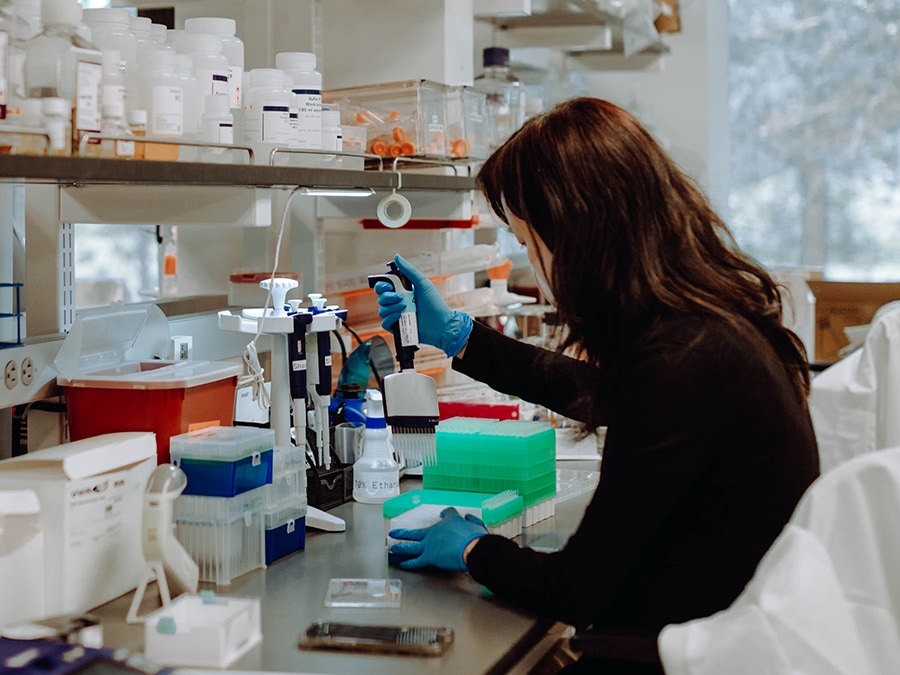
On any given afternoon in San Mateo, a machine-learning model proposes an antibody. A few floors down - or a few minutes later, depending on the day - a wet lab actually makes it. Real protein, real assays, real numbers feeding back into the model before anyone has touched a stand-up agenda. That is, more or less, the whole point of BigHat Biosciences. Most biotechs talk about closing the loop between computation and bench science. BigHat just runs the loop, again and again, until something patentable falls out the other end.
The company is not a hype project. It is a 97-person operation with a Series B in the bank, contracts with two of the larger pharmaceutical companies on earth, and a platform - it calls it Milliner - that has the unglamorous job of optimizing antibodies across half a dozen properties at once. Affinity. Stability. Immunogenicity. Developability. The boring stuff that determines whether a drug ever reaches a patient.
The Problem They SawAntibodies are wonderful, mostly
Therapeutic antibodies are among the most successful drugs ever invented. They are also notoriously difficult to engineer. A molecule that binds beautifully in a screen can fall apart in a vial, stick to the wrong things in a patient, or refuse to be manufactured at scale. The standard industry response has been to grind: screen millions of candidates, optimize one property at a time, throw away anything inconvenient, and hope.
The trouble with that approach is what BigHat's founders kept seeing in their previous roles - the molecule that won on affinity often lost on stability. The one that survived heat broke under stress. The one that did everything right immunologically failed to express. Pick any axis you like. Antibody design is a multi-objective optimization problem dressed up as a screening problem. You either treat it that way, or you keep paying for the privilege of pretending otherwise.
The other problem was time. Iterating between computational design and physical molecules in most biotechs takes weeks. Sometimes months. Models cannot learn from a feedback signal they receive next quarter. They learn from feedback they get on Friday.
The Founders' BetTwo people, one lab, no handoffs
BigHat was founded in 2019 by Mark DePristo and Peyton Greenside. DePristo is the kind of resume that arrives with a footnote: lead architect of the GATK at the Broad Institute, then head of genomics at Google Brain. Greenside trained at Stanford in biomedical informatics, then went to Verily. They met there, working on problems where the bottleneck was never the math.
Built large-scale genomics at the Broad and Google. Has thought longer than most about what it takes to make biology computable, and has the opinions to prove it.
Stanford-trained computational biologist. Spent enough time in industry to know that the model is only ever as good as the data plumbing underneath it.
Their bet was not subtle. They argued that the path forward was not better algorithms applied to old data. It was a tightly coupled stack - ML, automation, and biophysics - sitting under one roof, talking to itself constantly. Build the lab around the model. Build the model around the lab. Refuse to ship one without the other.
The ProductMilliner, the platform that makes the hats
The name is a wink. A milliner makes hats. BigHat's platform makes the antibodies that go inside the company name. It is the thing that distinguishes BigHat from a hundred other AI-in-biotech pitch decks - because it actually exists, and because the company has built it as one continuous machine rather than two cooperating teams.
ML, designed for biology
Models that optimize antibodies across multiple objectives at once - affinity, stability, immunogenicity, developability - rather than one property at a time.
High-speed wet lab
Automated synthesis and biophysical characterization. The bench produces feedback fast enough for the model to actually use it.
Closed feedback loop
In silico designs become real molecules in days. The data flows back. The next round is smarter than the last. Repeat until clinical.
What customers buy is not "an AI." It is a discovery engine that can chew through previously intractable antibody design problems - bispecifics, multi-specifics, VHH, next-gen formats - and produce candidates that are not just potent but well-behaved. The unsexy properties are the ones that kill drugs. BigHat optimizes them on purpose.
The ProofReceipts, not slides
Plenty of companies promise the AI-in-drug-discovery future. Fewer can point at signed deals with the same pharma logos that grace the side of stadiums. BigHat has Merck. It has Johnson & Johnson. It has a Series B that closed in 2022 when most biotechs were having a bad year, and investors that include the kind of firms that do not enjoy losing money.
The customers are the more interesting receipts. When a top-five pharma signs a multi-program collaboration with a 97-person startup, they have done their due diligence. They have asked harder questions than any investor. They have looked at the platform and concluded that it does, in fact, do the thing on the box.
The MissionBoring on purpose
Ask BigHat what it is building toward and the answer is unfashionably modest. Safer antibodies. More effective antibodies. Drugs that reach patients with intractable conditions because the engineering finally caught up with the biology. There is no manifesto about ending disease. There is a quiet, recurring claim that the way the industry has been doing this is too slow, too narrow, and too expensive, and that there is a better way - and the better way involves engineers and biologists actually sitting in the same building.
The vision underneath the mission is the part worth taking seriously. If you can reliably design antibodies that hit multiple objectives at once, you can chase targets the rest of the industry quietly considers undruggable. That is a structural shift, not a marketing one. It is the difference between fishing and farming.
Why It Matters TomorrowThe unglamorous future
The interesting thing about BigHat is not that it uses machine learning. Everyone uses machine learning now. It is that the company has organized itself around the realization that the bottleneck in modern drug discovery is not intelligence - it is the calendar. How fast can you get a real molecule back from a model's prediction. How fast can you tell the model it was wrong. How many rounds can you do in a month.
If that bet is right - and the pharma partnerships suggest the smartest counterparties in the industry think it might be - the consequences are large. Cheaper drugs. Faster pipelines. Therapies for targets that have sat in the "too hard" pile for a decade. None of which is guaranteed, all of which is worth taking seriously.
Back to that afternoon in San Mateo. The model has finished. The lab has the new batch. The data is coming back, and someone - probably an ML engineer who, two years ago, had never set foot in a wet lab - is leaning over a screen with a protein biochemist, arguing about what to try next. There is no handoff. There is no quarterly cycle. There is just a loop, running quietly, with a 97-person company crouched around it, designing antibodies the way thoughtful people design anything important. One careful iteration at a time.