Consider the spacer inside a water-treatment membrane. It is a small component with a dull-sounding job: keep water moving. Aqua Membranes, a company in Bidra Innovation Ventures’ portfolio, replaces conventional mesh with features printed directly onto the membrane. Its argument concerns flow, fouling and energy bills. Here is an invention whose audience includes someone responsible for keeping an industrial plant running. How does a young company reach that person?
- Bidra invests in technologies for fields, factories and mines.
- Its OCP connection offers a route to industrial expertise and potential pilots.
- The practical question is whether a trial can earn a buyer’s confidence.
Bidra’s answer begins with its backer. The firm’s current website identifies Morocco’s OCP Group as its sole limited partner. OCP works in phosphate, plant nutrition and industrial operations. Bidra can help founders approach its business units. The relationship gives the investor a particular vantage point: it can look at a technology and ask where, inside an existing industrial system, it might become useful.
01 / A seed gets a bigger field
Bidra launched in 2022 with $50 million and an agricultural brief. The announcement described crop inputs, digital services and agricultural markets, with OCP and Mohammed VI Polytechnic University, or UM6P, providing backing. Even the name pointed toward the farm: Bidra means “seed” in Arabic.
In April 2023, the backers announced another $200 million commitment. The scope widened to energy, water and mining. Today Bidra describes a $250 million global investment mandate. That number measures the scale of its investment brief; it does not tell us how much has reached startups, what those stakes are worth, or what the firm earns.
The expansion makes more sense when viewed from a phosphate business. Agriculture depends on nutrients. Nutrient production depends on industrial chemistry, water and energy. Follow those dependencies and a farm technology investor arrives at membranes, hydrogen and mineral recovery surprisingly quickly. The portfolio reflects those connections.
02 / The robot keeps the old sprayer
Take Niqo Robotics. In May 2024, Bidra led its $13 million Series B, with participation from Fulcrum Global Capital and Omnivore. That was the entire financing round, rather than a disclosed $13 million cheque from Bidra. The company’s spot-spraying technology uses cameras and computer vision to target individual plants.
The telling detail is the retrofit. Niqo’s technology can work with existing agricultural equipment. A farmer can consider a change to a familiar operation. In its account of the financing, AgFunderNews reported Niqo’s claim of more than 90,000 acres commercialized during 2023-24, benefiting over 1,800 farmers. Those are company-reported figures, but they locate the proposition in fields rather than demonstrations.
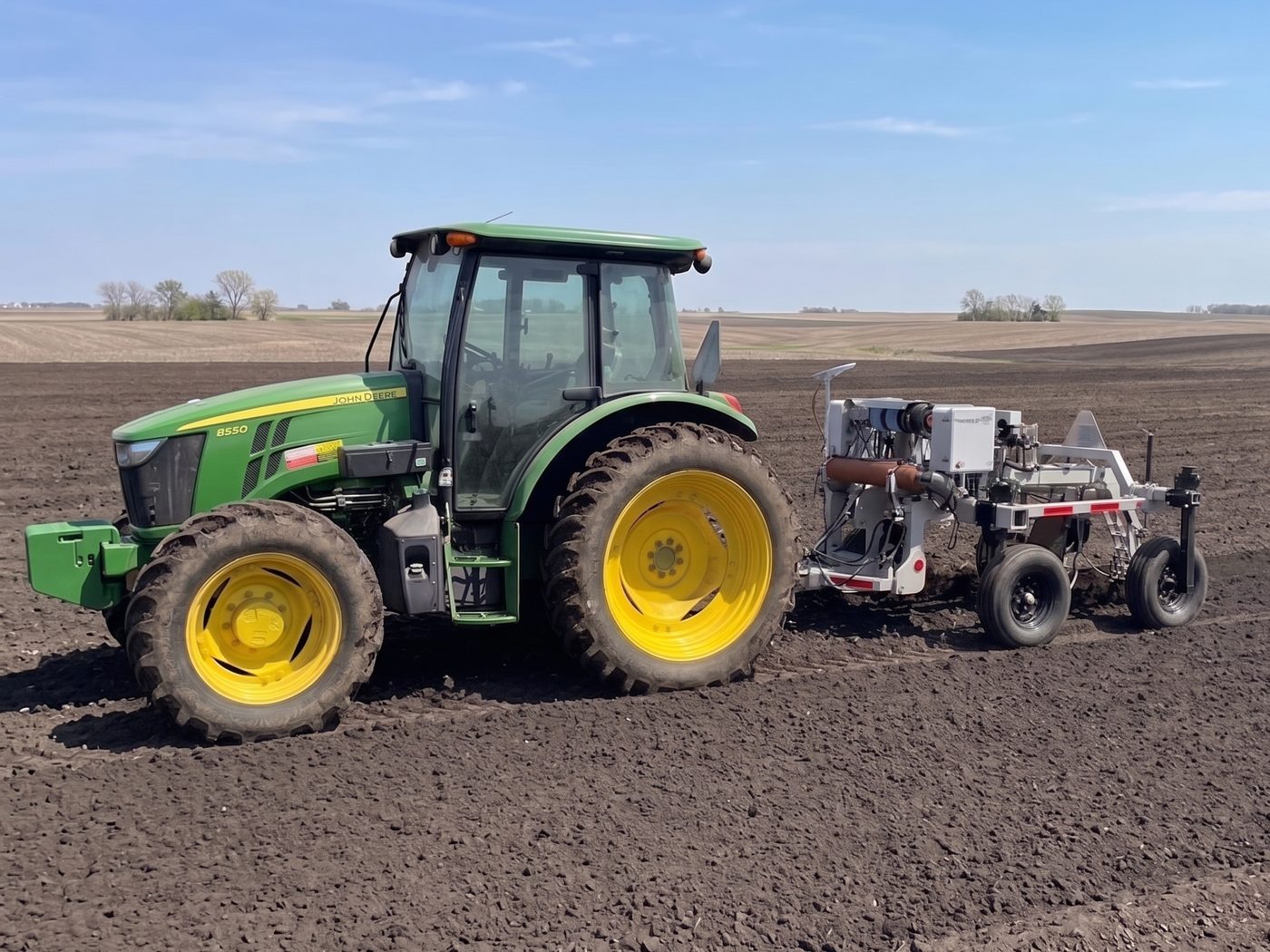
TerraBlaster, another portfolio company, attacks the information problem before fertilizer application. Its Blaster 1000 is a towed implement designed to measure soil nutrients while moving through a field. The company says results feed the variable-rate workflows agronomists already use. Again, adoption depends partly on fitting into someone else’s working day.
03 / Follow the chemistry
Elsewhere in the portfolio, Peregrine Hydrogen develops a process that co-produces hydrogen and valuable chemicals. It says the approach reduces the energy required compared with conventional water electrolysis. The investment logic is understandable: selling a useful second output can change the economics of producing the first.
Travertine offers another version of that idea. Its technology links phosphate processing with useful industrial materials. In October 2026, the company reported that a calcium carbonate co-product produced with Arianne Phosphate had passed testing in a Canadian building-material formulation. This is a specific step toward usefulness: material made, delivered and tested by a prospective industrial user.
Meanwhile, Apollo Agriculture combines financing, inputs and advice for farmers, and ThriveAgric connects smallholders with inputs and markets. Bidra’s investments span both physical inventions and the arrangements that get resources to people. A better input has limited value if the intended user cannot obtain it.
“What if your first customer was a multibillion-dollar corporation?”
Bidra’s opening question to founders
04 / The introduction has a job to do
Bidra typically invests $500,000 to $5 million initially. Its stated preference is earlier stages, leading rounds or joining syndicates, with later-stage investments considered when strategic fit is strong. Its model combines the prospect of financial returns with opportunities for OCP to learn about, test and potentially adopt emerging technology.
- 01CapitalSupport the company
- 02ConnectionFind the operating team
- 03PilotTest a real problem
Founders can also seek specialist agricultural investors such as Omnivore or broader climate investors such as Clean Energy Ventures. Bidra’s distinguishing question is whether its industrial relationships fit the company’s next step. That makes it particularly relevant to businesses that need equipment, field testing or chemical expertise to establish a commercial case.
The expertise matters here. Bidra’s team includes Abhiram Kannan, its head of investment for industrials and mining, and principal Matt Foley, whose background includes entrepreneurship and agricultural corporate investing. CEO and founding member Yassine Cherkaoui oversees a mandate that also includes strategic investments in venture funds. Global Corporate Venturing named him to its 2026 Powerlist.

Bidra also connects founders with UM6P’s research ecosystem, including UM6P Ventures and business builder INNOVX. These are different kinds of help: investment, technical learning and industrial engagement. A founder approaching the firm should be able to explain which one would move the company forward.
05 / Bring a test, not just a pitch
The useful lesson is to work backward from a buying decision. For a water technology company, that might mean agreeing on energy consumption, cleaning frequency and reliability before starting a pilot. For agricultural equipment, it might mean identifying who operates it, who pays and what changes during a season. These are practical implications of Bidra’s model, rather than a published investment checklist.
The model has conditions. Corporate access helps when the technology fits the sponsor’s operations and can survive an industrial test. It offers less when those needs diverge, or when a startup’s cash runway cannot accommodate the buyer’s timetable. A successful introduction still leaves procurement, integration and economics to solve. Bidra’s proposition becomes most interesting at precisely that point: when the conversation turns from an invention’s promise to the work required to use it.