A map can be beautifully drawn and perfectly wrong by lunchtime. The lane that was open yesterday has cones across it. A traffic sign has moved. A delivery driver knows the detour because she has just taken it; the digital picture of the street may still be living in the past. Ro Gupta built a company around that lag. The world supplied a renewable inventory of changes. CARMERA’s job was to notice them.
It is an unusually practical starting point for a career now spent in venture capital. Gupta is CEO and Managing Director of Woven Capital, Toyota’s growth-stage investment arm. His route there ran through online discussion networks, a Brooklyn startup and years inside Toyota’s software organization. The connecting problem is how to turn information into something people can use, on a street or across an industrial business.
The long way out of Princeton
Gupta was born in Kolkata and moved from India to the United States at four. His parents encouraged small invention ideas, but he remembers an accompanying concern for financial responsibility. At Princeton, getting a dependable first job and paying off debt occupied his attention. He graduated in 2000 and went into management consulting. The conviction to start a company took longer to arrive.
There was, however, an engineering education waiting to become relevant. Transportation ideas from Alain Kornhauser and entrepreneurship teaching from Ed Zschau stayed with him. His studies exposed him to machine learning, computer vision and autonomous mobility before those subjects became regular fixtures in a venture pitch. He had encountered the ingredients well before he assembled the business.
One campus memory offers a less dignified lesson in navigation. Gupta wished he had spoken to John Nash. His closest encounter came while trying to cross Fine lawn: he attempted to jump a chain, tripped, and looked up to find Nash laughing. Even a future mapping entrepreneur could choose a poor route.
Conversations, then cameras
Disney gave Gupta an early vantage point on technology companies through business development. Then came Disqus, where he spent six years, from 2009 to 2015. As a business development executive and data product builder, he worked on a discussion network that reached billions of users. The subject was conversation rather than transportation, but the scale of the information was already part of his working life.
His position in that world was quite specific. In 2013, he argued that publishers could overlook the value of the discussions beneath their own articles. Readers were participating in the product. Recognizing what they contributed required looking beyond the original piece of content. It was a business argument about activity that a publisher might otherwise treat as incidental.
By 2014, a different experiment was taking shape. Gupta was trying road intelligence technology on his own car. An introduction through Jake Levine brought him into contact with Notation Capital. He subsequently worked from its first office, above Threes Brewing in Brooklyn. There are less agreeable places to spend time contemplating infrastructure.
He co-founded CARMERA in 2015 with Justin Day, formerly chief technology officer at MakerBot. The early network included Notation and MakerBot founder Bre Pettis. When the company emerged publicly in 2017, it announced $6.4 million in funding. The car experiment had become a company with a technical product and a set of people willing to help it grow.
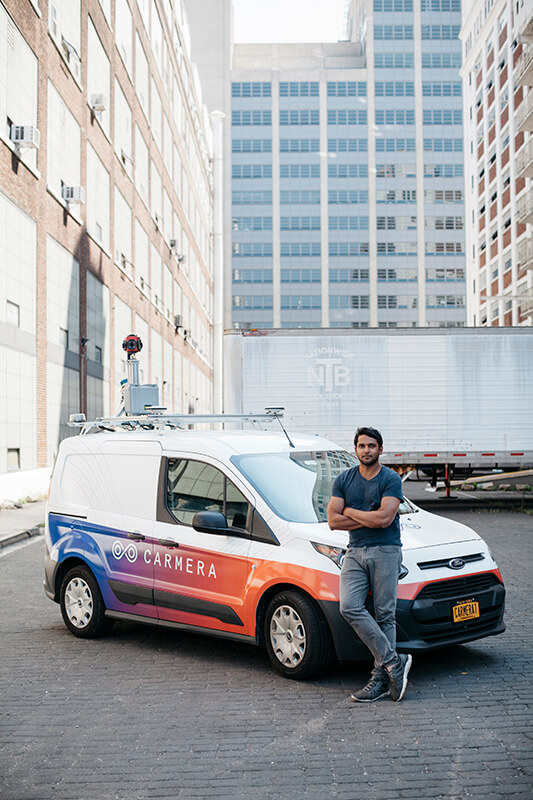
The delivery truck has another job
CARMERA made detailed maps for automated driving. The problem extended beyond drawing a road once. A vehicle needed information that could remain useful as its environment changed. Gupta’s experience in Kolkata and his NGO work in Mozambique helped shape his interest in infrastructure that could not simply be taken for granted. Access and coverage mattered alongside technical detail.
The company’s approach enlisted vehicles already doing useful work. It provided fleet monitoring services, collecting observations from commercial routes that could help keep its road intelligence fresh. Fleet operators received a service relevant to their own vehicles. The mapping business gained repeated views of streets. The arrangement tied the need for current data to an activity that was happening anyway.
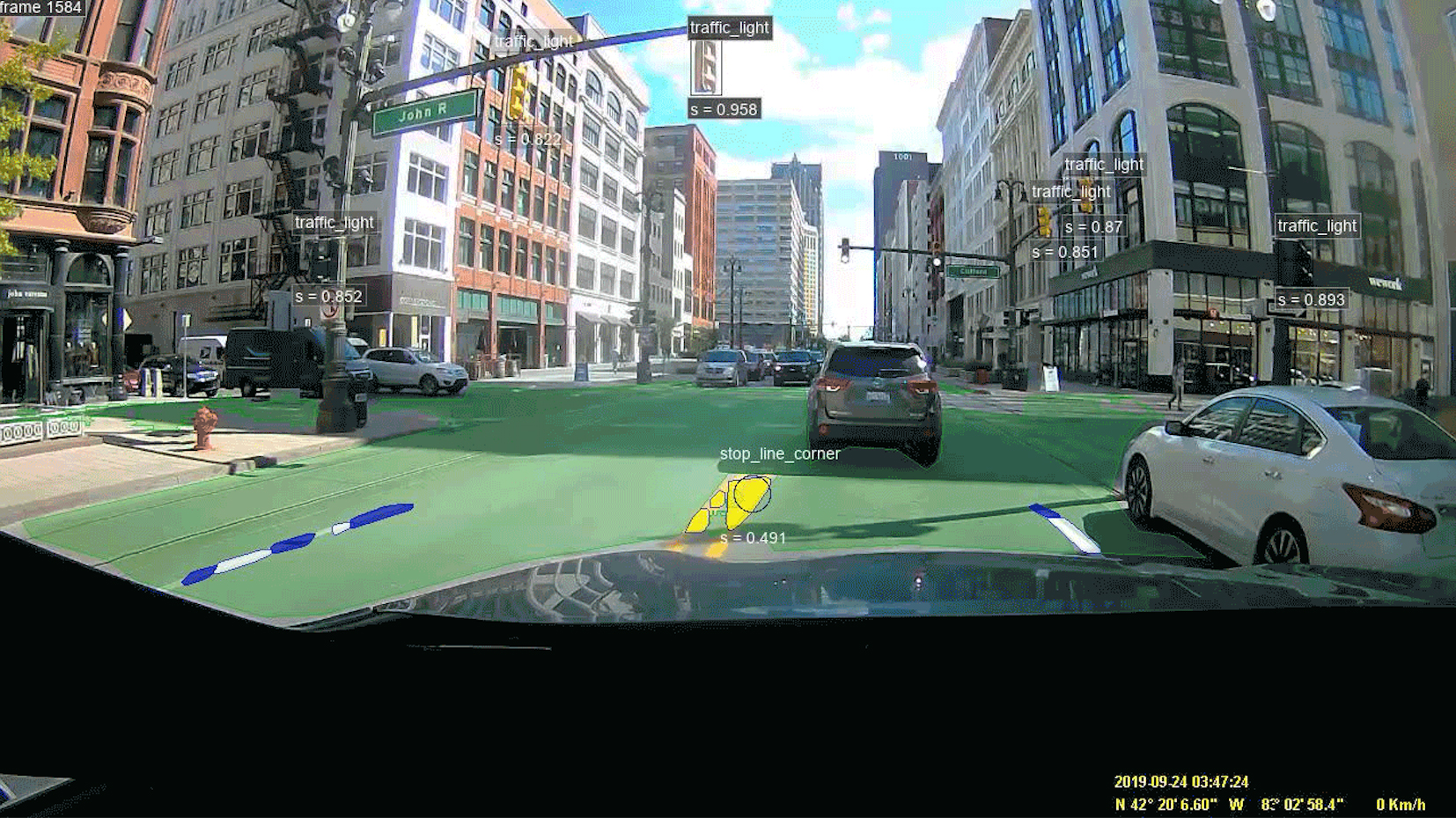
That recurring journey was the important part. Sending a dedicated vehicle to survey an area produces a picture at a particular moment. A fleet coming back through the same neighbourhood offers opportunities to detect what has happened since. The street becomes a continuing stream of observations, with computer vision helping identify changes that deserve attention.
A driver would hardly consider a freshly closed lane an interesting research finding. It is an inconvenience to deal with immediately. CARMERA was trying to make a digital system respond to that same ordinary urgency. The economics of revisiting a place mattered as much as the elegance of recording it.
A schematic of the approach, rather than a measured performance chart.
Toyota, before the deal
The relationship with Toyota grew through work. In February 2019, Toyota Research Institute-Advanced Development and CARMERA announced a proof of concept using vehicle cameras to generate detailed maps in downtown Tokyo. It included Toyota Safety Sense components and commercially available dashboard recorders. The premise was to use accessible hardware to help reach roads beyond the highway network.
There was a result to examine the following year. In March 2020, TRI-AD reported that the collaboration had detected and placed features including lane markings, signals and signs across Tokyo’s 23 wards and two American cities. The project achieved relative accuracy of 40 centimeters for key navigation features. That figure described a particular mapping test, a useful piece of evidence about the approach.
Relative accuracy for key navigation features reported in the TRI-AD/CARMERA proof of concept, March 2020.
In July 2021, Woven Planet announced its agreement to acquire CARMERA. The completed transaction was announced in August. The team would join the Automated Mapping Platform effort, bringing its experience in updates, change management and camera-based crowdsourcing. Its New York and Seattle operations would become part of the larger organization.
The sequence gives the transaction its significance in Gupta’s story. A startup and an industrial company had several years of collaboration behind them. The buyer had seen the work develop. Gupta would remain inside that ecosystem and learn its engineering and business operations from a new position.
Enough detail, in enough places
Gupta was also reconsidering what a map should contain. In April 2021, he published an essay called The Mapping Singularity Is Near. He later joked about having chosen a “very pretentious title, which is my fault.” The argument underneath was more economical: different users’ mapping needs were converging, and the old division between ordinary maps and highly detailed machine maps was becoming less tidy.
His proposed middle ground, medium-definition mapping, sought useful combinations of detail, reach and freshness. Some features might need close precision. Others could be represented more simply. The map supplier had to understand which distinctions mattered to the system using its data, then spend effort accordingly. More detail everywhere could impose costs without adding equivalent value.
It was a founder’s willingness to question the category his own company served. The desired outcome was information appropriate to its job, updated across more places. That concern also connected to his hope that developing countries could gain access to better mobility technology without waiting through every expensive stage of an earlier model.
“Embrace risk - the good kind.”
Ro Gupta, advice to founders, 2021
Inside the industrial machine
After the acquisition, Gupta took on engineering leadership in mapping and Geo at Woven by Toyota. He subsequently held corporate business strategy and partnership roles, including work on CTO Office initiatives. He also supported Woven Capital as an entrepreneur in residence. The founder was learning how decisions travelled through the organization that had bought his company.
Woven Capital announced his appointment as Managing Director on December 22, 2025. Its current biography identifies him as CEO and Managing Director. George Kellerman, the founding managing director, moved to a role advising Toyota’s chief financial officer. Gupta inherited a firm already investing internationally, with a second fund to deploy.
The numbers describe the institution he now leads. Fund II added $800 million, matching the first fund and bringing the two-fund platform to $1.6 billion. Its stated target was 20 to 25 new investments, from Series B through later stages. Toyota had also moved Woven Capital into direct ownership in July 2025. The remit included mobility, AI, automation, climate technology and energy.
Equal-sized funds. Fund I launched in 2021; Fund II was announced in 2025. These are fund commitments, not Gupta’s personal wealth.
Gupta uses a nautical image to explain the relationship: venture vehicles act as speedboats around Toyota’s industrial supertanker. They can explore opportunities while remaining connected to an organization with manufacturing experience and global operations. In his 2026 conversations, the value of corporate venture includes both investment returns and an earlier view of technologies that could matter to the wider business.
He knows the relationship from both ends. Before joining Toyota, he had to make a startup’s technology useful to a corporate partner. Afterward, he worked inside the engineering, strategy and partnership functions that make such relationships possible. His investment role puts those experiences into the same conversation.
The people who make the map useful
In March 2026, Gupta announced two leadership appointments. Michiko Kato became Woven Capital’s first chief investment officer; Mia Panzer joined as its first chief operating officer. He had worked with Panzer at CARMERA, where she led finance and operations and helped guide its sale. An earlier working relationship was becoming part of the next organization’s foundations.
There is continuity beyond the team, too. After Woven Capital’s participation in Muon Space’s 2026 funding round, Gupta described how founder Jonny Dyer’s work at Skybox Imaging and Google Street View had helped inspire CARMERA. Satellite observation and street-level mapping meet in the larger task of making the physical world legible. A new investment brought an old influence back into view.
For all the machinery in his career, Gupta leaves room for a joke. In a 2026 podcast, asked about two robots behind him, he said their occupation was looking cute on podcasts. A previous interviewer asked how geo-awesome he felt on a scale of one to ten. He answered eleven. The numbers in venture capital are generally less forgiving.
His advice to students has allowed for patience, provided they keep “optimizing for learning early on.” That seems an apt description of the route he actually took. A finished map soon needs revision. Gupta’s career has kept returning to the people, observations and partnerships that make the next version more useful.
Follow the route
More from Gupta, and conversations worth your time.
- Woven Capital Investment focus and portfolio
- Ro Gupta on LinkedIn Professional updates
- Ro Gupta on X Public profile
- The Mapping Singularity Is Near Gupta’s 2021 essay
- Mapping an entrepreneurial pathway The Princeton conversation
- Practical AI: Mapping the world Audio and full transcript, 2021
- Watch: Toyota’s speedboat strategy Technoventure with Peter High, April 2026
- Watch: AI, robotics and corporate venture EUVC, May 2026
- Watch: Toyota’s next reinvention Build with Japan with Rie Yano