The star arrived after the scale. In 2025, Orion passed $5 trillion in platform assets and refreshed the visual identity stretched across its wealth-technology family. The new mark placed a small celestial point beside the name. It was an economical gesture for a complicated company: one symbol asked to hold a constellation of software, investment services, acquired histories and human expectations.
Betsy Perez, Orion's chief marketing officer, supplied the useful interpretation. The star nodded to the company's astronomical namesake, she said, and to the advisers it serves. They were Orion's “true north.” The line worked because it turned a piece of design into an instruction. If the brand family became confusing, look at the adviser. If a product story became too technical, look at the adviser. A compass is most valuable when the landscape is messy.
Perez has spent more than 25 years in businesses where the landscape tends to be exactly that. Her public work history runs through marketing agencies, Omaha Steaks, Union Bank & Trust and now Orion. She studied at Creighton University from 1995 to 1999, where her activities included the speech team. That detail feels apt. Her career has been less about producing pretty surfaces than about making large systems explain themselves.
The work beneath the logo
At Union Bank & Trust, Perez did not lead marketing in isolation. Her remit also covered customer experience and call-center teams. That combination is revealing. A bank can promise warmth in a campaign and revoke it in forty seconds of hold music. Putting the message and the experience within the same operating view makes the brand answerable to reality.
When Perez joined Orion in 2021, she entered a company with a different kind of translation problem. Orion served independent fiduciary advisers through technology and investment capabilities, while familiar names such as Redtail and Brinker carried their own histories. Perez moved through senior marketing leadership, became executive vice president of marketing in 2022 and chief marketing officer in 2023. Her remit now connects market insight, brand, thought leadership, demand and experiences.
The 2025 identity project made that connective work visible. Orion, Redtail and Brinker received related visual treatments intended to align them without erasing where each had come from. Perez described the result as a unified, forward-looking brand system that preserved their heritage. It is a delicate corporate sentence. Unity pleases the organization chart; memory pleases the customers who chose a product before it joined the family.
“The star in our logo is a nod to Orion's celestial namesake and to the advisors we serve. They are our true north.”Betsy Perez, on Orion's refreshed identity
This was not merely a new outfit for an old company. The refresh accompanied work to simplify the investment experience and present Orion as a more integrated platform. Marketing's burden was to make the integration legible. A successful visual system cannot merge databases, shorten workflows or improve a call. It can, however, tell customers that the company understands the promise those operational changes are meant to keep.
A conference that refuses to end
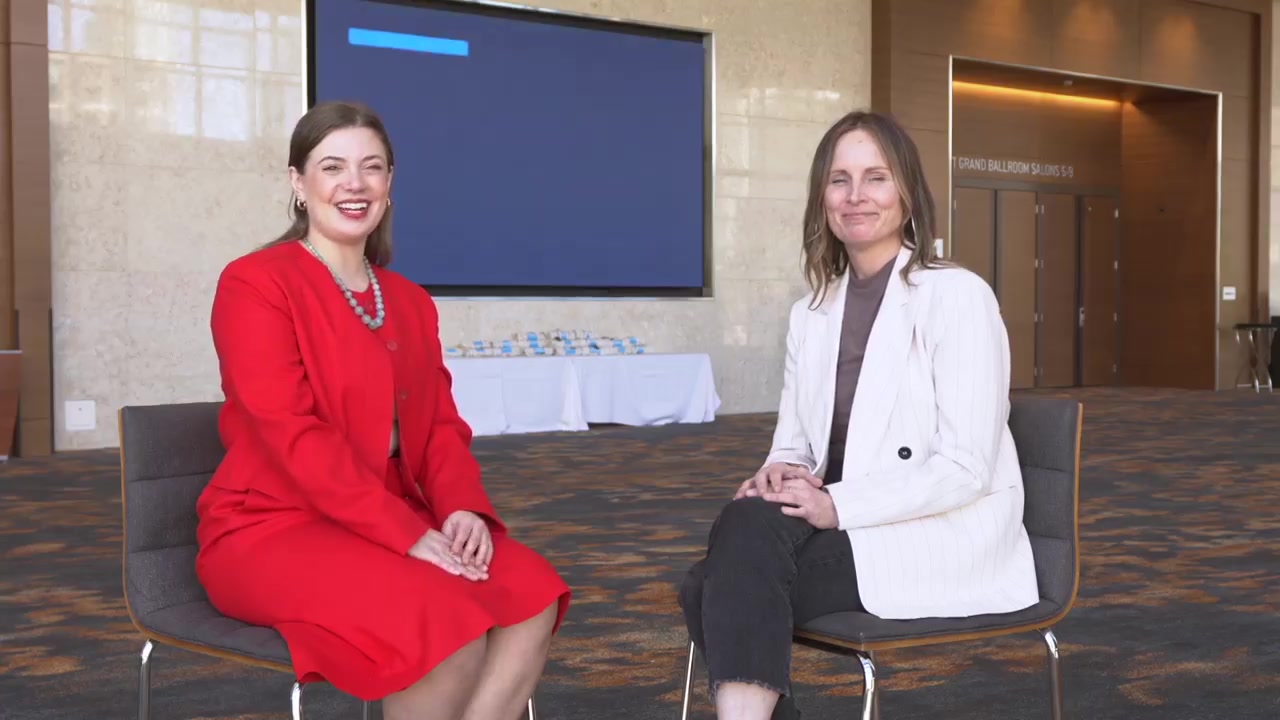
Perez's view of brand becomes warmer when she talks about Orion Ascent, the company's large gathering for the wealthtech community. In a 2026 interview from San Diego, she did not select a keynote or product announcement as her favorite part. She chose the energy of advisers learning from one another, in the planned sessions and in the conversations around them, then leaving with things they could actually use to grow and scale.
Her team has tried to preserve that exchange after everyone surrenders a badge and goes home. Community groups launched at Ascent continue meeting through the year, virtually each month and sometimes at other in-person events. In 2026, Orion added groups for women and next-generation advisers. This is marketing as maintenance rather than spectacle. The ballroom is an ignition point; the recurring meeting is where the promise proves it has a pulse.
The instinct has appeared elsewhere in her career. Perez has served on the advisory board of Inspire, an initiative celebrating women's leadership, and has long been affiliated with AAF Omaha. A recommendation from a 2010 Kansas City Direct Marketing Association event remembered Perez and a colleague as informative and entertaining speakers. None of this supports a grand theory of personality. It does show a consistent comfort with rooms where practitioners exchange what they know.
From a campaign to a capability
When the search box starts answering back
At that same 2026 Ascent, Perez led a discussion on a problem that would have sounded eccentric during most of her career: how does an adviser market a firm when an artificial-intelligence system stands between the question and the website? Her phrase for the shift was “answer engine marketing.” Search once produced a ranked set of links. A language model produces a synthesis, and the synthesis may become a prospective client's first impression.
Perez cited a figure that gave the room reason to sit up: 25 percent of investors were beginning their search for a financial adviser with an LLM search tool, with greater use among younger generations. Her larger point was not the permanence of one percentage. It was the direction of travel. Advisers have to understand how machines summarize their firms and which public traces influence the summary.
“AI is looking for proof, not promise.”Betsy Perez, Orion Ascent 2026
That sentence contains an entire argument about reputation. A company's website is a collection of promises it writes about itself. An answer engine can also inspect reviews, media mentions, YouTube videos, directories and third-party conversations. It is less interested in a polished claim than in the evidence surrounding it. The marketing department may own the message, but it does not own all the material from which the message will now be assembled.
Perez's response is strikingly free of sorcery. First, diagnose: find the questions clients are asking and benchmark the firm's visibility against competitors. Next, inspect the sources from which AI systems build trust and decide where credibility needs work. Then create content that is structured clearly enough for a language model to parse, including direct answers to genuine client questions.
The final step is the least technical and the easiest to neglect. Be authentic. Know why the firm is different. If planning sits at its center, Perez suggested asking what the organization actually believes about money. A language model can compress a thousand pages into a paragraph, but it cannot supply a point of view the firm never developed. Efficiency makes distinctiveness more valuable, not less.
The useful admission
Perez admitted that the speed of AI-driven change feels overwhelming to her, despite having a large marketing team. It was a small, credible moment. Most Orion clients do not have a department of comparable size. Rather than pretending the technology is simple, she made the work smaller: diagnose, benchmark, build trust, structure the content. Experienced operators often earn their calm by giving the confusion an order.
She also drew an important boundary around the work. AI visibility is not a campaign; it is a capability. Campaigns are rented bursts of attention with an end date. A capability becomes part of how a firm listens, publishes and manages its reputation. It can improve gradually. It can belong to a small team. Most importantly, it can survive the next change in terminology.
That distinction echoes the longer arc of Perez's career. Channels have changed from direct marketing and multi-channel programs to social platforms and machine-generated answers. The durable job is still translation: find the real value inside a complicated organization, align it with the customer's experience, and leave enough evidence for other people to believe it.
A reputation needs witnesses
Perez was listed among the finalists for Chief Marketing Officer of the Year in the 2025 WealthManagement.com Industry Awards. The recognition landed during the same period as Orion's visual overhaul, which makes it tempting to treat the work as a neat before-and-after photograph. Her own framework argues against that interpretation. A reputation cannot be completed on launch day. It accumulates through independent witnesses: the client review, the useful interview, the conference conversation, the product experience and the employee who can explain where the company is going.
This is where her past responsibility for a bank call center becomes newly relevant. Third-party credibility begins with first-party behavior. A firm cannot collect durable proof of care if its daily encounters produce indifference. Language models may be new readers of reputation, but the raw material they encounter is made by old-fashioned moments between people. The machine changes how the evidence is gathered and compressed. It does not absolve the company from creating evidence worth gathering.
For an adviser, Perez's approach also rearranges the marketing budget in a subtle way. A homepage remains useful, but so does a direct answer in a video, a clear biography, a thoughtful appearance in industry media or a client review that describes a real outcome. Each item can help a person decide. Each can also help an answer engine understand what the firm does. The strongest content serves both audiences without performing a robotic impersonation of helpfulness.
Her insistence on authenticity keeps the framework from becoming a scavenger hunt for mentions. More proof is not automatically better if it points in six directions. The firm still needs a coherent position and language its people can use without consulting a slogan sheet. In Perez's Orion work, the star supplies the shorthand. In her AI advice, the equivalent is a clear belief about clients and money. Both are small statements expected to carry operational weight.
A front-row seat
Her recent recruiting offers another glimpse of the organization she is building. In August 2026, Perez described a Marketing Assistant role that would support her and the broader team while gaining exposure to revenue marketing, operations, creative, communications, events, and platform adoption. She called it a launching point rather than a destination. The candidate did not need a settled specialty. Curiosity and the chance to discover one were part of the design.
There is an appealing symmetry here. Perez wants young marketers to see the whole system before choosing a corner of it. She wants Orion's acquired brands to participate in a coherent whole without losing their histories. She wants advisers to treat AI discovery as a firm-wide capability while holding onto their distinctive human beliefs. The recurring move is integration without flattening.
A star, after all, is not very informative by itself. It becomes useful when someone agrees what it points toward. Perez's work at Orion is to keep that direction intelligible across logos, products, communities, events, search results and now the synthetic prose of machines. The task sounds modern because the machinery is new. Its discipline is old: say what you mean, make the experience match, and give people proof.