An employee receives a wellness allowance. The employer has paid for it, HR has announced it, and a portal has recorded it. Six months later, the money is still sitting there. Perhaps the employee cannot remember which app holds it. Perhaps a purchase requires a receipt, a policy search, or cash up front. The perk has survived the budget meeting and failed at the checkout counter.
Benepass exists in that last, awkward stretch. Founded in 2019 by Jaclyn Chen, Kabir Soorya and Mark Fischer, the New York company helps employers put pre-tax accounts and flexible benefits behind a card, app and administrative platform. Employees can see balances, pay with a physical or virtual card, or submit claims. Employers define the spending rules and track what happens to the money. It sounds tidy. Benefits rarely are.
- Benepass sells employers one place to administer LSAs, HSAs, FSAs, HRAs and commuter benefits.
- Its distinguishing bet is a payments ledger that applies benefit rules as money moves.
- Public customer accounts describe a 75-day migration at The Aspen Group and lower LSA administration costs at Trupanion.
- The company reported more than 250 employers and 4.5 million card transactions in January 2026.
The day the commute vanished
The first version of any startup is a theory about what people will do next. Benepass was building commuter features before the pandemic. Then millions of employees stopped commuting. The company shifted attention toward health and dependent care accounts, while remote work created a new appetite for flexible stipends. It did not invent the lifestyle spending account; it spotted a useful answer to a practical question: how does an employer support different lives without buying a separate vendor for every life?
Chen later described the earliest sales problem plainly: “Going from zero to one client is difficult.” People said no; referrals came only after customers did. That admission is more revealing than the usual startup origin myth. The product needed employers willing to trust a young company with sensitive money and employees willing to trust the card at the register.

By its 2022 Series A, Benepass was serving employees in more than 30 countries. Its founder letter included examples too odd to emerge from a committee: dog obedience training, a concert, and a home office stipend. That was the appeal of choice. A perk catalog tries to guess what everybody wants. A funded account lets the employer set a boundary and the employee make the last decision.
One card, several kinds of money
The simplicity of the card conceals a thicket of distinctions. An HSA has tax rules and ownership requirements. An FSA may expire. A commuter account has its own eligible purchases. An employer-funded LSA can cover groceries or a bicycle if the company permits them, yet its tax treatment differs from a health account. An HRA may pay for a narrow healthcare need. Swipe the same card twice and two entirely different policies may apply.
Benepass’s product range now includes those pre-tax accounts, flexible spending programs, specialty health reimbursement arrangements, reimbursements, and an administrative layer for eligibility, funding and reports. Its ledger records where benefit dollars belong and which rules govern them. In its current pitch, the company emphasizes instant card decisions and faster claims, then gives employers controls over who can use a benefit, where, and for what. The user sees a payment. The operator sees a system of permissions.
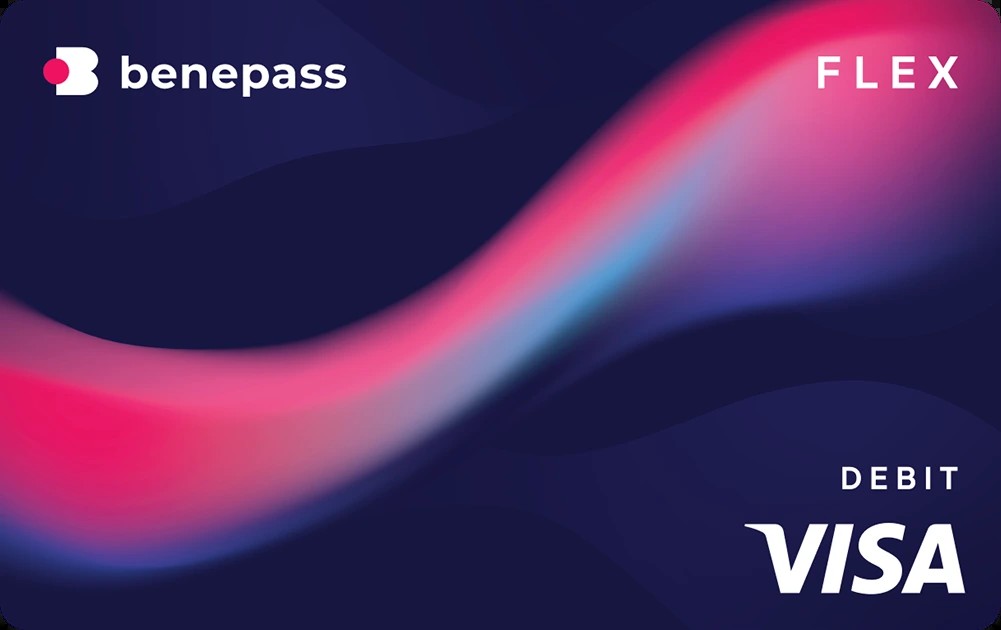
That architecture puts Benepass in a crowded market. Traditional account administrators handle HSAs and FSAs; single-category perks companies handle meals, fitness or learning; newer platforms such as Forma and Compt sell flexible benefit administration. Benepass’s claim is that a card-first experience and proprietary financial infrastructure can join these jobs, especially for employers with many programs, locations and payroll feeds. It sells to organizations and their benefits teams, rather than to an employee shopping for a personal account. Its public site does not list a standard platform price; contract terms depend on the program. For some LSAs, Benepass says employers pay for actual use rather than the entire allowance.
The test is a Tuesday, not a demo
The Aspen Group runs five healthcare brands across 47 states. Its switch to Benepass had a 75-day window in the busiest benefits season. According to its customer account, the team moved 3,745 HSA accounts and 2,100 FSA and commuter accounts, set up Workday data flows, and shortened the period when employees could not use their accounts. A missed balance or declined card would have been felt by a real person, possibly on a day they needed care.
After launch, The Aspen Group reported 97% claims reimbursement approval and 96% card auto-substantiation, with more than 81% of transactions on card. Those are customer-reported results, not a guarantee for the next employer. They do show what this category is bought to accomplish: fewer manual questions, fewer interrupted payments, and reliable reporting across separate entities. The company even added Aspen Dental as a pre-approved merchant so employees would not be turned away at their own employer’s facilities. It is the sort of detail that never appears in a grand mission statement and matters enormously at the front desk.
Trupanion tells a different version of the same story. Its roughly 1,200 employees work across a hybrid, global organization. The benefits team wanted fewer vendors and less work preparing reports. After moving to Benepass, Trupanion said its LSA reached 80% annual engagement in 2024 and its administration costs fell 67% compared with the previous vendor. Employees spent on fitness, groceries, books and, pleasingly for a pet insurer, pet care. The company could filter unspent balances and remind people before dollars expired.
“We see that everybody has very different interests and needs.”Rachel Mulvihill, Trupanion
These examples suggest a useful design rule for any benefits team, with or without Benepass: count the steps between the announcement and the purchase. Can employees find the balance? Do they know what qualifies? Must they front the cash? Can HR see which programs are used and which are merely advertised? A generous policy with poor access is a smaller benefit than it looks.
From perk card to operating system
Benepass raised $12 million in a 2022 Series A, $20 million in 2024 financing, and $40 million in a January 2026 Series B led by Centana Growth Partners. The latest round backed a move into larger, more complicated employers and specialized health programs. By that announcement, Benepass said it served more than 250 employers worldwide and had handled over 4.5 million card transactions. It also said revenue had more than doubled since January 2025, though it did not publish a revenue figure.
The expansion changes the company’s job. Early perks software had to make spending pleasant. Enterprise benefits infrastructure has to withstand bad files, delayed transfers, duplicate records and a dozen legal entities. Benepass’s September 2026 administrator alerts address precisely those exceptions, flagging funding, contribution, identity and data issues before employees encounter them. The company says 81% of employer integrations now run automatically. That is less photogenic than the card, but perhaps closer to the reason an employer signs the contract.
There are limits to the idea. A card cannot make a poorly chosen benefit valuable; a ledger cannot make a policy intelligible by itself. Global reach also means local rules and payment acceptance still matter. Yet the core lesson travels well beyond employee benefits. Money promised is not the same as money usable. Benepass has built a business in the narrow, consequential space between the two.
Keep reading
Company pages, customer accounts and the founder interview behind this profile.