For someone whose business involves turning ordinary rooms into interactive digital models, Beck Besecker has a pleasantly modest piece of office equipment: a notebook. In a description of his working routine, he explained that he wrote down his weekly tasks so he could enjoy physically checking them off. Even the future, apparently, benefits from a satisfying little tick.
His Sunday evenings were for reviewing projects, setting out the week, and looking ahead to meetings that needed preparation. He counted the hours available for actual work after subtracting meetings. He preferred a half-hour appointment to an hour. Anyone who has watched a calendar consume a perfectly serviceable Tuesday will recognize the attraction.
That detail offers a way into Besecker’s career. The co-founder, CEO and chairman of 3D Cloud deals in technologies that can look theatrical: augmented reality, virtual showrooms, furniture that appears on a screen inside your own home. Yet his recurring interests are practical. What needs to happen next? What does the customer need to know? Which part of the process is making everybody work harder than necessary?
Ohio, Purdue, and the length of a receipt
Besecker grew up farming in Darke County, Ohio. His education took him through Urbana University and Purdue. The agricultural beginning is a useful detail to hold beside the later vocabulary of clouds and virtual rooms. His professional story starts closer to the work of sorting and understanding information than to the spectacle of a headset.
At Purdue in the mid-1990s, he worked on a project involving donor histories and a capital campaign. The question was straightforward: which people should the university approach, and why? Records that looked like administrative material could help determine where effort would be useful. Data became a means of making a conversation more relevant.
That idea carried into Copient Technologies, founded in 1999. Initially aimed at online retailers, the business developed targeted marketing technology that also found a place at physical checkouts. Purchase histories and loyalty cards could inform which offers appeared for a shopper. NCR acquired Copient in 2003; Besecker later held a senior new-business role at Catalina Marketing.
He has joked that shoppers receiving a very long, personalized receipt can blame his team. It is an unusually tangible calling card for a technology executive. Plenty of founders promise to leave their mark on the world. A receipt trailing out of a shopping bag does make the achievement easy to measure.
Two brothers look beyond the photograph
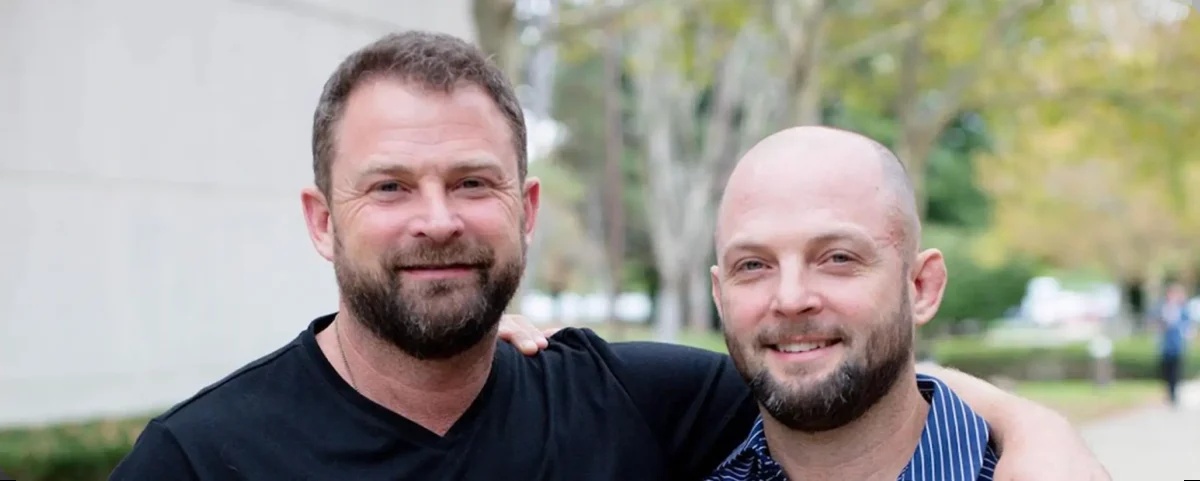
In 2011, Beck and his brother Barry founded the company that became 3D Cloud. Barry, now its chief technology officer, brought a background in mathematics and computer science. Beck described his own strengths as finance and business development. Their partnership joined the problem of what could be built to the question of who would find it useful.
The early proposition was expansive: a product online could have a manipulable three-dimensional model. A shopper could examine something rather than accept the single view a photograph provided. Beck saw a further requirement underneath that experience. Someone would need to organize, maintain, and distribute those models. The interesting business included the machinery behind the picture.
The company’s names trace its changing public identity: Marxent Labs, then Marxent, then 3D Cloud by Marxent, and finally 3D Cloud in 2024. The destination was becoming clearer. Furniture and home improvement offered products people wanted to configure and visualize before committing money and space.
A sofa is a particularly good argument for this work. Its purchase involves color, scale, layout, and the rather unforgiving dimensions of a living room. The decision is personal, expensive, and difficult to undo casually. Helping a shopper resolve those questions gives the technology an everyday purpose. The customer need not care how the model works to care whether the sectional fits.
A showroom is also a question
By 2014, Besecker was taking the possibilities of augmented reality to TEDxDayton. In July 2017 he appeared on CNBC’s Squawk Box with Toll Brothers architecture president Jed Gibson to discuss Kitchen 360. The setting had changed from a grocery checkout to a prospective home, but the commercial task remained familiar: help somebody understand the choices in front of them.
His later writing and conversations repeatedly return to the distance between inspiration and a purchase. An attractive photograph can start the process. It cannot, by itself, answer every question about how a particular arrangement will look in a particular space. Retailers have to help the customer move through that uncertainty.
Besecker’s explanation also gives shoppers a little dignity. People enjoy having ideas of their own. They want tools that let them explore, adjust, and decide. In a 2024 interview he described the appeal of giving people control without making them feel pressured by a sale. A room planner can let a customer participate before a sales conversation begins.
His skepticism about copying physical shopping wholesale into a virtual setting follows the same logic. Why recreate the inconvenience of walking through an entire parking lot just to inspect cars online? A new medium ought to make some tasks easier. The most useful digital showroom may be the one that knows which parts of the old showroom to leave behind.
“People love control, and they don’t want to feel sold to.”Beck Besecker · 2024
Leave room for the bad news
His approach to running a company has a similar impatience with unnecessary performance. In a 2017 essay, Besecker described a preferred balance in communications: roughly three-quarters good news, with room for the difficulties. A report containing only cheerful developments would be less credible. A small problem disclosed early gives colleagues a chance to do something useful about it.
The advice is specific. Describe what happened. Keep the scale of the problem in proportion. Bring possible solutions, or ask for help. Take care with blame, especially in an email. The prescription makes honesty a working procedure rather than an admirable word somebody prints on a wall.
This willingness to hear an unwelcome answer matters when a company is finding its market. Besecker has described years of experimentation before the home category became the focus. He has also talked about the value of investors with operating experience who understand that a new business can take time to settle into its shape.
He tested interest in a 3D Commerce Summit with a preliminary website before committing to the event. That small experiment is revealing. A founder can make a plausible case for almost anything in a presentation. Asking people to register introduces an awkwardly helpful participant: reality. It has little respect for a beautiful slide.
The toolbox under the technology
In June 2023, Besecker published Your Good Work Habits Toolbox. Its subjects include organizing work, communicating clearly, handling decisions, and working with other people. These are the skills an organization depends on even when nobody has remembered to put them in a job description.
His published author biography gives job creation a particular importance. He sees employment as a way for people to support families, develop skills, and pass knowledge along. That helps explain why a software entrepreneur would spend time on a book about workplace conduct. The organization has a purpose beyond producing its next application; people have to be able to build lives inside it.
The material grew out of employee development and training sessions. There is a recognizable continuity with the company’s culture essays, which began when the staff was still small. Besecker and colleagues used them to explain expectations and share what experience had taught them. Building the organization included writing down how it should function.
The book also makes room for embarrassment. One anecdote concerns failing to recognize Neil Armstrong while working at Purdue. There is something reassuring about a business author allowing readers to meet the version of himself who got a social encounter wrong. The lesson arrives with a human being attached.
In a 2024 conversation about leadership, Besecker emphasized curiosity and humility. The pairing is apt: curiosity gets someone to ask the next question, while humility allows the answer to change the plan. His public reflections suggest a leader interested in making those behaviors repeatable. A useful habit has the advantage of still being available on an ordinary Wednesday.
“Success is only real when shared.”
Besecker’s stated mottoThe next room to figure out
Besecker’s recent work brings those older concerns into another technological cycle. In March 2026, 3D Cloud announced a newly allowed US patent covering AI-powered, chat-based product configuration. The described system connects conversational requests with product rules and real-time visualization. A shopper could change a configuration by saying what they wanted.
In September 2026, the company opened its 3D Visual Configure, Price and Quote workflows to new customers. The offering links visual selection with rules, pricing, and the list of components required for an order. That last detail is easily overlooked. A pleasing picture becomes much more useful when a retailer can accurately sell what it shows.
The ambition has become easier to express: make configuring a complicated purchase feel as intuitive as an ordinary online transaction. Besecker has compared the desired experience with booking an airline ticket. Behind the apparent simplicity sit constraints, choices, and information that have to remain consistent. His work keeps returning to that boundary between a person’s intention and the systems needed to fulfill it.
There is a pleasing fit between that ambition and the notebook. A checked box records a promise that has actually been completed. A configured room, priced correctly and ready to order, does something similar for a shopper. For Besecker, the next reality still has to survive contact with the things people want to get done.