Peter Kuhn once learned a sales pitch so carefully that he memorized the jokes. As he tells it, he was Moat’s first salesperson, listening to founder Jonah Goodhart explain the company. Kuhn recorded the pitch on a BlackBerry, transcribed it, printed note cards and rehearsed. A week later, he delivered it back. Goodhart laughed. “You don’t need to use my exact jokes.”
The joke is a useful place to begin with Baku, the company Kuhn founded with Guy Barbier in 2021. A founder knows why a product matters. A new seller needs to learn how to make somebody else care. Somewhere between those two people, knowledge gets lost. Baku has made a business of working on that transfer.
- Baku began with hands-on B2B sales coaching and execution support.
- Its current offer puts account evidence and sales guidance into AI software.
- The useful lesson: inspect how deals move before assuming you need more of them.
First, stop discounting against yourself
Consider Chameleon. In Baku’s published customer account, founder Pulkit Agrawal describes a familiar moment: seed funding secured, two salespeople hired, growth expected. He had competing priorities and insufficient visibility into what was going wrong. The first problems Baku identified were specific. Sellers spent too long with poorly qualified leads. Their message missed the intended audience. They offered discounts before the negotiation required them.
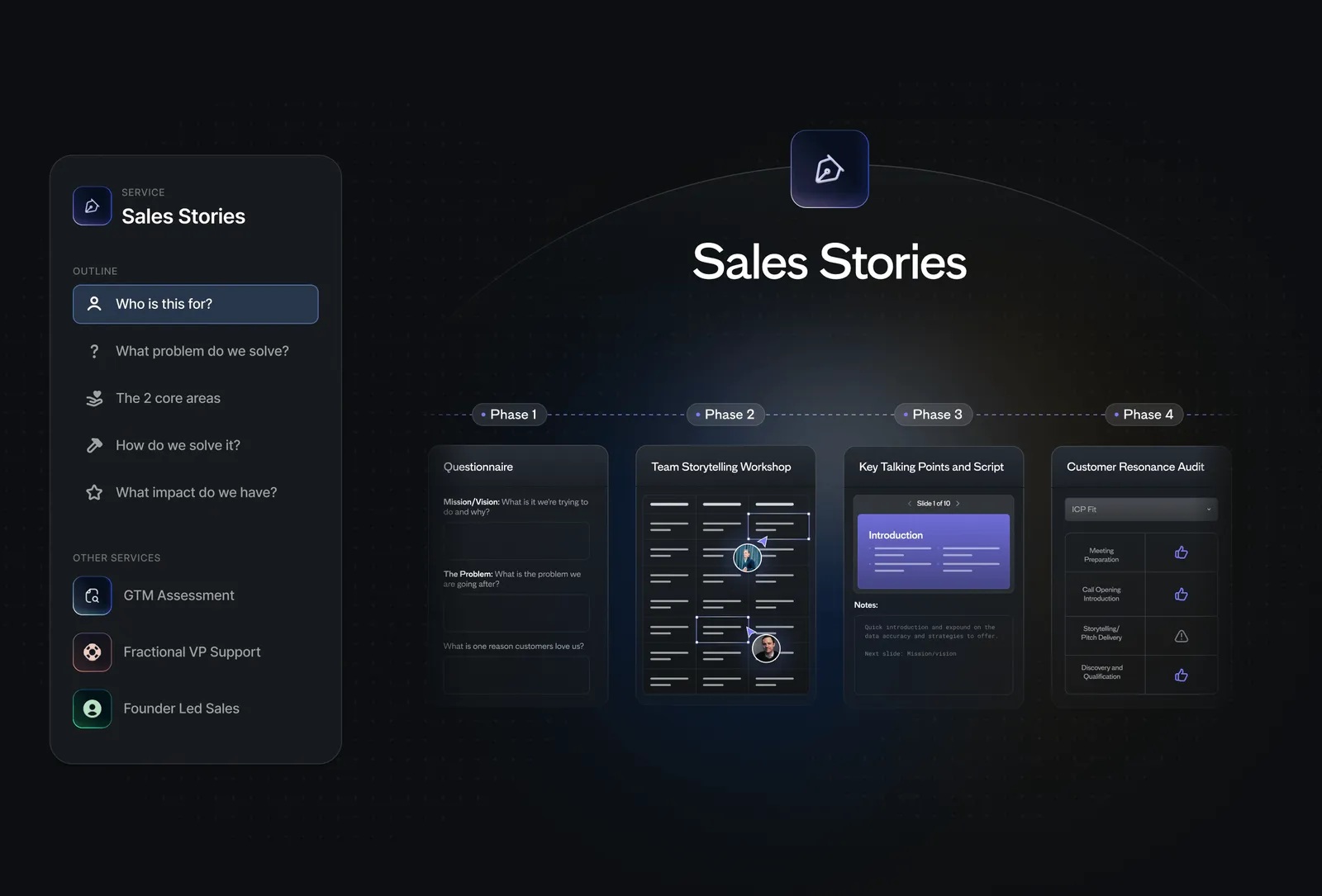
Baku ran workshops on the ideal customer profile, rewrote sales scripts and worked on how proposals, prices and negotiations were presented. The intervention reached individual deals: emails, recorded calls, stakeholder identification and next-step planning. The founder’s account says a formal discovery audit became part of the company’s standard practice.
Within six months, Chameleon reported annual contract value rising from $12,000 to $25,000, with 70 percent of pipeline concentrated in its ideal customer profile. Those are customer-reported outcomes from a consulting engagement, not a controlled experiment. Still, the sequence is instructive: diagnose qualification and conversation quality, change the work, then examine what happened to the numbers.
A leader on loan
At Black Crow, the problem looked different. The company had early momentum and a sales team, but was not ready for a full-time VP of Sales. Its account describes inconsistent deal progression, an unsettled pipeline meeting process and prospects getting stuck between demonstrations, trials and paid contracts.
Baku supplied interim leadership. That meant weekly deal work with sellers, pipeline reviews, training and support recruiting a permanent sales leader. Black Crow reported moving from $400,000 to $2 million in annual recurring revenue in under six months. Its account also describes a 20 percent improvement in demo-to-pilot conversion, although it does not specify whether that means a relative gain or percentage points.
The revealing detail is the handoff. Baku helped recruit, hire and onboard the eventual VP. Its assignment included making the team ready for the person who would replace its interim role. For a founder, that is a practical distinction between receiving advice and borrowing operating capacity.
The manager has only so many hours
Kuhn and Barbier came to this work through Moat’s early sales team. Kuhn later held leadership roles at Oracle Data Cloud; Barbier ran Zeotap’s North American business. Their experience involved teaching people to sell complex products, where a conversation might need to persuade several people with different concerns.
But teaching has a capacity problem. In a public post explaining Baku’s AI development, Kuhn describes sellers who need help and managers who are always in meetings. Give a manager five reports and a forty-hour week, and the theoretical maximum is eight hours each. Double the team and that allocation halves, before any other managerial work.
The manager’s calendar becomes part of the sales process.THE CAPACITY PROBLEM
Kuhn says that constraint pushed Baku to build its proprietary tool. The move makes sense as an extension of its consulting work: preserve more of the account context, make coaching available between scheduled meetings, and let a person work through a decision while the question is still useful.
A useful record, a considered decision
Today Baku leads with AI software configured for a customer’s business. It organizes account context into views of stakeholders, deal risk and possible next actions. Sellers can examine recommendations and challenge the analysis. The emphasis is on helping someone reason through a customer situation.
That places Baku beside the CRM, in the working space between recording activity and choosing what to do. Its website names Salesforce and HubSpot as compatible systems and says teams can retain existing call recorders, including Gong and Fathom. The alternative is partly a manager’s time, partly a company building its own workflow around general-purpose AI.
evidence
options
decides
The commercial model is a flat fee for company access, scoped to the team and intended use, without a separate token bill. Relevant calls and emails need to be available on the right accounts. A tidy analysis built on an incomplete record can miss the person or promise that matters most.
Borrow the meeting, keep the thinking
There is something readers can borrow immediately from Baku’s published discovery framework. Prepare a hypothesis about the buyer’s problem. Agree on the agenda and desired outcome. Leave most of the conversation for inquiry. Finish with an agreed next step, then follow up within twenty-four hours, preferably the same day.
The condition matters: predictive discovery works when the seller has researched the buyer and has reason to expect similar problems across prospects. A hypothesis is useful because someone can correct it. Treat it as a script that must survive every objection, and the listening disappears.
Kuhn’s note cards were a way to carry somebody else’s understanding into a room. Baku’s software attempts a more flexible version of that transfer. The test comes when the buyer says something unexpected. Does the seller recognize what changed, ask a better question and choose a useful next move? That is where the sales process becomes visible.