Azran Osman-Rani wrote a user guide to himself. A practical document, for colleagues: how he thinks, how he makes decisions, how to work with him. The explanation was refreshingly unceremonious. He had learned that he was not the easiest person to work with. Giving people instructions seemed a sensible way to save everybody some time.
There is something rather endearing about a chief executive arriving with operating instructions. Most organisations leave employees to discover the management’s peculiarities through expensive trial and error. Azran put his on paper. For someone whose career includes a stock exchange, satellite television, a long-haul airline and internet streaming, it is an appropriately practical admission: even the person asking everyone else to adapt can create friction.
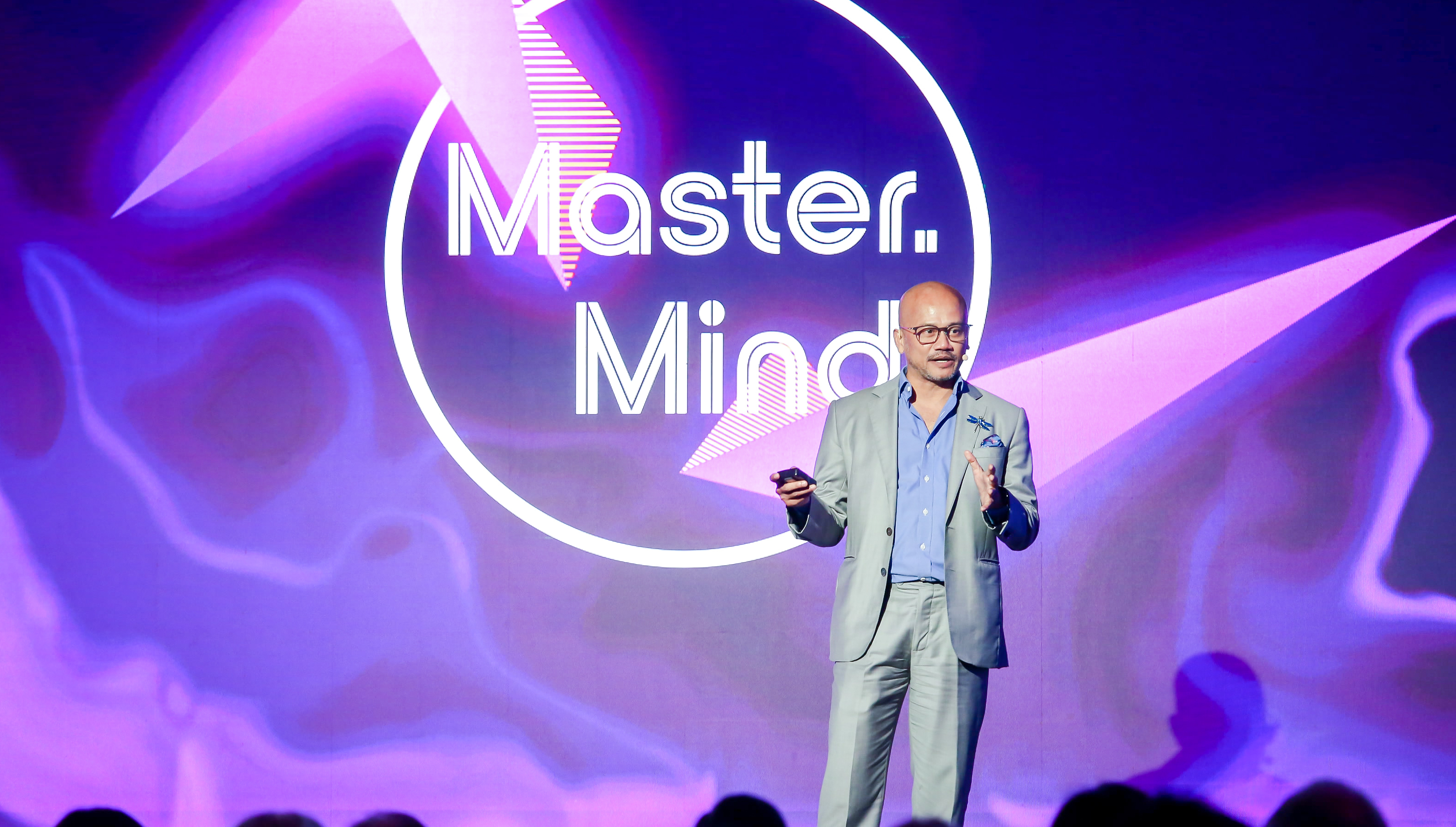
Today, he is co-founder and CEO of Naluri, based in Kuala Lumpur. He also writes, speaks and coaches executives. His recurring concern is how people make decisions when the future refuses to follow the presentation. He has spent enough time inside large organisations, and enough time building new ones, to have met both the reassuring spreadsheet and the rather less reassuring Monday morning.
His book, 30 Days and 30 Years, puts two unusual clocks on the desk. One asks what can be learned and changed quickly. The other asks what a business is for over a much longer stretch. Between them sits an awkward question for anyone lovingly polishing a five-year plan: how much of this will still be useful when the world changes its mind?
“I wrote a user guide on how to work with Azran.”Azran Osman-Rani
An education with room for a Frisbee
He was born in Kuala Lumpur in 1971 and grew up in neighbourhoods including Kampung Pandan, Bangsar and Taman Tun Dr Ismail. His father, Osman-Rani Hassan, was an economics professor; his mother, Safiah Osman, an education professor. Their home brought him into conversations with visiting academics. A four-year-old with drawings to show was allowed a place in the discussion.
That detail matters more than the familiar shorthand of an academic household. The child was invited to offer an opinion. Adults listened. Later, he would remember the confidence that came from speaking with people of different ages and backgrounds. He also lived overseas as his parents pursued their doctorates, including time in Manila and New York. Changing surroundings became part of growing up.
At Stanford, where he earned degrees in electrical engineering and management science and engineering, his appetite wandered happily beyond the course catalogue’s engineering pages. He took classes in history, culture, psychology and economics, and tried ballroom dancing and sailing. The degree had a technical name. The education had considerably more room to roam.
Ultimate Frisbee became another occupation. He recalled practising throws down a dormitory corridor late at night, trying to keep the disc from veering into doors. Casual curiosity grew into serious involvement with Stanford’s team. It is a small, comic picture of learning: a future airline executive concentrating on keeping something airborne in a space plainly unsuited to flight.
From advising to being answerable
His early professional years were spent in consulting, at Booz Allen Hamilton and McKinsey & Company. The work exposed him to different industries rather than furnishing a single industrial identity. He has described himself as a generalist. That is a useful description of a career in which the organisations change much more dramatically than the questions he asks of them.
At the Kuala Lumpur Stock Exchange, later Bursa Malaysia, he became senior vice president and head of the business transformation office in 2002. He subsequently joined Astro, serving as senior director of business development from 2004 to 2007. Consulting, a market institution and broadcasting made an unusual preparation for running an airline. They did, however, put him close to strategy, execution and the complications of organisational change.
There is a difference between recommending that an organisation do something and carrying responsibility for the consequences. His move into operating roles made that distinction tangible. The career begins to look less like a succession of sectors than a succession of commitments: understanding a problem, joining the people responsible for it, then finding out which assumptions survive contact with the work.
By 2007, the next commitment was AirAsia X. As founding chief executive, he led the start-up team through the business plan, capital raising, aircraft acquisition and the necessary licences and approvals. A new airline requires quite a collection of permissions before the romance of departure can begin.
The aeroplane had to earn its keep
AirAsia X’s first long-haul service departed for Australia’s Gold Coast on 2 November 2007. Six years later, the airline listed on Bursa Malaysia. Its growth brought the organisation to approximately 2,500 employees. Those dates compress an enormous amount of ordinary work: recruiting people, putting aircraft into service and persuading customers that a different way of buying a long flight was worth trying.
The arithmetic depended on using expensive equipment intensively. In its early reporting, AirAsia X explained the importance of dense seating configurations and rapid turnarounds. A plane parked on the ground still has costs attached. Keeping it in the air for more of the day spreads those costs across more passenger journeys. The glamorous object is an aeroplane; the underlying problem is utilisation.
His later account of the airline’s scheduling approach makes the trade-off explicit. Travellers making an occasional long-distance trip could accept less convenient departure or arrival times in exchange for a lower fare. The schedule could therefore be arranged around getting more work from the aircraft. The customer’s priorities gave the airline permission to question an industry habit.
Inside the office, the arrangement was similarly unfussy. In 2009, Azran worked in the open with colleagues, without a private office or cubicles separating the desks. For an executive interested in information moving quickly, proximity had an obvious appeal. The organisation’s chief decision-maker was physically available, an arrangement considerably easier to understand than another diagram explaining who may speak to whom.
The story also contains retreats. In 2012, AirAsia X announced the withdrawal of London and Paris services, alongside changes in India. Fuel costs, taxes and economic conditions had put pressure on the routes. London and Paris had recorded load factors above 80 percent in 2011; plenty of occupied seats did not settle the business question. Capacity was redirected towards core markets in Asia and Australasia.
It is an instructive complication in a career often reduced to a growth chart. Opening a route is a public promise. Closing one requires explaining why the promise no longer works. A willingness to revise the plan becomes much less abstract when customers already have tickets. His tenure ended in January 2015, leaving both the expansion and the difficult adjustments in the record.
- 2007First long-haul flight
Kuala Lumpur → Gold Coast - 2012Network rethink
Europe withdrawals announced - 2013Public listing
Bursa Malaysia
Two sons, two versions of television
His next move returned him to the media business. In 2015, he joined iflix as group chief operating officer and CEO of its Malaysian operation. Patrick Grove and Mark Britt were central connections in that move. Azran had already worked in broadcasting at Astro; now he was helping build a service that questioned the broadcaster’s control over when people watched.
He illustrated the change through his sons. The older one remembered television channels; the younger watched programmes on demand. Within one family, the expectation had shifted. A scheduling grid that once organised the evening was becoming an inconvenience. For Azran, the opportunity lay in that change of habit, alongside the challenge of making a reliable, affordable service work in emerging markets.
The payment problem was less elegant than the product idea. In a later account, he described iflix trying to collect subscription money by motorcycle. The collection cost exceeded the subscription itself. The team eventually looked to telecommunications companies, which benefited when customers used more data to watch video. Wholesale subscriptions could be bundled into those companies’ offerings.
That episode has the pleasingly untidy texture of business as it is actually done. There is a viewer, a programme, a mobile connection and someone who must pay. The breakthrough came from rearranging the relationship between them. His operating roles at iflix ran from 2015 to 2017. The service’s later international reach belongs to a wider team and a longer company history.
Thirty days. Thirty years. Eight peers.
The two clocks in his book bring those experiences together. The short horizon is associated with curiosity and learning; the long one with purpose. The book’s subjects include hiring, communication, performance management, boards and peer groups. He is interested in the routines through which a company works, including the meetings that tend to disappear from the heroic version of entrepreneurship.
That is where his user guide fits. An organisation moves faster when people can understand how decisions are made. A colleague who must repeatedly guess the chief executive’s preferences is spending attention on a puzzle the chief executive could help solve. Writing the guide amounts to making some of that information available. It also puts a little responsibility for the relationship back on the boss.
He makes room for other people to question his own thinking. In a February 2026 essay, he described his YPO Forum: eight peers, chief executives in non-competing industries, meeting six to eight times a year, with an annual retreat. The arrangement is regular and structured. Familiarity accumulates; unfinished ideas can be discussed before they become official positions.
His executive coaching has a similarly personal character. He offers conversations about boards, stakeholders, succession, growth and setbacks, with meetings that can take place in an office, a café or outdoors. The setting is flexible; the work is specific. A chief executive dealing with a difficult decision gets another person’s attention rather than a universal answer printed on a motivational card.
In January 2026, his writing urged leaders to connect new initiatives to existing work, and to remove an old process when introducing a new commitment. By July, he was again discussing speed and assumptions with Pierre Le Manh on The Shift Code. Across the years, the preoccupation holds: how do you organise yourself and a group of people to notice what needs changing?
The career offers a rather enjoyable answer to the demand that everyone settle on a tidy professional identity. Engineer, consultant, airline executive, streaming operator, founder, author: Azran has occupied each description without letting it close the next door. The next thirty years may remain an open question. For the next thirty days, there is almost certainly something worth taking apart.
Curiosity & learning
Purpose & direction
More conversations, fewer guesses
Watch, read and follow Azran’s work.