The cell’s message sounds like a child negotiating over dinner: don’t eat me. CD47 is a protein on the surface of cells that helps tell macrophages, the immune system’s roaming cleaners, to keep moving. Many tumors exploit the same instruction. Forty Seven, named for the molecule, was built on the enticing notion that an antibody could interrupt that signal and put cancer back on the menu.
The pitch was legible even to someone who had never opened an oncology textbook. That made it commercially powerful. It did not make it clinically certain. Forty Seven’s story runs from a Stanford laboratory to a $4.9 billion acquisition, then through pivotal studies that brought the central drug candidate to a stop.
The short version
- Four Stanford researchers founded Forty Seven around the CD47 pathway in 2015.
- Its lead antibody, magrolimab, aimed to help macrophages recognize cancer cells.
- Gilead bought the company in 2020 for about $4.9 billion.
- Later Phase 3 results ended the blood cancer program; Gilead subsequently abandoned further development.
A company named after a warning label
Irving Weissman, Ravindra Majeti, Mark Chao and Jens-Peter Volkmer had studied CD47 as a cancer target since work published in 2009. Their idea was less about inventing a new weapon than exposing a concealed target. Macrophages already know how to engulf unwanted cells. Cancer, the hypothesis went, was borrowing a normal cell’s passport to pass the checkpoint.
In 2015, the researchers formed Forty Seven. The following year it licensed a group of programs from Stanford that included the antibody then called Hu5F9-G4, later known as 5F9 and magrolimab. The license covered more than 100 issued or pending patents. Venture investors committed $75 million in a Series A round. It was an unusually mature beginning: the lead antibody had already entered early human trials when the company announced the financing.
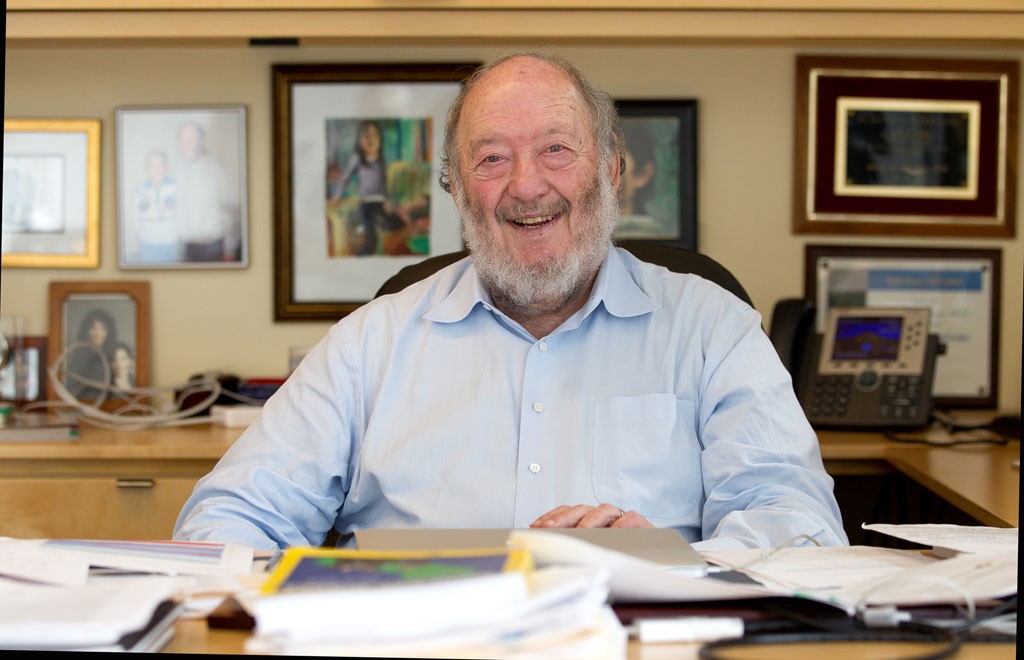
The company was a drug developer, not a seller of cancer treatment. Its immediate users were trial investigators and participants; the hoped-for customers were oncology clinics and patients, pending approval. Revenue from an approved Forty Seven medicine never arrived. Its business model was to fund research, test candidates, and make the science valuable enough to carry through expensive clinical development - independently or with a larger owner.
The good data and the expensive applause
Forty Seven pursued several cancers and combinations. In blood cancers, magrolimab was paired with azacitidine. In lymphoma, it was studied with rituximab. The company also arranged clinical work with Genentech on atezolizumab and with Acerta Pharma, AstraZeneca’s hematology unit, on a three-drug lymphoma regimen. The partnerships mattered because a macrophage-directed antibody might work best beside a treatment that points the immune system at a specific tumor.
Early results made the case look persuasive. Forty Seven presented promising responses in small Phase 1b groups with myelodysplastic syndromes, or MDS, and acute myeloid leukemia, or AML. Those studies were designed chiefly to explore safety and dosage. The response signals justified larger tests; they did not settle whether patients would live longer or whether the treatment could clear a randomized comparison.
Capital followed the data. A second $75 million venture round in 2017 paid for a wider set of trials. Forty Seven listed on Nasdaq in 2018 at $16 a share. In late 2019 it raised roughly $195.6 million in a public offering. Gilead announced a $95.50-a-share cash acquisition the following March, putting the headline price near $4.9 billion. In its accounting, Gilead later reported $4.7 billion net of acquired cash and treated magrolimab as substantially all the value of the assets it bought.
That is the striking economic fact: a company with no approved product commanded billions because one experimental molecule might become a new way to treat several cancers. Gilead wanted a non-cell therapy addition to its oncology portfolio. Forty Seven offered that and a team fluent in a pathway that many drugmakers were starting to investigate.
“The company’s lead program, magrolimab, is an anti-CD47 mAb.”Gilead acquisition presentation, March 2020
Then the larger trials spoke
The first decisive reversal came in July 2023. Gilead stopped the Phase 3 ENHANCE trial in higher-risk MDS after a planned analysis found futility. Another AML study, ENHANCE-2, was discontinued that September. In February 2024 Gilead halted ENHANCE-3, citing futility and a higher observed incidence of Grade 5 serious adverse events. Grade 5 means death. The company said it would pursue no further magrolimab development in blood cancers.
A week later Gilead paused enrollment in magrolimab studies of solid tumors worldwide; the FDA requested a partial clinical hold. By January 2025, Gilead had told European regulators it had discontinued further development because of a lack of efficacy in the adult MDS and AML populations studied. It did not plan to seek marketing authorization in any indication.
The earliest thing to fail was the expectation that encouraging response rates in small studies would survive a larger, controlled test. It is tempting to read the outcome as a rebuke to CD47 biology itself. The evidence supports a narrower conclusion: magrolimab, in the tested settings and regimens, did not produce the benefit needed to continue. Other researchers can still ask different questions of the pathway. Forty Seven’s investors and buyer had wagered on this particular answer.
The useful part of an unfinished medicine
Forty Seven’s most transferable move was to choose a sharp biological proposition and build several ways to test it. The company gave the pathway a memorable story, secured the Stanford rights, advanced an antibody, studied combinations, and enlisted partners with complementary drugs and expertise. It also kept adjacent programs alive: FSI-174 targeted cKIT as part of a proposed antibody-based transplant conditioning regimen, while FSI-189 targeted SIRPα, CD47’s partner on immune cells. A collaboration with Rocket Pharmaceuticals explored conditioning before a gene therapy for Fanconi anemia.
Anyone copying that approach needs to copy the discipline of the later chapters too. A mechanism can earn a trial, a round of funding, even a buyer. It cannot stand in for a randomized outcome or erase a safety signal. The model works only when the biological story survives comparisons that patients actually experience. Forty Seven built a valuable company around a clear question. The final answer came from the clinic, where clarity is harder to buy.