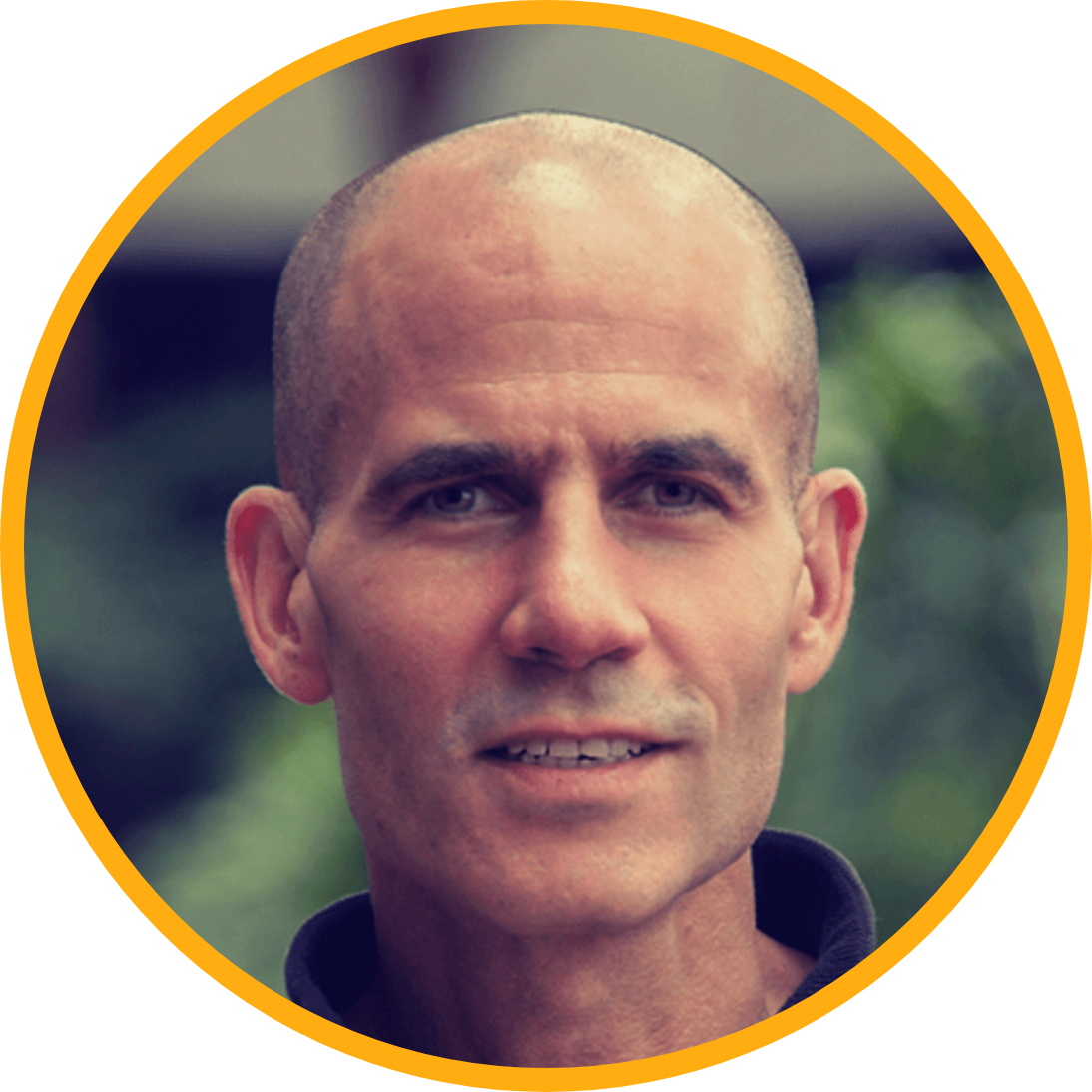
A Chicago Kid Who Took the Bus to School - and Learned the Rules Everywhere Else
Terry Rosen grew up on the north side of Chicago, in a working-class, ethnically diverse neighborhood where his grandparents - immigrants from Russia and Hungary - had planted roots. He walked or took the city bus to school. He spent his free hours at the basketball court, absorbing what he calls "playground rules": lots of freedom, minimal supervision, figure-it-out-yourself energy.
By high school he already knew he wanted to be a chemist. Not a doctor, not a businessman. A chemist. He went to the University of Michigan for his bachelor's in chemistry, then to UC Berkeley for his Ph.D. in organic chemistry, where he worked under Clayton Heathcock - one of the great synthetic chemists of his generation. Rosen finished his doctorate in 1985 and never really left the lab. He just kept scaling up.
His PhD work produced something quietly significant: a creative organic synthesis that helped advance the chemical pathway behind cholesterol-lowering statin drugs - including Lipitor, which would go on to become one of the best-selling pharmaceuticals in history. Rosen wasn't there when the money came in. But the chemistry was his.
Thirty Years Across the Industry - Before Anyone Heard His Name
After Berkeley, Rosen went to Abbott Laboratories, then Pfizer (neuroscience), then Tularik Inc. - a Bay Area startup where he rose from medicinal chemist to Executive Vice President of Operations. When Amgen acquired Tularik in 2004, Rosen went with it. Over the next decade at Amgen, he ran South San Francisco discovery operations, headed chemistry research, then protein sciences - touching basically every modality in the drug discovery toolkit.
This is the part of the story that doesn't get enough attention. Thirty years of working inside the machine, learning how large-scale drug development actually works, what goes wrong, why promising molecules fail, and where the industry chronically leaves value on the table. When Rosen finally started his own company, he wasn't guessing. He was applying three decades of institutional knowledge with the flexibility that only a small team can have.
The economic outcome was not our intent. It enabled us to start Arcus, more than just financially. Flexus was a perfect storm.- Terry Rosen on the $1.25B Flexus acquisition by Bristol-Myers Squibb
Founded in February. Sold in February. $1.25 Billion.
In February 2015, Terry Rosen and his colleagues co-founded Flexus Biosciences, a startup targeting IDO and TDO - enzymes that tumor cells use to suppress the immune system. The science was early but compelling: block these enzymes, restore immune cell function, create a new class of combination-friendly cancer therapy.
Also in February 2015, Bristol-Myers Squibb acquired Flexus for $1.25 billion - $800 million upfront, plus up to $450 million in development milestones. The founding and the sale happened in the same calendar month. It's the kind of biotech story that sounds implausible until you realize how long the underlying science had been in development, and how well Rosen knew exactly what he was building and who would want it.
Three months later, in May 2015, Rosen and Juan Jaen co-founded Arcus Biosciences. Not a pivot. Not a consolation prize. A deliberate next move, funded by the Flexus outcome, with a wider thesis and a longer time horizon.
The Deal Timeline That Built Arcus
Arcus Biosciences - Combination Therapy as a First Principle
The thesis at Arcus isn't complicated, but executing it is. Rosen and his team recognized early that the next wave of cancer immunotherapy wouldn't come from single agents - it would come from intelligently combining them. Checkpoint inhibitors alone weren't curing most patients. The tumor microenvironment was too complex, too immunosuppressive, too good at finding workarounds.
Arcus set out to build a portfolio of molecules specifically designed to be combined: small molecules and antibodies targeting the adenosine pathway, TIGIT, PD-1, HIF-2alpha, CD73, CD39, and AXL - each addressing a different arm of tumor immune evasion. The idea was to stack combinations with best-in-class individual agents, giving oncologists a toolkit rather than a single hammer.
The 10-year Gilead Sciences partnership, announced in May 2020, validated the strategy at scale. By November 2021, Gilead had exercised options worth $725 million across three Arcus programs. The collaboration now spans co-development and co-commercialization across multiple cancer indications, with Taiho Pharmaceutical holding rights in Japan and other Asian markets, and AstraZeneca running collaborative studies with casdatifan.
From day one, we realized that there was a necessity and an opportunity as the industry was starting to combine multiple agents together.- Terry Rosen on Arcus Biosciences' founding thesis
The TIGIT program with Gilead - once a key pipeline asset - was discontinued in 2025 after Phase 3 futility data on domvanalimab. Rosen and the team made the call quickly, redirected resources, and leaned harder into what was working. That's the other part of the Arcus story: the willingness to kill programs when the data says so, and keep capital concentrated on genuine signals.
The genuine signal right now is casdatifan.
Casdatifan - HIF-2α and the Numbers That Changed the Kidney Cancer Conversation
HIF-2alpha (hypoxia-inducible factor 2-alpha) is a protein that clear cell renal cell carcinoma (ccRCC) cells need to survive and grow under low-oxygen conditions. Block it, and you starve the tumor of a critical survival signal. MSD's belzutifan was first to validate this mechanism. Casdatifan - Arcus's HIF-2alpha inhibitor, developed and retained after Gilead returned rights in early 2025 - is making a case for best-in-class.
At ASCO GU 2025, updated data for casdatifan in combination with cabozantinib showed a 45% confirmed overall response rate and a 15.1-month median progression-free survival in IO-experienced patients with clear cell kidney cancer. In a disease where prior TKI/IO combinations were pushing median PFS into the 8-12 month range, those numbers sparked serious attention. Rosen called it "a transformational change for Arcus."
Arcus retained casdatifan from Gilead in February 2025 - a strategic repositioning that gave Arcus full economic rights to what may be its most valuable asset. The PEAK-1 Phase 3 trial is now actively enrolling. Parallel studies with AstraZeneca's volrustomig bispecific are underway for first-line ccRCC.
The Pipeline
Heathcock Hall - and the Art of Honoring the People Who Made You
In 2019, Terry and Tori Rosen donated $25 million to UC Berkeley's College of Chemistry to fund a new building. The building is called Heathcock Hall - named after Clayton Heathcock, the professor who supervised Rosen's doctoral work in the early 1980s. This wasn't a naming-rights transaction. Rosen had been giving to Berkeley's chemistry program for years: the annual fund, a named lectureship for Heathcock, an earlier $1 million to seed the building project. The $25 million was the capstone.
Rosen was subsequently appointed to a new adviser role at Berkeley's College of Chemistry. He also sits on the Salk Institute Board of Trustees, the California Life Sciences Association Board, and advisory structures at Caltech and the University of Michigan. The board profile reads like someone genuinely invested in the scientific ecosystem, not just the résumé line.
The Chicago kid who took the bus to school has spent his career in one of the most credentialed institutions in American science. And when he had the money, he gave it back to the classroom that made him.
Track Record
Key Achievements
Off the Record
Things Worth Knowing
The Lipitor connection: His Berkeley PhD work contributed to organic synthesis pathways that fed into cholesterol-lowering statin chemistry - including Lipitor, which became one of the best-selling drugs ever made. He wasn't in the room when it happened, but the chemistry was partly his.
The playground principle: Rosen has talked about learning "playground rules" on Chicago basketball courts - freedom, self-governance, figure it out without adult supervision. It maps surprisingly well to how he approaches biotech: set the conditions, hire good people, get out of the way.
The mentor building: Most people name things after themselves when they have $25 million to spend. Rosen named it after his PhD advisor. Heathcock Hall. Clayton Heathcock didn't have to read about a building named after him in a press release - he had a former student who just quietly made it happen.
The grandparent geography: His grandparents immigrated from Russia and Hungary. His parents grew up as childhood friends. Chicago's immigrant working-class history is baked into the Rosen origin story in a way that probably shapes how he thinks about teams, community, and persistence.