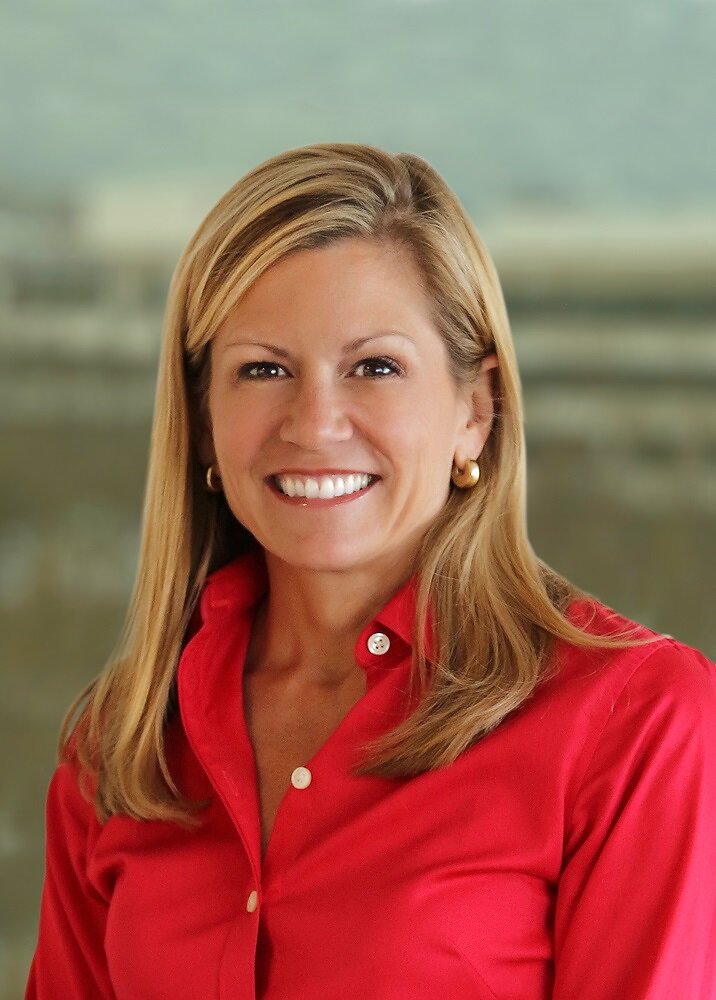
The gift-card rack asks very little of you. Pick a restaurant, a shop, a game. Choose an amount. Carry on with the groceries. It is an agreeable arrangement for anyone who has remembered a birthday while buying milk. For Talbott Roche, that small act of convenience became the beginning of a career spent making a deceptively simple idea work.
In 2001, she joined a specialty marketing division inside Safeway. Blackhawk Network, the business she helped found there, started with seven card partners and one distribution partner in the United States. The proposal put other companies’ gift cards into a grocery chain. Customers could buy a present without making a separate trip to the business whose name appeared on it.
Twenty-five years later, Roche is still at Blackhawk, now its CEO and president. The rack survives as a familiar piece of retail furniture. Her job has changed repeatedly around it. The story of that change contains a useful surprise: staying with one business can require a person to keep finding a different way to work.
Before the rack, a shop floor
Roche grew up in Richmond, Virginia, and attended an all-girls school from kindergarten through high school. Her first job was as a salesperson at Talbots. The near match between employee and employer is a small gift to anyone writing about her; the experience itself placed her early working life on the selling side of a counter.
She went west to Stanford and earned a bachelor’s degree in economics. The distance mattered in her account of growing up: she has described being the first student from her high school to attend college west of the Mississippi. It was an early departure from the route immediately around her, well before payments became her professional subject.
Her subsequent career passed through consumer businesses, marketing and sales. She held executive positions at News Corporation between 1996 and 2000, including sales roles at News America Marketing and Smart Source iGroup. From October 2000 to July 2001, she worked at Landor Associates as a branding consultant and director of new business development.
Those jobs give the later gift-card story a particular texture. Roche came to the business through the work of selling and understanding brands. The opportunity inside Safeway concerned an everyday consumer decision: where someone would be willing to buy something. The product already had a purpose. Its location could make it more useful.
Bring the choice to the shopping trip already happening.
A good idea meets the back office
Moving a product to a convenient place sounds almost embarrassingly straightforward once someone has done it. The difficulty was getting the participants to see enough benefit to join. Retailers had to accept the category. Brands had to accept sharing part of the economics in return for reaching customers through someone else’s stores.
That makes the rack a negotiation made visible. Each card represents a business willing to sell through another business, with a customer expecting the purchase to work. Convenience is the promise out front. Behind it sits the less decorative question of how everyone involved will fulfill their part of the bargain.
Blackhawk’s expansion into cards bearing payment-network brands made those obligations more demanding. Roche recalled resistance when the team first approached Visa. Supporting cards usable across accepting merchants required bank contracts, risk and fraud controls, systems and different processes. The shelf space was only the part a shopper could see.
The company also chose to bring processing capabilities and more customer care in-house. These were operating decisions about control, efficiency and the customer’s experience. In Roche’s account, growth required attention to the machinery supporting an invention, alongside the search for the next product. A clever display could open a market; someone still had to answer the telephone.
Promotions, with a company attached
Roche’s titles mark the stages of that work. She arrived as an assistant vice president in July 2001. In January 2005, she became senior vice president of marketing, product and business development. The combination put several parts of the commercial proposition under one title: what to offer, how to explain it and where to take it.
She became president in November 2010. Blackhawk went public in April 2013, with Roche serving in that role. An idea developed within a supermarket company now had the obligations and visibility of a listed business. The corporate milestones were accumulating around a proposition that customers could still understand without a prospectus.
- 2001Joins the Safeway division
- 2010Becomes president
- 2013President through the IPO
- 2016Adds the CEO role
- 2018Leads through take-private
On February 22, 2016, Blackhawk’s board appointed her CEO. She kept the presidency. William Y. Tauscher, the previous chief executive, remained chairman and took responsibility for international business and corporate development. His continued presence also connected her new position to a relationship she had already identified as influential in her working life.
There is a temptation to read such a timeline as a smooth ascent. The more interesting detail is the length of the apprenticeship. Roche spent nearly fifteen years inside the business before becoming CEO. She had seen it from marketing, product development and the presidency before becoming responsible for the whole enterprise.
The argument worth having
Roche has offered a more revealing leadership anecdote than the usual account of a decisive executive making the call. During acquisition discussions, she recalled preferring one direction while colleagues favored another asset. Debate changed her view. The group arrived at a conclusion she considered better because others had been able to challenge her.
That is an unusually useful detail to preserve. A leader can invite opinions while leaving the outcome quite untouched. In this example, the disagreement altered the decision. Roche has also described maintaining a network of advisers, CEOs and women business leaders, people she could turn to for help with problems and perspective beyond her own organization.
“Bad news should travel faster than good news.”
Talbott Roche · 2026
The principle has consequences for a company that grows through many relationships. An inconvenient fact loses value when it spends too long waiting for permission to be spoken. Roche’s emphasis on early candor fits the acquisition anecdote: listening becomes consequential when information can reach the person who has the authority to act on it.
It also helps explain why her leadership story extends beyond her own promotions. In 2020, Women in Payments gave her its Advocate for Women award, recognizing her support for mentorship and women’s advancement. That November, she received the Woman in PayTech award. The two honors recognized related but distinct parts of her public work.
Going private, looking further out
In January 2018, Blackhawk announced an agreement to be acquired by Silver Lake and P2 Capital Partners for approximately $3.5 billion, including debt. For Roche, the change of ownership offered a different setting for work already underway. She told employees that private ownership could give new initiatives more time to develop.
Her message also concerned integration and consolidation of systems. That is a telling ambition for a business assembled partly through acquisitions. Buying capabilities creates a subsequent obligation to make them work together. Roche framed the transaction as a way to pursue Blackhawk’s existing direction with patient partners and greater room to invest.
At the time, she said new digital channels accounted for 20 percent of sales, with another 30 percent coming from incentives and international businesses. Those were figures describing that moment, rather than today’s business. They show how far the company’s attention had already moved beyond its initial physical distribution model.
The digital interest predated the transaction. By early 2016, Roche was discussing how businesses used digital gift cards for rewards and incentives. A company sending a reward and a shopper buying a birthday present had different needs. Both gave Blackhawk a reason to build on the value stored in a card.
The next aisle may have no shelves
Roche’s work has also taken her into other companies’ boardrooms. She joined Electronic Arts’ board in June 2016, bringing experience in digital commerce, marketing and consumers to a games business. In October 2026, Gen announced her appointment to its board, adding another consumer technology connection to her career.
Gen’s announcement described the transformation she had led at Blackhawk from physical gift-card distribution toward a digital business serving multiple markets. Seen alongside the earlier Electronic Arts appointment, the connection is understandable: brands need to reach people, earn their confidence and support the transaction that follows. Roche has spent much of her career working where those needs meet.
Her current questions include how AI assistants change the way consumers discover and compare products. She has discussed the role stored value might play as purchasing experiences develop, while emphasizing trust and consumer control. The prospect returns her to a familiar problem: understanding where a customer’s decision begins, then finding a useful place in it.
The grocery rack supplied one answer. It met people during a trip they had already chosen to make. An assistant recommending a purchase presents a different setting, with different decisions about permission and relevance. Roche’s interest in it follows naturally from the work that started inside Safeway, even if the shelves have disappeared.
Her career leaves a pleasingly practical image: a salesperson at Talbots, followed years later by a business built around other people’s shopping trips. The familiar rack made buying a gift easier. Keeping that promise required Roche to learn new jobs, hear inconvenient arguments and give other people room to make decisions. The milk was always the easy part.