There is a question Susan Rawlings Molina likes to ask before anyone gets too comfortable with an answer: “What problem are we trying to solve?” It sounds almost too ordinary to belong to a chief executive. Seven words, ordinary vocabulary, and a question a colleague can answer without opening a slide deck. Yet it is a useful place to begin a career that has moved through accounting, executive offices, nonprofit service, and the uncertain business of starting again as a founder.
Molina is the co-founder and CEO of GroundGame.Health, based in Tampa, Florida. She also chairs its board. The titles describe her responsibilities; the sequence behind them explains why her founder story begins long before the company’s formation. Before building this business with Sri Akula, she had already spent years running other organizations. She arrived with experience of the work that continues after a strategy presentation ends.
A company announcement can compress that experience into a few lines. A life resists the compression. There are credentials, changes of direction, volunteer commitments, and encounters with people whose ambitions have little to do with the next board meeting. In Molina’s case, those parts of the record deserve to stay in the picture.
The accountant before the founder
Her early geography runs from Indiana, where she was born and grew up mainly in Muncie, to the University of Arizona. She played drums through college. Her degree was a BSBA in accounting. The California CPA credential followed in September 1985; her professional profile now lists it as inactive. These are concrete beginnings for a career that would eventually involve both company operations and company ownership.
Accounting supplies a rather unforgiving vocabulary. Money comes from somewhere. Costs belong somewhere. A total has to reconcile. For a reader considering Molina’s later work, that background offers a useful point of entry: the business record includes decisions about strategy, customers, capital, and organizational responsibility. There is plenty here to examine without converting a degree into a theory of her entire personality.
At TMG Health, she became interim president effective October 12, 2015, as its founding president and CEO prepared to retire. She subsequently served as president and CEO. Her work included rebuilding the company’s strategy, renewing its focus on customers, and preparing it for acquisition by Cognizant in 2017. That is a particular kind of executive assignment, with an eventual transaction as one public marker of the work.
In 2018 she became president and CEO of HealthPlan Services, a Wipro subsidiary. By April 2020, she had also joined the board of RecoveryOne. The chronology puts her in several kinds of rooms: leading an operating company, preparing a business for a new owner, and joining another organization as a director. The same person occupies each role, but the responsibilities change with the chair.
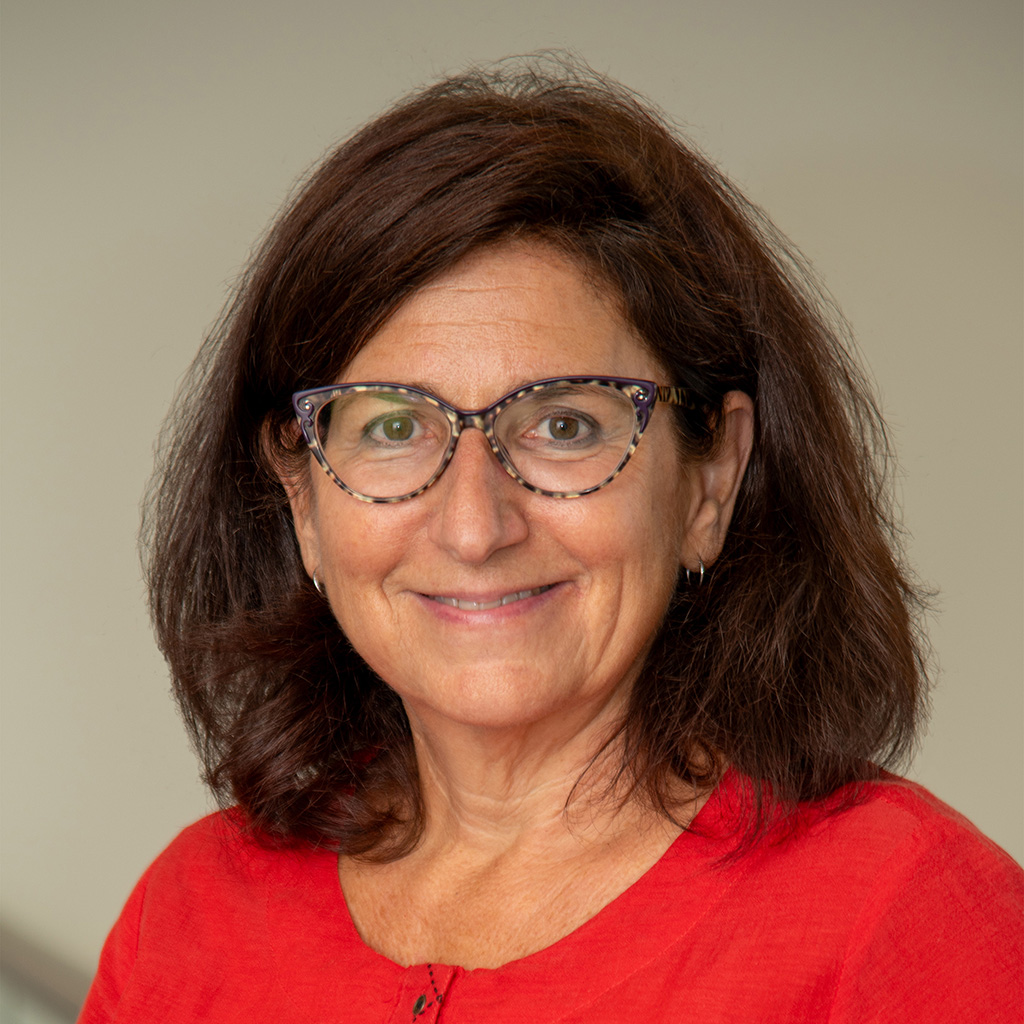
Photograph: GroundGame.Health
An 8,000-kilometer detour
The volunteer portion of her professional record changes the scenery. It includes service as co-founder and director of Montana Large Animal Sanctuary & Rescue, an organization established for unwanted large domestic animals. It also includes a representative board role with Montana Shares. These are parts of her history alongside the corporate appointments, rather than decorative hobbies added to make a biography more agreeable.
Then, across December 2019 and January 2020, comes Jagriti Yatra. Molina participated as a resource person and mentor in an 8,000-kilometer journey across India with 450 young participants focused on social entrepreneurship. The entry is brief; the scale of the journey is enough to interrupt a reader’s expectations of an executive résumé.
Resource person. Mentor. Fellow traveler.
Mentoring makes an interesting companion to executive work. A manager can assign a task within an organization. A mentor meets someone whose decisions remain their own. The usefulness of experience depends on whether it can be made relevant to another person’s circumstances. On a journey organized around social entrepreneurship, the conversation also has to accommodate the relationship between an enterprise and the people it hopes to serve.
The journey placed her experience alongside the ambitions of people developing their own ideas about enterprise. Her role was explicitly that of a resource person and mentor. It is an unusual entry beside years of company appointments, and one that gives the reader a different setting in which to understand the work she chose to do.
Two founders, different tools
Molina and Sri Akula began exploring a business together in 2020. Her account describes joining two existing ventures, helping develop their foundation, and combining them through a seed-funded acquisition in 2022. Their professional backgrounds supplied different tools: her operating experience and his product and technology work. Today, the company names Molina as co-founder and CEO and Akula as co-founder and president.
The distinction between building from a blank page and building from existing organizations matters. Existing ventures bring something to work with. Combining them also creates work of its own: deciding what belongs together, what the business will promise, and how its people will deliver. Founding can involve assembling capabilities already in motion. The origin includes the work already underway and the founders’ choices about where to take it.
A further combination followed in April 2024, when GroundGame.Health joined with SameSky Health. Abner Mason, previously SameSky’s founder and CEO, became chief strategy and transformation officer. The transaction brought additional cultural and linguistic capabilities into the business. A $17 million funding round led by 7wireVentures accompanied that new chapter, with the combined organizations describing a reach across all 50 states.
“We don’t do this alone.”
Susan Rawlings Molina · April 2024
The sentence is short enough to fit beneath almost any merger announcement. Here it also identifies the people beyond the founders who belong in the account: colleagues joining through a combination, local organizations, investors, and the team responsible for the day’s work. A funding total tells us what capital arrived. A list of new responsibilities tells us where the next chapter begins.
Growth, with the year attached
The business has a measurable growth record. Its 2024 company spotlight reported more than $20 million in 2023 revenue, 145 employees that year, and three-year revenue growth of 993 percent. Those are historical figures. Keeping the dates attached gives them their proper meaning, and avoids quietly turning a past snapshot into an assertion about the present.
The Inc. 5000 record supplies another sequence: No. 692 in 2023, No. 447 in 2024, and No. 576 in 2025. Three consecutive appearances are a useful fact in their own right. An annual ranking is a position on a changing list; it should be read alongside the year, rather than treated as a permanent badge with the inconvenient details removed.
- 2023No. 692
- 2024No. 447
- 2025No. 576
Molina was also listed among Tampa Bay’s 2025 Dealmakers of the Year honorees. The recognition followed the merger and funding year. Alongside her earlier acquisition work at TMG, it adds another transaction to the career’s public record. She has been responsible for organizations at more than one point in their development, with different owners, teams, and immediate tasks.
When the software gets very good
By September 2026, another question had entered her public conversation: what happens when software becomes convincing enough to complicate trust? Discussing tests of AI agents, Molina raised a concern about someone believing they were speaking to a person and later discovering otherwise. The problem, in that account, could arise from the agent’s capability itself.
Her position leaves substantial room for technology. She describes its usefulness in documenting work, tracking activity, and supporting delivery. She also argues for retaining human involvement where it is needed. For a company leader, those choices involve practical responsibilities: what a system does, what a person understands about the interaction, and what happens after the exchange finishes.
It is a revealing discussion to place beside her operating history. Companies have to select tools, assign work, and measure results. A demonstration can show that a tool performs an action. Running the organization requires decisions about how that action fits into the larger task. Molina’s current argument asks that human trust remain part of the decision.
A voice of her own
She has also described an earlier lesson in judgment. A CEO mentoring her asked a challenging question. She supplied a rational answer while withholding her real perspective; he challenged the choice. Years later, she still remembered the exchange. Her advice to her younger self follows from it: have more confidence in the value of her own considered view.
That lesson gives the opening question a second audience. Before a team can decide what problem it is solving, someone has to risk saying what they actually think. The accounting graduate, operating executive, mentor, and founder all appear in the same career. What connects those chapters is worth considering whenever the next answer arrives looking polished, persuasive, and a little too ready for the room.
Follow the conversation
Explore her work, career, and conversations.
- GroundGame.Health website
- Susan Rawlings Molina on LinkedIn
- The full Top of the Ladder conversation
- Watch her September 2026 conversation on YouTube
- The April 2024 company combination
- The company’s Inc. 5000 record
- The 2024 company spotlight (PDF)
- Her 2020 board appointment
- The 2025 Tampa Bay dealmaker honorees