At twelve, Ousmane Kabré was already running a business before the school day began. He bought bread from a bakery and delivered it to households in Burkina Faso. The object was straightforward: earn money for an education abroad. His first enterprise had customers, a delivery schedule, and a founder who still had to get to class.
Years later, recalling those mornings, he described getting up at four, completing his rounds, then washing and preparing for school. In his room, he kept his goals and plans behind a mirror. Each morning brought another look at the future he wanted. There is something appealingly practical about that arrangement. The ambitions were large; the reminder occupied very little floor space.
Hard work alone did not close the gap between what he could earn and what studying overseas would cost. A customer, Hélène Ouédraogo, helped finance his education. Her intervention changed his prospects and gave him a question that would outlast the journey: what should someone do with an opportunity another person has made possible?
A debt with an unusual repayment plan
Kabré came to Madison to learn English and pursue further study. His route passed through Madison College, where he completed an associate degree in 2013, and then the University of Wisconsin-Madison. The Jack Kent Cooke Foundation selected him as a Transfer Scholar that year. He earned his business bachelor’s degree in 2015 and his Master of Accountancy in 2016.
Those dates make a tidy sequence on a résumé. The route itself involved several different institutions, a new language, and a scholarship connecting one stage to the next. Kabré’s later work would revisit those same junctions. Before he became someone who helped students navigate higher education, he had been the student doing the navigating.
At Madison College, he served as Student Senate president and a Wisconsin Technical College State Ambassador. He belonged to Phi Theta Kappa and received the Karen Roberts Student Life Leadership Award. His college years included taking responsibility for other students, alongside working toward his own qualifications. The future nonprofit founder was getting some practice in the meetings department.
While studying business, he considered how to repay the woman who had helped him. The answer led outward. He would help other young Africans gain access to education and develop the ability to create opportunities themselves. Leading Change Africa took shape while he was still a student, drawing on the people and connections around him.
“All I can do is pay it forward.”
Ousmane Kabré
His explanation for starting before graduation was disarmingly brief: “There was no reason to wait.” A university already put him in contact with potential collaborators. Waiting for a more impressive title would have postponed work he could begin with the network he had. The project grew alongside his education, rather than requiring him to finish becoming somebody first.
- 2013Madison College
Associate degree - 2015UW-Madison
Bachelor’s degree - 2016UW-Madison
Master of Accountancy - 2023YAM + Madison College
Curriculum agreement
The accountant takes an interest in the machinery
Accounting gave Kabré a professional foundation. He interned as a budget and financial analyst at American Family Insurance, then spent three years in assurance services at EY’s Milwaukee office. His work covered manufacturing, retail, and software businesses. He also earned his CPA license. These were businesses with operations to understand and numbers that had to agree with one another.
A software-company audit at EY helped spark his interest in building an enterprise software company of his own, Intro Group. An audit is an unusual place to look for a startup origin story, although it offers a close view of how companies function. Kabré’s entrepreneurial interests extended beyond education even as education remained central to his public work.
His career has consequently accumulated a varied set of activities: nonprofit leadership, accounting, software, teaching, speaking, and writing. The connections between them are often institutional. He learned inside colleges and companies, then began building organizations that could work with those institutions. He seems particularly interested in the point where a personal ambition meets a system capable of supporting it.
Bring the classroom closer
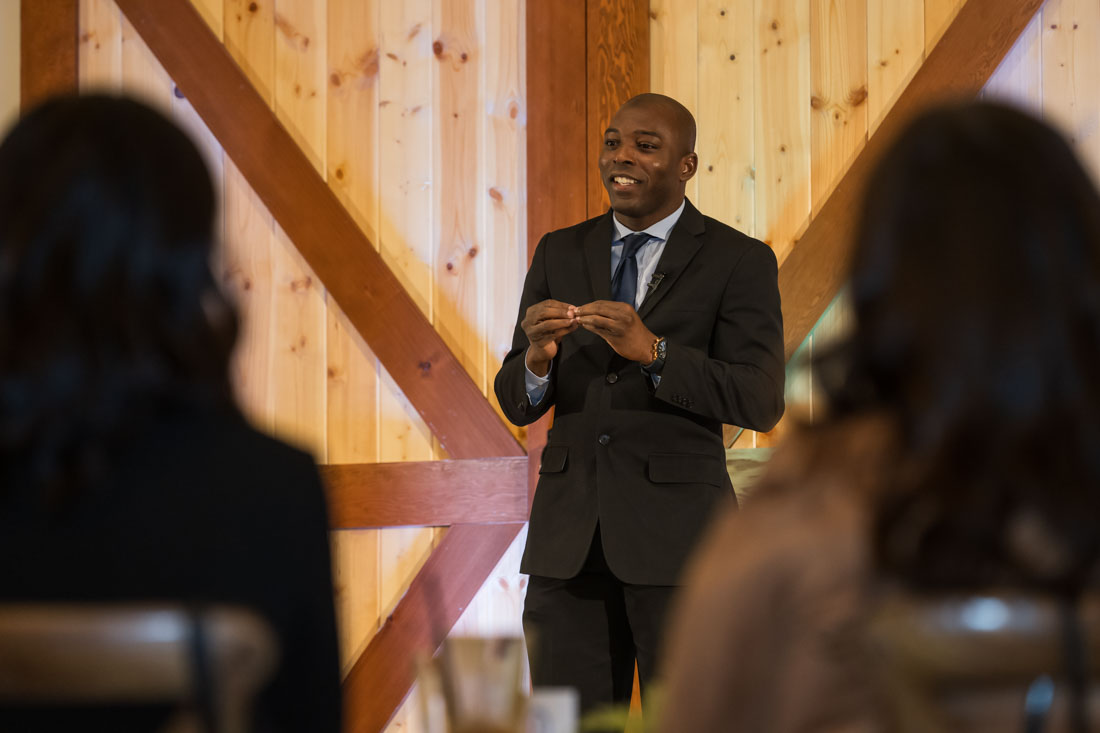
Scholarships can change an individual’s route through the world. Kabré also began working on how to bring educational material to people who would study closer to home. He founded YAM Education in 2021. The company’s name means intelligence in Mossi, giving an education venture with American college partnerships a name rooted in Burkina Faso.
In March 2023, he returned to Madison College for a formal agreement signing. YAM would license entrepreneurship and small-business curricula from the college he had once attended. The arrangement included six credit courses, covering subjects from marketing and customer contact to operations and field experience, as well as twenty noncredit professional-skills modules.
The technology had an everyday constraint to accommodate: internet connections are not equally dependable everywhere a student might want to learn. YAM was designed with offline capabilities. That choice matters because a course can be available online and still be inconveniently out of reach. Educational access has to survive the actual conditions in which someone opens the lesson.
The agreement also provided for digital badges, co-branded certificates, and a possible route toward further study at Madison College through credit for prior learning. Kabré was revisiting his own educational starting point as a business partner. A student’s past work could count toward a later opportunity, rather than disappearing at the next institutional boundary.
The Cooke Foundation’s alumni community recognized this work when Kabré received the 2023 Matthew J. Quinn Prize. A decade after his Transfer Scholarship, the relationship had acquired another chapter. He was being recognized for a venture intended to help other learners obtain skills and qualifications.
The return journey has a team
Leading Change’s work also acquired a physical home in Burkina Faso. Its Ouagadougou center formally opened in October 2020. That gave the organization a place for training, preparation, and contact with students. A mission conceived while Kabré studied in Wisconsin now had a local address where participants could turn up.
During a visit reported in July 2024, Kabré and director of operations Awa Maïga met the Burkina Faso team and students. They worked on an operational plan for 2024 and 2025. The center offered leadership and English instruction, communication skills, and college preparation. The work involved both an ambition for the future and the scheduling required to get there.
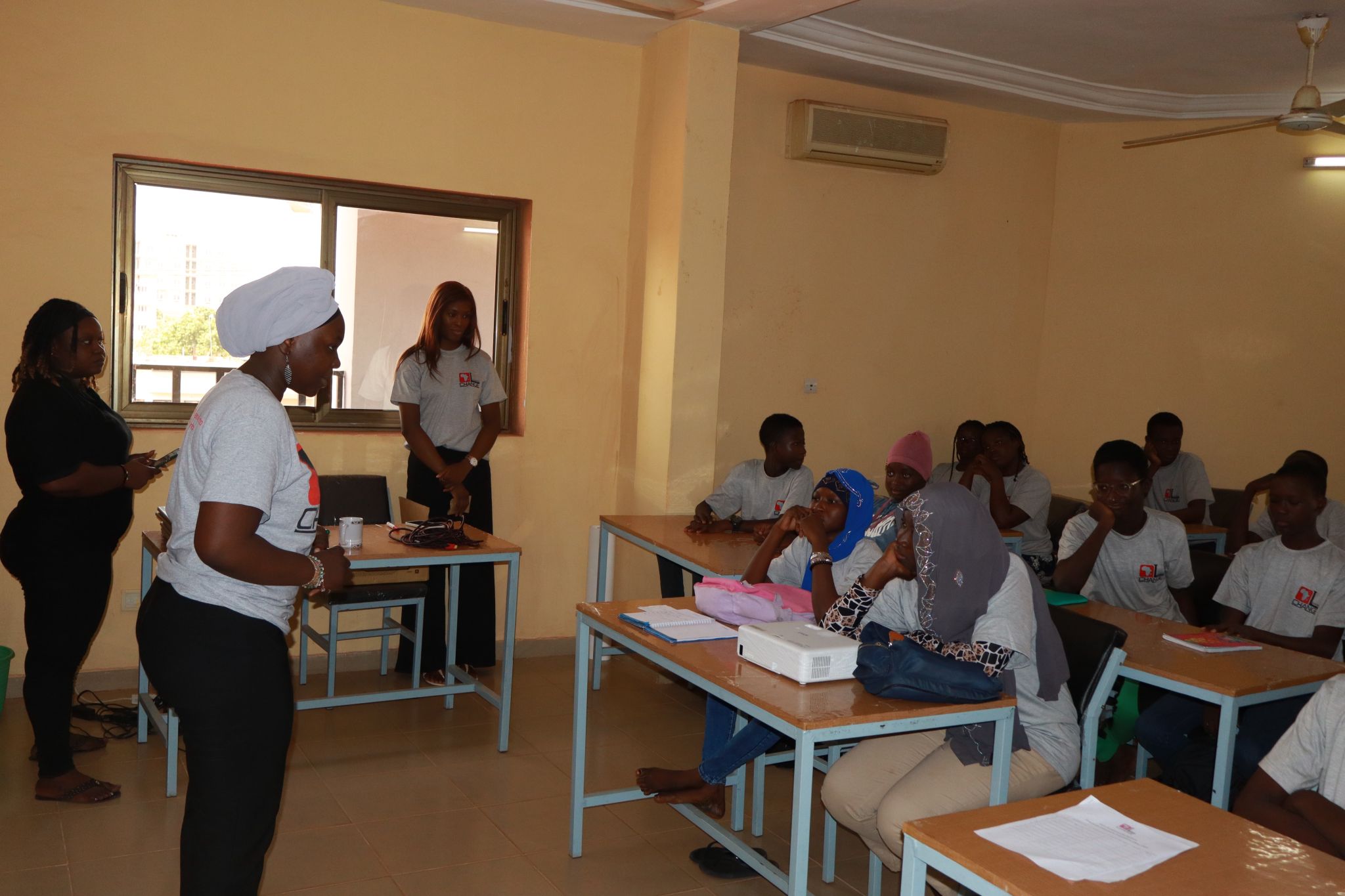
That team includes people responsible for university relations, scholar support, entrepreneurship, and rural development. Kabré’s original experience involved one person deciding to help him. The organization now distributes the work among people with different responsibilities. Mentorship becomes easier to sustain when somebody has agreed to answer the next question.
Its 2026 Leadership Academy plans included a ten-week virtual program on the YAM platform, with English and French cohorts, plus selected in-person activities in Burkina Faso and Mali. The format combines individual learning with assignments, group work, facilitated sessions, and mentorship. Students are asked to practice leadership with other people, where the concept becomes rather more demanding.
The post-secondary programs likewise address several stages of preparation. The undergraduate track combines English, public speaking, technology, and scholarship support. A graduate track helps with program selection, funding, and the practical transition to overseas study. Familiar parts of Kabré’s own route reappear as tasks that participants can prepare for with assistance.
A book with other people in it
Kabré’s book, Underwriting Dreams: A Journey of Leadership and Hope, carries a title that sits comfortably beside his accounting background. At its launch, his acknowledgments ran through the people who had helped him: Ouédraogo, Madison College president Jack Daniels, adviser John Leffin, accounting educator Kristen Fuhremann, professor Terry Warfield, and David Gay.
He credited Warfield’s teaching on servant leadership and Leffin’s guidance as the organization developed. The list is revealing because it gives the story a cast. Kabré regularly talks about effort and ambition, but his own account reserves space for people who supplied encouragement, instruction, and introductions. Even a book bearing one author’s name can keep a fairly crowded guest list.
In August 2025, the Wisconsin School of Business named him the first recipient of its BOLD Award, recognizing alumni within ten years of graduation. The announcement reported that more than 1,600 scholars had enrolled in Leading Change programs across Africa and the United States. It also recognized his work with YAM and Intro Group.
Fuhremann described his persistence and generosity, pointing to his habit of setting goals and assembling the pieces needed to pursue them. His response to the award directed attention to the teams at Leading Change and YAM, along with their supporters. The recognition had his name on it; the thanks took considerably more names to deliver.
The bread business remains a useful place to begin his story because it contains both sides of what followed. A boy organized his mornings around an ambition. A customer supplied help his earnings could not cover. Years later, the founder’s work still depends on joining those two things: someone prepared to do the work, and someone prepared to make the next step possible.