John Simmons gave a roomful of chief executives an uncomfortable thought to take home. A growing company could outgrow the people who had helped build it. Years later, newspaper publisher Matt Walsh found himself applying that thought to someone particularly awkward: Matt Walsh. Advice has a habit of becoming less attractive when it acquires your own name.
In July 2021, Walsh described how Simmons's remarks at the Gulf Coast CEO Forum had stayed with him as he considered a change in leadership at Observer Media Group. The lesson had travelled from a business gathering into a founder's reckoning with his own job. Simmons had supplied a question that survived the meeting.
It is a useful introduction to the Tampa executive. His career crosses accounting, venture capital, operating roles and public company boards. The connecting subject is what happens when a business needs something different from its leaders. Sometimes that means financing. Sometimes it means oversight. Sometimes the difficult entry on the agenda is a person.
The accountant changes seats
Simmons's earlier roles included audit partner at KPMG Peat Marwick, chief financial officer at Checkers Drive-In Restaurants, and vice president and controller at Eckerd Corporation. Those titles put him in different relationships with a business: examining its accounts, managing its finances and working inside its operating structure.
That distinction matters to the shape of his career. An auditor encounters the company's account of itself. A finance executive helps produce that account while dealing with the decisions behind it. Moving between those positions gives the résumé a change of perspective, even when the subject remains money.
He also served as president of Quantum Capital Partners, a venture capital firm, and president of New Homes Realty, a residential real estate company. Investment and property added further settings. His later experience included the chief operating officer and chief financial officer roles at DeMert Brands, a manufacturer and distributor of haircare products.
The result is an unusually varied list of businesses for someone now encountered through a staffing company's board. Restaurants, real estate and consumer products have different customers and different daily concerns. His work has crossed those boundaries without settling into a single industry identity. The job titles, rather than the products, tell the more consistent story.
KPMG Peat Marwick
Checkers
Kforce
A business can change its requirements
Since 2012, Simmons has led Growth Advisors. Its work concerns private companies, growth and liquidity transactions. His own description of his specialties includes financing and exit advice. The vocabulary sounds tidy. Anyone who has helped build a business can appreciate how much untidy human material sits beneath the word “exit.”
A company can be an investment, an employer and the principal project of someone's adult life at the same time. A decision about its next stage therefore reaches further than the arithmetic. Even a sensible change can be hard for the people whose work made that change possible.
Simmons's public speaking has addressed that intersection. In October 2014, he was named to a New York workshop at Private Equity International's Operating Partners Forum. Its subject was management, with the operating partner considered as mentor and coach. Melissa Henderson was the moderator; the other named panelists were Joelle Marquis and Jack Scott.
The announced questions included coaching's effect on value creation, developing managers, deciding when to end a manager's tenure and finding mentors. It was a practical agenda with little room for the comforting idea that management is mainly the distribution of encouragement. A coach sometimes has to explain why the current arrangement has reached its limit.
“The most painful part of being a growth company is outgrowing the loyal employees who have been with you from the start.”
John Simmons, recalled by Matt Walsh in 2021
The word “loyal” gives that observation its sting. It acknowledges a contribution while allowing that a company's needs can change. Gratitude and a staffing decision do not always point in the same direction. The challenge, as Simmons described it, included helping people find another place where they could be happy.
The nervous candidate remembers the smile
There is another view of Simmons from the receiving end of a consequential meeting. In a public recommendation, Tyler Goelz recalled being 19 and nervous when he met him during an acquisition involving Lifestyle Family Fitness. Goelz and a friend were being considered for work there. Senior executives and the head of IT were present.
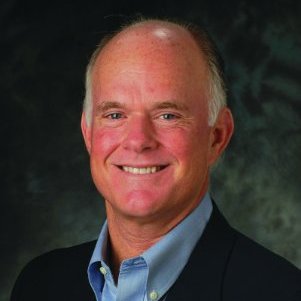
Goelz remembered his own mullet, which is an excellent detail for anyone tempted to make business history excessively solemn. More consequentially, he remembered Simmons's smile and ability to make a human connection. His account credits Simmons with reducing the strain of the encounter.
The two subsequently worked in the same office for almost four years, Goelz wrote, and kept in touch. It is one colleague's recollection, with the limits that implies. Still, it gives the management discussion a face: a young candidate measuring a senior executive by how the meeting felt, and remembering the answer years afterward.
Tampa was more than a business address
Simmons's regional connections reach back well before Growth Advisors. Leadership Tampa Bay lists him in its 1988 class and records his service as president in 1990. That is a different kind of leadership assignment from running a portfolio company, and an early marker of his involvement in the region.
The program brings business, civic and government leaders into discussions of regional issues. Its format includes meetings, questions and facility visits. In that setting, an executive's own company becomes one participant in a larger local economy. The perspective widens beyond a firm's immediate customers and balance sheet.
His university connections also include service rather than education alone. Simmons attended Loyola University New Orleans and later served on its board of trustees from 2009 to 2015. During that period he chaired the audit committee and was a member of the executive committee.
His college activities included leading Alpha Delta Gamma and serving as founding president of the Inter-fraternity Council. Student entertainment and accounting both appeared among his interests through committee and fraternity roles. Before the public company committees came the campus committees. Apparently, there was always another meeting.
In September 2017, ACG Tampa Bay listed Simmons as a speaker for an evening at the University Club of Tampa. The introduction paired his former chief executive role with experience in operations, finance and boards. It was another place where those parts of his career appeared together. For an audience interested in businesses and their development, the mix was the point: decisions about expansion have operating consequences as well as financial ones. The advisor on the program had held jobs on both sides of that discussion.
At Kforce, the questions reach into technology
Simmons joined Kforce's board in July 2014. He serves on its Audit and Corporate Governance committees and is designated an audit committee financial expert. The qualification fits the accounting background. The work now extends into subjects that would sit awkwardly in a traditional picture of the accountant's desk.
Kforce's audit committee responsibilities include oversight of cybersecurity, data privacy and risks associated with artificial intelligence. Simmons and fellow director Catherine Cloudman also form a working group for more frequent, detailed discussions with executive management about cybersecurity. Its participants include senior finance, operating, information security and internal audit leaders.
That assignment provides a concrete picture of his present board work. Financial oversight and technology risk meet in the same conversation. The directors have to hear from people with different responsibilities and keep the board informed. The machinery is a sequence of discussions, reports and follow-up questions, rather than one dramatic decision.
- 2014Joins the board in July.
- 2026Shareholders elect him again on April 22.
- 2029The newly elected three-year term expires.
On April 22, 2026, shareholders elected Simmons to another three-year term, expiring in 2029. The vote recorded 14,296,079 shares in favor, with 1,024,229 against and 48,269 abstaining. Derrick Brooks and Ann Dunwoody were elected in the same director class. The result extends an association that began twelve years earlier.
His board service also places him alongside people whose professional backgrounds differ from his own. The shared responsibility is attached to the company they oversee. In that setting, breadth of experience has a practical purpose: it gives the conversation more than one starting point.
There is a particular continuity in returning to a board while the questions change around it. Simmons arrived with experience in accounts, investment and operations; his current assignments include a closer look at digital risk. The products and vocabulary move on. The obligation to understand what management is doing, and to keep asking useful questions about it, remains.
The question that follows the meeting home
Read across these episodes and the most revealing change is in the scale of the conversation. A nervous young applicant wants to know whether he belongs. An executive team needs to decide who can lead its next stage. A director asks how the company understands a changing risk. Each encounter requires someone to make the matter discussable.
Simmons's career puts him in all three settings. That does not make every setting equivalent, or every answer easy. It does explain why the story of the newspaper publisher is such a fitting introduction. A passing piece of advice became useful when its listener was ready to consider its personal consequences.
The board appointments establish his formal responsibilities. The remembered meeting and the remembered remark tell us something about how business advice travels: through a person's impression of the speaker, and through a sentence that remains available long after the chairs have been pushed back. The next stage of a company may begin with a spreadsheet. It may also begin with someone finally taking an old question seriously.