A contact form is a wonderfully modest thing. A name, an email address, a little box for a question. Yet Syed Balkhi kept encountering a peculiar problem: people who wanted to put one on a WordPress website struggled to do it. Developers, meanwhile, kept being summoned back to clients for minor changes. The task was small. The interruption was not.
- Advice came first. WPBeginner gave Awesome Motive an audience and a view of its recurring problems.
- Software followed. Forms, SEO, analytics, payments, and backups became separate products.
- Acquisitions widened the toolbox. Sandhills, BuddyBoss, and aThemes brought established products and expertise.
- Buy by the job. Check platform fit, feature tiers, and renewal prices before building a stack.
The beginner is the clue
Balkhi founded WPBeginner in 2009 as a free resource for people learning WordPress. Awesome Motive grew out of that world: tutorials, reader questions, and the everyday business of making a website work. Its stated mission is to help small businesses grow and compete with larger ones. The useful detail is how closely the software follows the problems a tutorial reader might have tomorrow.
WPForms provides a neat example. In his launch account, Balkhi described a partnership with developer Jared Atchison and an approach that began with user experience. The objection was obvious: WordPress already had form plugins. But availability and usability are different matters, particularly when the person arranging the fields also has a business to run.
The idea took shape in 2014; the product launched in 2016. Its bear mascot, Sullie, had no grand origin story. Balkhi said it was simply cute. For a business built around making technical work approachable, a friendly bear seems a fairly economical design brief.
“We labor for Simplicity.”
Awesome Motive’s published core values
The commercial insight is easy to miss. A beginner’s confusion is evidence of unfinished work. Someone may have built every feature the customer needs, while leaving the customer unable to use it. Watch that customer closely and a mature software category can begin to look surprisingly young.
The servers failed before the idea did
OptinMonster supplies the less tidy chapter. Balkhi and Thomas Griffin initially planned a hosted service. During testing on WPBeginner in 2013, traffic overwhelmed the servers. Griffin’s retrospective describes a week of attempted fixes without meaningful progress. Paying for outside help looked expensive and uncertain, so they changed the architecture: a WordPress plugin launched that September.
Then customers on other website platforms bought it and requested refunds because they could not use it. The plugin had solved one constraint and exposed another. In April 2015, OptinMonster returned as a hosted application. The decision came from an inconvenient signal: people wanted the product, but the delivery method excluded them.
The distinction matters for anyone copying the company. A popular blog can deliver an audience, but it cannot confer infrastructure expertise. Distribution makes a product easier to test and can make its technical shortcomings harder to hide. Here, the founders preserved the customer problem while revising their means of solving it.
A toolbox that follows the customer
Awesome Motive now builds, buys, and manages a family of website tools. Think of a website owner moving through a working day. First comes publishing. Then being found. Then collecting an inquiry, accepting money, understanding the traffic, and protecting the work. The portfolio occupies many of those moments.
SeedProd · aThemes
AIOSEO · SearchWP
WPForms · OptinMonster
Easy Digital Downloads · WP Simple Pay
MonsterInsights · Duplicator
A photographer can build galleries with Envira Gallery. A nonprofit can collect donations with Charitable. An agency can use form and backup tools across client sites. Easy Digital Downloads serves sellers of files and software; AffiliateWP manages affiliate programs. Each brand has its own proposition, rather than disappearing into one enormous application.
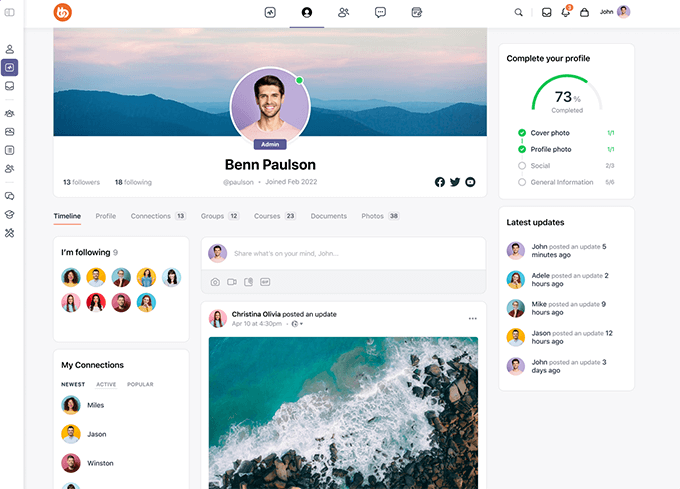
BuddyBoss extends that logic into communities and learning. Acquired through WPBeginner Growth Fund in July 2024, it combines profiles, groups, discussions, and learning integrations, with a separate platform for branded mobile apps. Awesome Motive’s announcement names Stanford, MIT, and Yale among its users. Small businesses remain the central pitch, but the portfolio reaches more varied institutions.
For a buyer, the attraction is practical: acquire specialist capabilities without commissioning each one from scratch. The company’s expertise sits in WordPress product development, beginner-oriented interfaces, marketing, documentation, and operating software brands. Its products compete individually: Gravity Forms offers form building, Yoast offers SEO software, and OptiMonk offers conversion campaigns. Common ownership does not settle those comparisons.
Free advice has a business model
The company says its software is used on more than 30 million websites. That is a claim about portfolio reach. Free editions, paid licenses, and overlapping installations make it quite different from a count of unique paying customers. The scale is useful context; multiplying it by a subscription price would produce fiction.
Company-reported reach. Free and paid usage are not separated in this headline figure.
WPBeginner explains its own economics plainly. Purchases of premium products help fund the site. It also earns referral fees when readers buy recommended services. That arrangement links education and distribution: a person arrives seeking help, learns a task, and may discover a paid tool along the way.
There is a responsibility attached to that convenience. The publisher may own or have invested in the software it recommends. Its disclosure makes that relationship visible. Readers can benefit from the instruction while still comparing competing tools. A helpful explanation deserves attention; a buying decision deserves its own inspection.
For other founders, the interesting mechanism is a feedback loop. Useful teaching attracts people with a shared problem. Their questions reveal adjacent problems. Products answer some of those questions, and product revenue helps support more teaching. This works only if the lessons remain useful enough to earn the reader’s return.
Buying the next missing piece
In an Acquire.com interview, Balkhi described acquisitions through the customer’s journey: landing pages, analytics, forms, and the gaps between them. He discussed familiar financial measures, including growth and churn, but strategic fit mattered. A business serving a small handful of enterprise accounts would sit awkwardly beside this broad website audience.
The published M&A program emphasizes profitable businesses, straightforward models, and at least two years of successful operations. It offers full acquisitions or minority investments and describes long-term ownership. Those are the company’s stated criteria and terms, rather than a promise that every transaction takes the same route.

Sandhills illustrates what a deal can mean on the seller’s side. In September 2021, Awesome Motive acquired its WordPress products and services, bringing businesses including Easy Digital Downloads into the portfolio. Sandhills founder Pippin Williamson subsequently focused on nature conservation. A software transaction can also be a decision about how someone wants to spend the next decade.
In April 2025, aThemes joined through the Growth Fund, adding Sydney and Botiga. Its announcement reported more than 130,000 websites using its themes and plugins. The distribution logic is straightforward: people learning to build a website also need its design. The portfolio can introduce a product to an audience already asking the relevant question.
The bill, the fit, and the useful lesson
The customer’s bill comes product by product. At the time of research, WPForms Basic displayed $49.50 for the introductory year, with $99 renewals. OptinMonster Basic displayed $9 a month, billed as $108 upfront for the year, renewing at $210 annually. Features, site allowances, and campaign limits vary by tier.
| Product | Intro year | Annual renewal |
|---|---|---|
| WPForms Basic | $49.50 | $99 |
| OptinMonster Basic | $108 | $210 |
Several free editions let a website owner start small. But a collection of affordable products can still become a meaningful annual expense. Write down the task, select the feature tier that actually performs it, and budget for renewal. Buy the missing capability when it becomes necessary.
Platform fit comes before the discount. WPForms requires a WordPress site; OptinMonster’s hosted service serves other platforms too. A business happy inside a hosted website builder may gain little from moving into a plugin stack. Likewise, a form will not create demand by itself. Someone still needs a reason to visit, submit, and buy.
The lesson available to a much smaller operator is pleasantly unglamorous. Observe one customer completing one task. Where do they stop? Which edit sends them back to the developer? Solve that obstruction, test it in real use, and keep the documentation close. Copying the acquisition program requires capital and distribution. Copying the attention requires an afternoon.
A distributed company learns in public
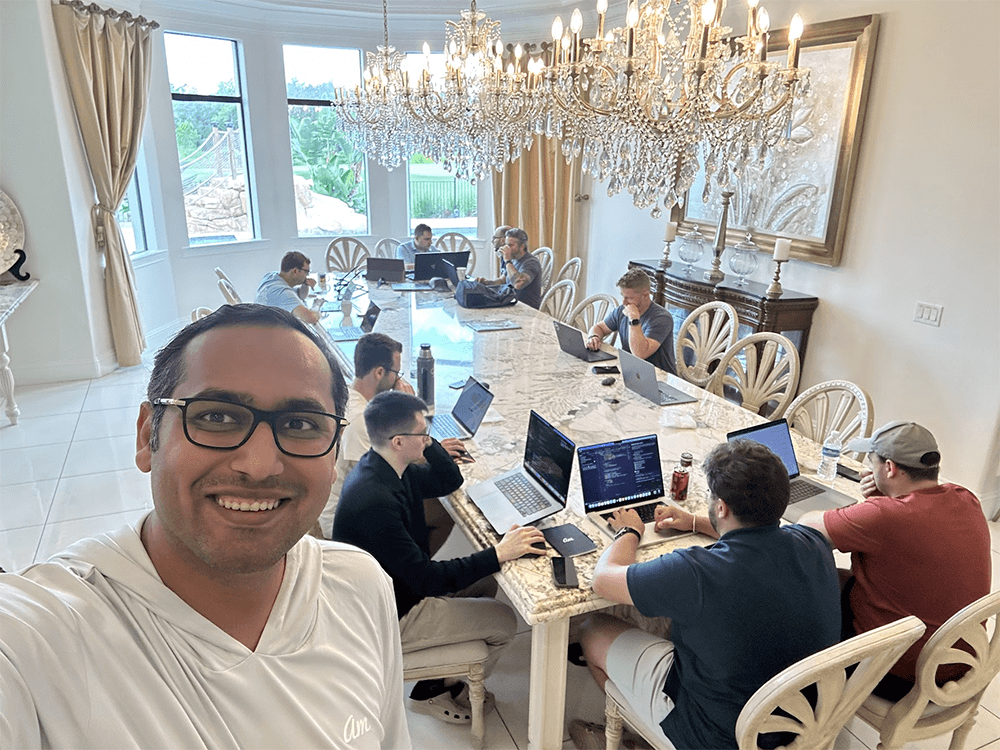
Awesome Motive describes itself as bootstrapped and fully distributed, with more than 300 team members across 50 countries. Its 2025 retreat brought people together in Antalya, Turkey. Balkhi reported switching internal presentations to ten-minute lightning talks, giving more colleagues room to contribute.

That year also included six product launches and AI hackathons. Balkhi’s review acknowledged uneven AI adoption, a useful admission amid the usual corporate enthusiasm. The old beginner problem had arrived inside the company: access to a tool and fluency with it are different achievements.
The experiments now reach the product line. On October 1, 2026, WPVibe announced six tested MemberPress recipes for AI assistants, covering jobs such as setting up membership tiers, creating coupons, and reporting revenue and churn. Its announcement says new memberships are saved as drafts for review. The familiar question has a new interface: can a website owner get a technical job done without becoming the technician?
Awesome Motive’s portfolio makes sense when viewed through that distinction. Websites need forms, payments, search, and backups. Their owners need to understand what those things do and how to make them work. A company that began by explaining the web now sells many of its working parts. The questions that started the business remain an unusually good place to look for its next product.