There are two people walking into a franchise restaurant. One wants lunch. The other wants to own the next location. They may stand beneath the same sign, but they require entirely different stories. The customer needs appetite, convenience and a reason to come back. The would-be franchisee needs evidence: economics, leadership, a market, a system worth betting on. Most communications agencies pick one audience. All Points Public Relations built its business in the uncomfortable space between them.
The Chicago firm calls itself an integrated franchise PR agency. The less polished description is more useful: it is a publicity shop that refuses to stop at publicity. Its teams work on media relations, social and digital campaigns, design, content, franchise-development strategy and lead qualification. A national article might create credibility. A local television segment might put a new shop on a neighborhood map. A LinkedIn post can keep an operator curious. Then a person follows up with the inquiry. The pieces are meant to behave like one machine.
01 · The originA newsroom instinct meets a teacher’s system
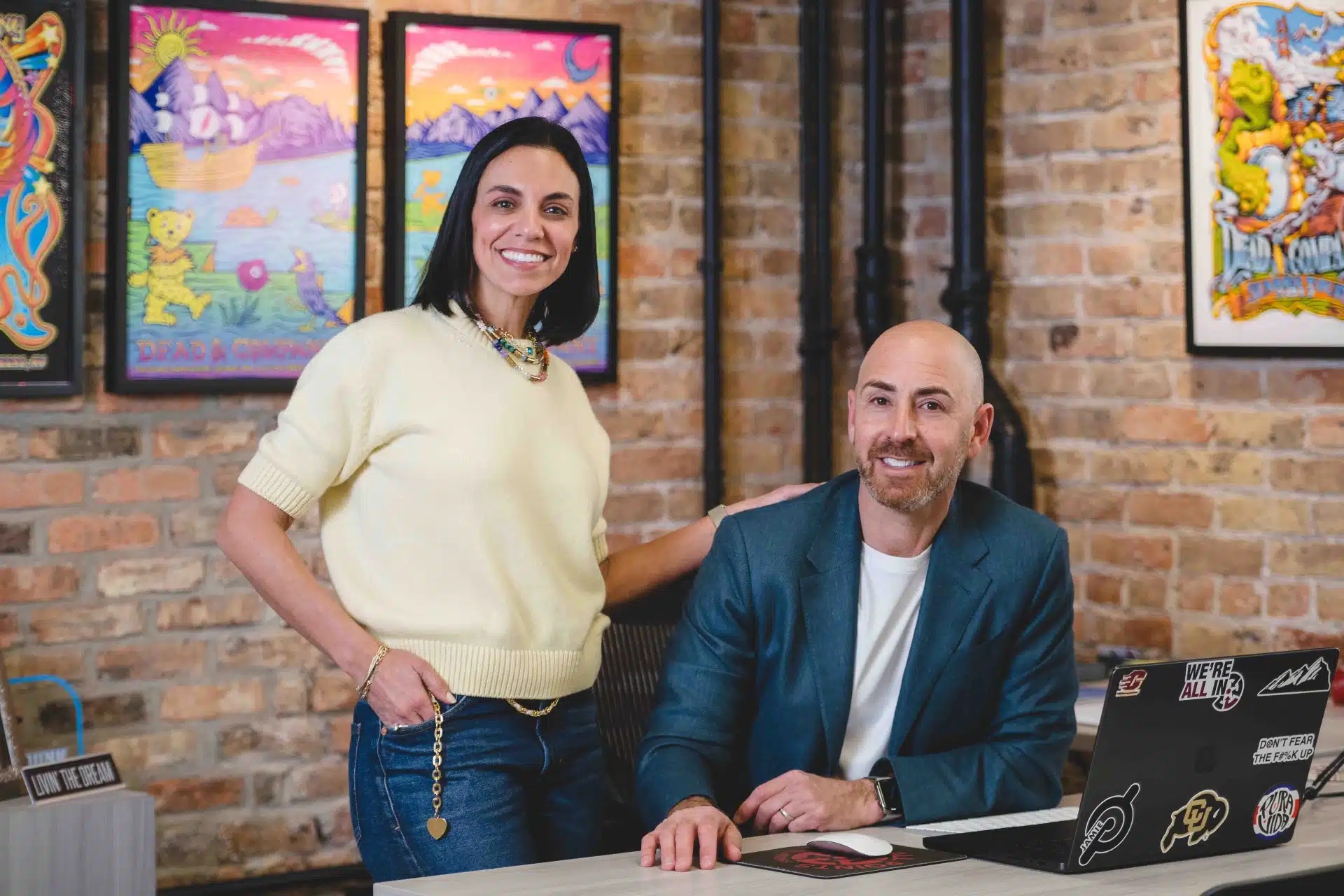
Jamie and Lauren Izaks founded All Points in August 2011. Jamie had worked as a television anchor, reporter and producer, then in corporate PR at Hyatt and in executive management at a national franchise agency. He knew what made an editor answer. Lauren came from education - Chicago public and private schools - with a taste for organization, technology and repeatable processes. If Jamie could see the story, Lauren could make sure an expanding team delivered it again next Tuesday.
The pairing sounds almost suspiciously tidy in retrospect. Newsrooms reward speed, judgment and a nose for relevance. Classrooms reward preparation, clarity and the ability to make a method work for different people. A franchise network asks for all of it at once. Every location is part of the same brand, but every owner, market and opening introduces a new variable.
“Persistence - it’s our one-word mission, guiding every facet of our work.”All Points Public Relations
“Persistence” can be empty agency copy. Here it has a practical meaning: do not confuse the first placement with the finished job. All Points plans campaigns early, repeats the central narrative across channels, adapts it to local markets and maintains contact with prospects long after a launch-day spike. The ambition is not simply to be seen. It is to make attention travel.
02 · The mechanismThe headline is only the first handoff
In ordinary PR, the glamorous moment is the clip. A founder appears on television; a trade title publishes the expansion plan; everybody forwards the link with three exclamation points. In franchise development, that moment may still be several steps from a useful conversation. The prospective owner has to understand the offer, trust the brand, request information and survive the inevitable cooling-off period. All Points’ unusual choice was to bring more of that journey inside the agency.
The All Points loop
That makes the business model broader than media relations but narrower than a general advertising conglomerate. Clients hire a specialist service team for a customized mix of public relations, creative and digital work, content and lead qualifying. The firm does not publish a rate card. That is sensible for work whose cost changes with the number of markets, openings, audiences and channels. It also means prospective clients must judge scope and accountability carefully before signing.
The likely buyer is not every small business with a press release. It is a franchise brand with a repeatable concept, credible unit economics, leadership available for interviews and enough coming news to sustain a campaign. All Points works with emerging concepts and established names across restaurants, wellness, automotive, technology, managed services, beauty and education. Its public roster has included Dairy Queen, Applebee’s, Little Caesars, Bojangles, Dave’s Hot Chicken, Wetzel’s Pretzels, Honey Baked Ham, Big Blue Swim School and Junk King.
03 · The proofImpressions are loud. Agreements are useful.
Agency case studies are usually museums of enormous numbers. All Points has those too. A campaign for Smalls Sliders reports more than 20 billion press impressions. The more interesting figures sit beside it: over 1,500 leads and more than 30 signed agreements. For Dill Dinkers, the firm reports two billion-plus impressions, more than 20 regional developer deals and over 10 franchise openings. Honey Baked Ham’s targeted push produced 30-plus press hits across more than 25 growth markets and a reported 64 million impressions.
These are company-reported results, not a controlled experiment. Press coverage is never the only force moving a franchise deal; concept quality, territory, financing and a sales team matter enormously. Still, the choice of metric reveals the agency’s worldview. It wants to be evaluated closer to the commercial outcome than a clip-counting publicist typically stands.
What failed first?
In the Honey Baked Ham brief, digital and other marketing were not producing the needed response in priority markets. The adjustment was a hyper-targeted earned-media push designed to give the opportunity third-party credibility.
What changed?
The story moved from broad brand fame to local investment relevance: market-by-market coverage, feature treatment and a clearer explanation of why an entrepreneur should consider the system.
That distinction matters. The point was not to abandon digital marketing. It was to give digital follow-up something credible to carry. Earned media, owned content and paid distribution perform different jobs. A campaign improves when the handoffs are designed in advance instead of patched together after the first tactic disappoints.

04 · The copyable partPlan early enough to be interesting
The most portable All Points lesson is also the least theatrical: begin sooner. The agency advises franchise-development teams to shape the next year’s narrative in the third quarter, when there is still time to find a real theme, prepare executives, coordinate markets and make each channel reinforce the same proposition. A press announcement invented the night before distribution is not a strategy. It is administrative weather.
A second lesson is to write for the two buyers separately. Consumer coverage can create heat around a restaurant or service; development coverage must explain why the business deserves an operator’s capital and time. The evidence, outlet and call to action change. A third lesson is to give the story a second and third life: executive LinkedIn posts, email nurture, local angles, conference conversations, retargeting and human follow-up. The reuse is not laziness when each version helps a different reader take the next step.
There are conditions where the method is a poor fit. No campaign can repair weak unit economics, an unprepared leadership team or a concept with no genuine news. It also struggles when the client expects instant national attention, cannot sustain several months of coordinated work or treats franchisees as distribution points rather than partners. The machine needs raw material. Persistence applied to a dull, unsupported claim merely makes the claim more persistent.
05 · The institutionA niche becomes a place to stand
All Points now reports more than 70 clients. Its advantage is not that a Chicago shop can perform every marketing discipline better than every specialist. It is that the disciplines share a franchise-specific context. The team understands the rhythm of openings and conferences, the tension between franchisor control and local authenticity, and the difference between a curious consumer and a qualified multi-unit operator. That accumulated pattern recognition reduces translation.
The company has also tried to make its internal habits visible. Lauren launched Positive Impact, a quarterly volunteering program, and the agency’s PRo Community Project donates integrated communications work to Chicago-area nonprofits. An annual Tech Day gives employees room to test tools and learn outside the churn of client delivery. The culture described publicly is earnest, structured and a little canine: the team page has included an official “Point Puppy.”
The firm’s current challenge is the same one facing every publicist: discovery is splintering. Search results, social feeds, creators, trade press and AI-generated answers now compete to tell a brand’s story. All Points has begun writing about search optimization and using AI to free time for what it calls human-centric work. The wager is consistent with the original company. Tools can compress research and production. They cannot persuade a skeptical reporter, reassure a franchise candidate or notice that a national story needs a completely different local doorway.
The clever thing All Points did was not invent integrated marketing. It chose a market where integration is unusually necessary, then put the awkward handoffs near one another. National and local. Consumer and investor. Attention and follow-up. The publicist still wants the headline. The business operator simply asks what happens on Monday morning.