A reporter had a practical suggestion for Avinoam Naor. Instead of spending money on a road-safety conference at the Hilton Tel Aviv, why not paint more crosswalks? There was something deliciously awkward about the question. Here was a software entrepreneur convening ministers and dignitaries to discuss a national problem. Outside, presumably, there were streets in need of paint. A bucket and a brush offered a rather economical rebuttal to the conference industry.
Naor’s answer was that painting crosswalks belonged to the government. His job was to make public policy harder to ignore. He recalled the exchange in 2014 while explaining what philanthropy could accomplish. The point of assembling powerful people was to change their decisions. It was an argument about who should take responsibility, disguised as a disagreement about road markings.
That distinction runs through his work. Naor, usually known as Avi, helped found Amdocs and served as its president and chief executive from 1995 to 2002. He subsequently committed much of his time to road safety, education and community initiatives. Across those projects, the recurring question is what happens after the money has changed hands. A donation can be completed in minutes. The work it is supposed to finance may take years.
Before the conference, the telephone directory
Naor was born in Haifa in 1948 and grew up in Kiryat Tivon. He studied computer science at the Technion, graduating in 1974. His early working life included Tadiran. These were years when Israeli computing careers were being constructed alongside the institutions that would train the next generation. His degree came from the Technion’s first graduating computer-science class.
In 1982 he joined the founding team of the business that became Amdocs, working alongside Boaz Dotan. The early territory was telephone directories. Naor worked on infrastructure software for communications projects and on a computerized directory-assistance system for Israel’s Golden Pages. This was technology devoted to helping people find things and helping companies organize the information underneath a service. A telephone directory rarely inspires a standing ovation. It does, however, require things to be in the right place.
He served as senior vice president before succeeding Dotan as president and CEO in 1995. In 1998 he led Amdocs’ initial public offering on the New York Stock Exchange. Acquisitions and further offerings followed. The engineer’s working world had expanded into the coordination of a public company and its subsidiaries, with customers depending on software that supported their own operations. Getting the system to function mattered beyond the presentation in which it was sold.
- 1982Amdocs founding team
- 1995President & CEO
- 1997Or Yarok established
- 1998Amdocs goes public
- 2002Leaves CEO role
A private loss becomes a public demand
In 1995, the year he became Amdocs’ chief executive, Naor’s son Ran died in a road accident at nineteen. In 1997 Avi and his then-wife Yona established Or Yarok, Hebrew for Green Light. The organization gave his public work a focus that would endure long after his executive tenure. Personal loss and corporate responsibility occupied the same period of his life; the familiar picture of a businessman finishing one career before discovering a cause gets the chronology wrong.
Or Yarok developed an approach combining community activity, research and pressure on policymakers. Its work reached across schools, local authorities and other public institutions. Naor brought business practices into the organization, including goals, research and measurement. A sympathetic audience was useful, but the larger ambition required government action and a public willing to expect it.
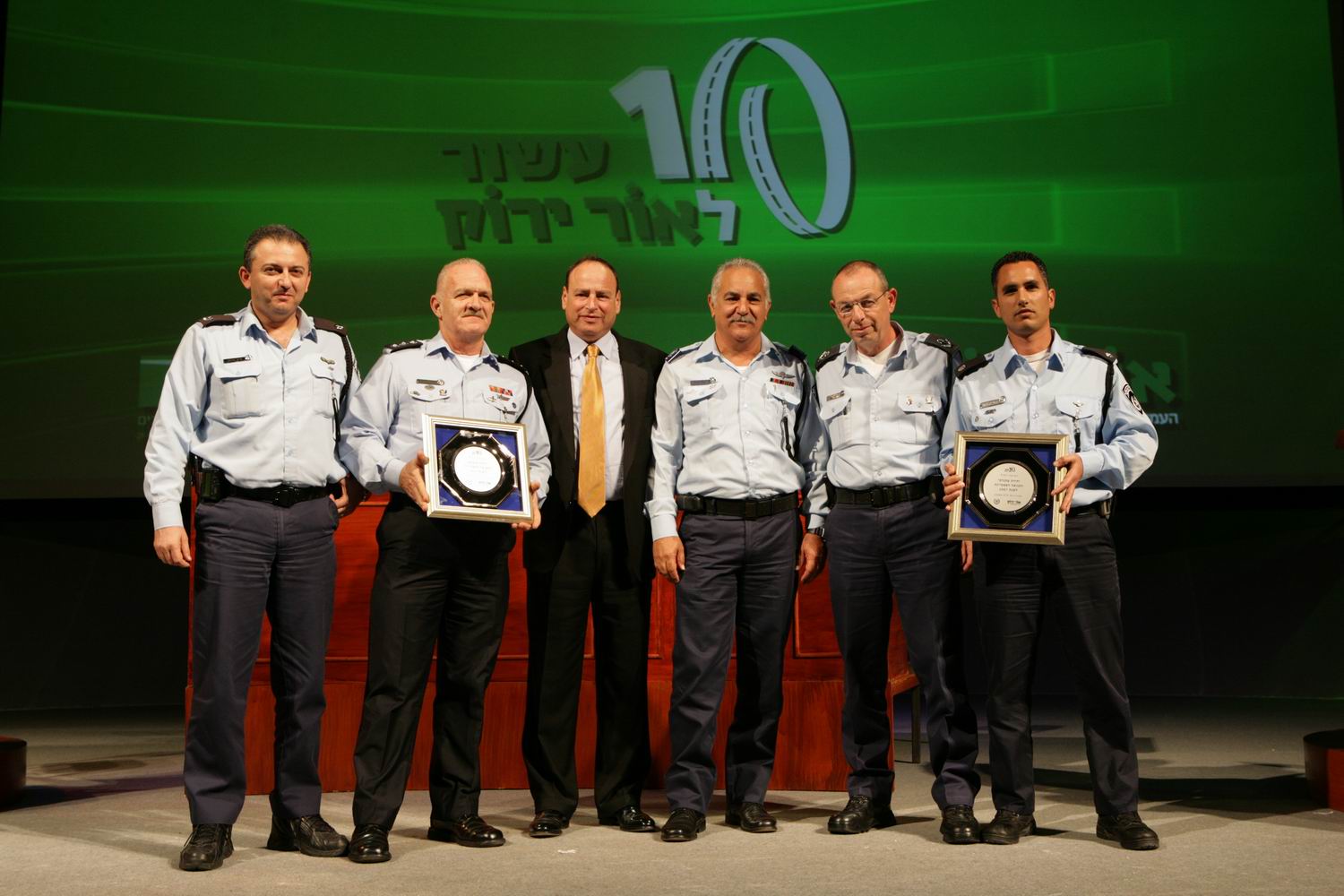
The research infrastructure grew too. Or Yarok established the Ran Naor Foundation for road-safety research in 2004, supporting academic work and researchers. A Ran Naor research center followed at the Technion in 2007. The connection to his university had become more than an entry on a résumé. It provided another place to turn a public concern into questions that could be investigated, tested and discussed.
Naor left the Amdocs chief executive position in 2002. His departure from the board followed in 2004. Those dates matter because they show a sustained rearrangement of his time. Giving money while holding a demanding job is one form of participation. Making room in the calendar for the work itself changes the relationship. Meetings, arguments and follow-through become part of the contribution.
The Sunday appointment that did not happen
Naor once recalled an American Amdocs chairman declining a Sunday meeting. A fire had damaged the chairman’s church, and he was going to help clean it with friends. Naor observed that this was someone wealthy enough to buy a cleaning company. Nevertheless, he was going himself. The episode stayed with him as an example of obligation expressed through personal effort.
There is a useful inconvenience in that kind of giving. A bank transfer does not ask its sender to cancel anything. Cleaning a building does. In Naor’s account, the example helped shape his understanding of what successful people owe the societies around them. “I have a social commitment,” he said. His subsequent projects repeatedly involved accepting a seat at the table, then returning to it.
“I have a social commitment.”
Avi Naor
A family gift acquires a five-year horizon
Avi and Eti Naor’s involvement with Ramat Hadassah Youth Village began with gifts celebrating the birth of their son Eyal. They arranged for the money to be donated, expecting a single contribution. Meeting the people at the village changed the scale of the commitment. A visit to deliver a gift became the beginning of a longer relationship, with a strategic program and a five-year family commitment.
The Oran Foundation, established in 2002, supported children and young people through educational settings including youth villages and boarding schools. Ramat Hadassah, in the area where Naor grew up, and Kiryat Ye’arim became particular commitments. Education offered a different time horizon from a software delivery. The result would emerge through a young person’s progress, with the ordinary complications that make an individual life resistant to a tidy forecast.
Naor described applying a strategic plan, then an operating plan, to the work. In a 2014 account, he pointed to progress in matriculation examinations and access to technological education at Ramat Hadassah. The useful part of that account is the attention to an outcome that can be checked. Money spent is easy to total. Whether a student leaves with better prospects demands a longer look.
The effort also expanded beyond a single village. He helped establish the Public Forum of Youth Villages and Boarding Schools, bringing philanthropic and professional partners together around educational provision. At Shahaf, established in 2010, the focus widened to communities working in Israel’s geographic and social periphery. The institutional shapes differed, but each required people to cooperate across organizational boundaries.
The donor has colleagues, too
Naor’s public argument about giving extends to the people doing it. In 2008 he described the importance of Israelis and overseas Jews working as partners. By 2014 he was elected the first Israeli co-chair of the Jewish Funders Network, alongside Dorothy Tananbaum. The appointment put him in a position to help shape the relationship he had been discussing. A network of donors is also a network of assumptions about whose job it is to contribute.
He has been involved in Committed to Give, an initiative encouraging Israeli philanthropy. The argument carries a demand for local participation: people who have prospered in Israel should help support its social institutions. Cross-border partnerships still matter. So does having Israelis contribute to the work and the responsibility. Nobody enjoys discovering that the committee’s most enthusiastic participant has forgotten to bring a wallet.
Recognition followed the work. Naor received the Presidential Medal of Distinction in 2013 and the Israel Prize for Lifetime Achievement in 2014. Honorary doctorates from the Technion and the University of Haifa connected his social activities with the academic institutions of his home region. The awards added a public record to a career already divided between commercial and civic organizations.
A startup is allowed to disappoint
His departure from Amdocs did not end his business life. He became chairman of Retalix, and in 2016 FST Biometrics announced his appointment as chairman following an investment. Later he co-founded Preciate with Eyal Fisher. The idea addressed a familiar retail frustration: physical shops had customer information, but an employee greeting someone at the door could not necessarily use it to offer a more personal service.
Preciate proposed facial recognition as the bridge. In 2019, Fox announced an arrangement giving it an option to acquire a stake. The proposition connected software, customer knowledge and the operation of a store. It also depended on shoppers accepting a system that recognized their faces. Technical capability and public willingness had to arrive at the same shop together.
They did not produce a lasting business. In November 2021, Preciate was reported to be closing after failing to secure further investment. Naor acknowledged the difficulty of persuading customers to register their images. The ending belongs in his story. Experience and capital can buy a venture time, but they cannot oblige a market to agree. Even an entrepreneur who has taken a company public must sometimes close the smaller company he hoped would grow.
When the person asking for action gets the job
Naor eventually moved from campaigning outside the state’s road-safety machinery to chairing the National Road Safety Authority. His appointment process began in 2021, and he entered the role in 2022. It placed a longtime critic of government performance inside the institution expected to deliver a response. There would now be less distance between the demand for a plan and responsibility for advancing one.
He resigned in July 2023. In his departure letter he described work on a multiyear strategy and a regional pilot, but said the conditions for the national program he had sought were lacking. The episode puts a limit on the easy transfer of executive experience into public administration. An organization can develop a plan and still struggle to obtain the backing and resources required to carry it out.
His institutional connections continue. The Technion’s February 2026 list includes Avinoam Naor as a full member of its Board of Governors. Shahaf’s board lists him as a director. Away from those tables, a 2022 profile recorded two interests: amateur carpentry and cycling. Carpentry seems an agreeable companion to committee work. At least the piece of wood stays where it has been put.
Return to the reporter and the crosswalks, and the tension remains. There is paint to buy, a government to persuade, a program to fund and a result to examine. Naor’s career has involved trying to connect those activities without letting one excuse the neglect of another. The check matters. So does what its writer is prepared to do the following morning.
Follow the work
Organizations, conversations and further reading.
- Amdocs company profile
- Or Yarok
- Shahaf Foundation board
- Avi Naor on LinkedIn
- Naor’s essay on philanthropic responsibility
- The Jewish Agency interview
- 30 Minutes or Less interview · Hebrew · 2020
- Listen to the interview on Spotify
- Or Yarok on YouTube · organization channel
- Preciate’s closure · November 2021 · Hebrew
- His authority resignation · July 2023 · Hebrew
- Technion Board of Governors · February 2026