Before Henry Taub’s payroll business could become automatic, somebody had to catch the bus. In the early days, Taub delivered payrolls around Paterson, New Jersey, without a car. The future co-founder of Automatic Data Processing was carrying the finished work to the people who needed it. There is something useful about beginning a technology story with a bus timetable. It keeps the word “service” honest.
Taub started Automatic Payrolls in 1949, aged 21. Its first office was above an ice cream parlor; a hotel basement followed. His younger brother, Joseph, helped build the operation. Frank Lautenberg joined in 1952 as its first salesman. The work involved long days, repeated calculations and the weekly obligation to get everybody paid. If there was glamour upstairs, it presumably came in a cone.
The company’s first year brought in $2,000. By 1975, when Lautenberg succeeded Taub as chief executive, annual revenue was $155 million. Between those figures sits a quarter-century of learning how to make a promise repeatable. Taub’s particular talent was seeing how an unremarkable task could support a business, provided it was done carefully enough that customers could stop worrying about it.
A childhood with somewhere to go
Born in Paterson on September 20, 1927, Taub grew up in the city’s working-class immigrant community. His father, Morris, worked as a weaver before becoming a junk dealer. The neighborhood around Carroll Street supplied the setting for a childhood Taub later remembered with affection. His account of the Depression years stressed the attention parents gave their children and the faith families placed in education.
He skipped two grades at school and completed his New York University accounting degree in 1947, at 19. The speed is striking, but his later recollections put the achievement in a family context. Education was the route immigrant parents hoped would open possibilities for their children. In an interview about his upbringing, Taub called education “the ladder with which you could pull yourself out.”
Accounting gave him a close view of how small employers functioned. His opportunity emerged when a client failed to issue its payroll on time. The disruption suggested a service other businesses might buy: let someone else handle the calculations and preparation. There was nothing abstract about the need. A paycheck has a date attached, and the person waiting for it usually has plans.

Three people, three jobs, one deadline
The early partnership had a practical division of labor. Henry planned the system and strategy. Joe managed operations. Lautenberg sold the service. Their skills gave the enterprise a way to move beyond the capacity of a single accountant. A dependable process needed customers; a persuasive salesman needed a service that would survive the promises he made.
Lautenberg’s later account of those years contains seven-day working weeks and 12-hour days. It also includes cleaning the office before leaving. Taub insisted on preparing the place for the following day. That detail makes the company’s origins easier to picture than a procession of corporate milestones. The founders had to finish the payrolls and then attend to the office they would return to.
For customers, outsourcing payroll meant trusting an outsider with a task whose errors were immediately personal. Taub’s business depended on accuracy, speed and timely delivery. Those were commercial qualities, but they were also everyday courtesies. A system that relieved an owner of paperwork still had to respect the employee at the other end of the calculation.
The computer arrived after the idea
Automatic Payrolls began with manual processing and bookkeeping equipment. Punch-card capability arrived in 1957. In 1961 the business went public and leased an IBM 1401 computer. By then it was operating as Automatic Data Processing. The sequence matters: Taub had spent years building the service before the computer arrived to increase what it could handle.
At the 1961 milestone, ADP had 300 clients and revenue above $400,000. In 1962 it added brokerage services, doing back-office processing for Wall Street firms. Dealer services followed in 1972, bringing accounting and inventory services to automobile dealers. The company found adjacent tasks that shared an essential characteristic: customers had necessary administrative work they were willing to entrust to a specialist.
Taub served as ADP’s chief executive from 1949 to 1975. His connection continued through decades of board service, from 1961 to 2009, and as honorary chairman from 1986 until 2011. The business grew beyond payroll while retaining the original bargain of taking recurring work off a customer’s hands. Its machinery changed considerably; the deadline remained a deadline.
- 1949Manual payroll service
$2,000 first-year revenue - 1961Public offering + IBM 1401
300 clients - 1975Lautenberg succeeds Taub as CEO
35,000 clients
A boardroom was another place to do the work
Henry and Marilyn Taub established their family foundation in 1967. Paterson remained part of its purpose. The foundation’s work continues to include communities in Bergen and Passaic counties, with particular attention to places with substantial needs. The geography is telling. His business traveled far beyond New Jersey; his giving kept a connection to where he began.
His service at the American Jewish Joint Distribution Committee stretched from 1975 to 2011. He chaired its budget and finance committee, became president from 1981 to 1984, and then board chair in 1985 and 1986. During his presidency he traveled to Poland with Marilyn and other JDC leaders, visiting Warsaw, Auschwitz and Lodz as the organization renewed direct contact with the Jewish community there.
He also helped establish the Taub Center for Social Policy Studies in Israel, created in 1982 under the leadership of Taub, Herbert M. Singer and JDC. The center brought researchers to questions of economic and social policy. It gave his interest in institutions another outlet: assembling the people and information needed to make consequential decisions.
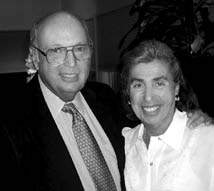
At AVI CHAI, where he became a trustee in 1984, colleagues remembered detailed questions and careful consideration of new initiatives and appointments. Arthur W. Fried recalled that on retreats in Israel’s Carmel Mountains, Taub made a point of speaking with every member of staff. It is a small social habit with a practical consequence: the people doing the work knew someone was paying attention.
Education, with buildings attached
At the Technion, Taub’s commitment became particularly tangible. He served as president of the American Technion Society from 1974 to 1976 and chaired the Technion’s international board of governors from 1990 to 2003. Henry and Marilyn supported the science and technology center that housed computer science, alongside faculty recruitment and a fund intended to support the institution’s future.
The computer science faculty remembered two building commitments: support for its earlier home and, later, the building that succeeded it. Recruiting faculty also mattered to Taub. Supporting a university involves buildings, but it also involves attracting people who can fill them with worthwhile work. Technion awarded him an honorary doctorate in 1983 and its medal in 1998.
At NYU, his own university, he became a trustee and supported the Taub Center for Israel Studies, established in 2003, as well as a professorship in public service and leadership. These were different institutions with different purposes. Together, they show how often his philanthropy returned to the chance to study, teach or improve public life.
“It was always a question of doing things better.”
Henry Taub
Payroll offered fewer arguments than basketball
Taub’s portfolio also included a rather more public enterprise. He and Joe belonged to the seven local businessmen who co-owned the New Jersey Nets for nearly two decades. Known as the Secaucus Seven, the group endured losing seasons, coaching changes and disagreements. Basketball provided an arena where organizational effort did not reliably produce the desired numbers.
In 1996 the owners chose Henry as chairman while trying to improve the franchise’s fortunes. Two years later they sold to another group of New Jersey businessmen. The episode adds a welcome wrinkle to a career easily reduced to orderly growth. A basketball team could make even an experienced business operator wait, watch and negotiate.
The next person’s chance
Taub died on March 31, 2011, aged 83. He and Marilyn had been married for 53 years and had three children. His public record reaches across companies, universities, community organizations and a basketball franchise, but education supplies a thread that is particularly easy to follow into the years after his death.
ADP’s scholarship program began in 1974. In 2012, the ADP Foundation introduced the Henry Taub Scholars Award, offering selected children of employees support for undergraduate study. In 2024, National Merit Scholarship Corporation identified Boston University student Katherine Wu as an ADP Henry Taub Memorial Scholarship recipient. A belief inherited from immigrant parents had become assistance for another generation’s education.
On June 10, 2024, ADP marked its 75th anniversary by ringing Nasdaq’s opening bell. The company recalled beginning with one New Jersey client; by that anniversary it served more than a million clients worldwide. The ceremony belonged to a business several generations of technology removed from Taub’s first office. Its founding obligation was still recognizable: finish the work, deliver it on time, and give somebody else room to get on with their day.