Look at the tablet. Its case is transparent. Behind the screen are the familiar little squares of digital life: music, messages, books, a camera. Then come the less familiar ones: law library, commissary, forms. A Securus tablet compresses a peculiar world into a touchscreen. The person holding it can reach beyond the prison walls. The institution still decides which doors open.
- Aventiv runs Securus Technologies, Securus Monitoring and JPay.
- Agencies choose the systems; incarcerated people, families and staff use them.
- Free learning, paid services and public funding can coexist on the same platform.
That arrangement explains Aventiv Technologies better than a catalogue does. The company serves two audiences whose wishes overlap without matching. A correctional agency wants security, workable administration and dependable equipment. A family wants an ordinary conversation without an extraordinary amount of friction. Every product has to live between those expectations.
01 The buyer isn’t always the user
Aventiv says it serves more than 1,800 agencies nationwide. Its Securus business supplies calling, video connections, messaging and tablets. JPay handles money transfers into trust accounts. Securus Monitoring supplies electronic monitoring for agencies supervising people in custody and in the community. The portfolio reaches from the family living room to the officer’s workstation.
For a relative, the useful starting point is the facility. Its approved services determine whether a call, message or video session is available. Securus offers prepaid calling through AdvanceConnect and video sessions through Video Connect. Funding the wrong account creates another headache: Securus explicitly warns that its Debit account is not a commissary account. One company’s ecosystem can still contain several wallets.
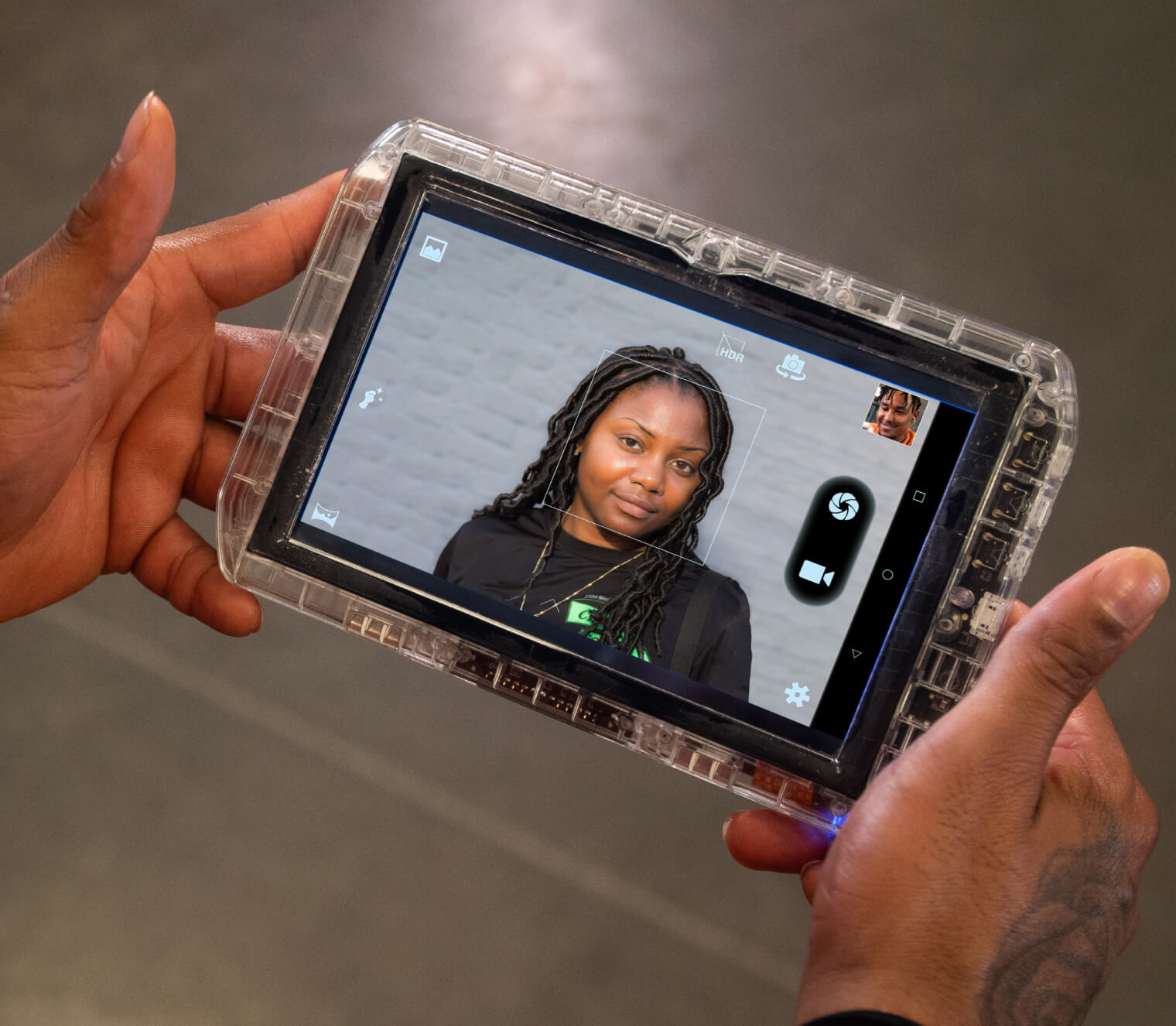
For agencies, the proposition is broader. Communications arrive with infrastructure, administration and investigative tools. This helps explain the company’s position in the market: specialist corrections technology, spanning hardware, software and financial services. ViaPath competes across many of the same categories. Aventiv’s distinction is its particular combination of brands, installed infrastructure and integrations; education and tablets themselves are available elsewhere.
02 The phone grew a classroom
The Aventiv parent began in October 2019, following a corporate reorganization. Its operating businesses have older histories: Securus acquired JPay in 2015, and Platinum Equity acquired Securus in 2017. Reading the parent’s history as a startup origin story misses the point. Aventiv inherited a working business and the arguments surrounding it.
In January 2020, incoming chief executive Dave Abel announced a transformation program emphasizing affordability, accountability and reform. The announcement explicitly acknowledged past criticism. It also pledged at least $40 million for facility communications infrastructure and $30 million for innovation that year. Those were commitments, rather than an audited statement of completed spending.
The product direction became tangible in August 2024, when Securus unveiled EVOTAB for incarcerated users and Officer T80 for staff. Secure cellular connectivity and cloud delivery were intended to reduce reliance on complicated equipment inside facilities. In August 2025, Securus One added a central administrative login, while OMNILens addressed investigative workflows.
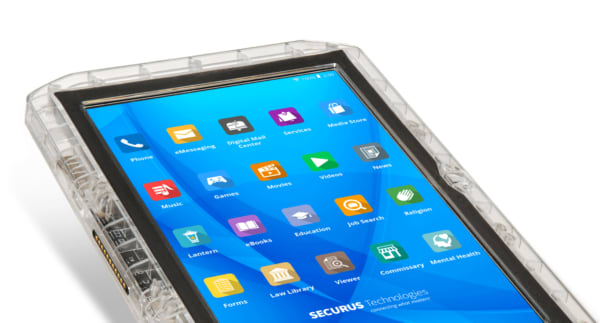
Chief product officer Jessica Lust described the underlying problem plainly: “For too long, agencies have struggled with fragmented systems that slow operations and hinder investigations”. The same administrative logic makes room for outside providers such as Edovo and Workbay. A platform becomes more useful when staff can reach its parts without repeatedly starting over.
Education supplies the most hopeful use case. In November 2025, Securus reported that its Edovo integration had reached more than 660,000 incarcerated learners, delivering over 23 million learning hours and three million completed courses. The self-paced learning is free to users. These are company-reported engagement figures. They establish use; they do not, by themselves, establish that this particular platform reduces reoffending.
cumulative learning hours reported by Securus
03 Every connection has a payer
A free lesson does not make the entire tablet free to use. Securus lists paid services including communications, entertainment and, where applicable, subscriptions. Prices and availability depend on the facility and contract. There is no single Aventiv price tag. Public funding can change the arrangement: California’s published Securus contract provides for state reimbursement of designated services made available without charging incarcerated users or their contacts.
The financial-services history deserves equal attention. In October 2021, the Consumer Financial Protection Bureau ordered JPay to provide $4 million in consumer redress and pay a $2 million penalty over debit release-card practices. The bureau found unlawful compulsory accounts and unfair, abusive or deceptive conduct involving fees. People leaving custody could face charges to access money already owed to them.
The person who signs the contract and the person who lives with it can want different things.THE CENTRAL TENSION
That is a concrete product lesson: a smooth institutional transaction can produce a bad consumer experience. The design has to account for someone with limited money, limited choices and little room for error. Calling the service convenient does not settle whether its terms are fair.
04 A reset behind the screen
The balance sheet needed its own redesign. Aventiv announced refinancing in March 2024, then a lender-backed recapitalization agreement in April 2025 that included $360 million in interim financing. The debt-for-equity exchange completed in July 2026, transferring ownership to a lender-led group. Brian Evans became CEO in August; Kevin Elder became president.
Financial pressure produced a change in ownership even as products kept evolving. The practical lesson travels beyond corrections: connect the services, simplify access and measure actual outcomes. It works only if reliable infrastructure, affordable terms and facility policy let people use what is offered. A classroom icon means little when the classroom is unavailable. The interesting question about that clear-cased tablet is what happens after someone taps it.