The bracelet makes a small buzzing sound. Every half hour, it samples the moisture leaving its wearer’s skin. There is no appointment to remember, no breath tube to find, no convenient pause for the weekend. SCRAM Systems built its signature product around a simple weakness in supervision: a test tells you something about a moment. The hours between tests remain a problem.
- SCRAM CAM samples for alcohol every 30 minutes, day and night.
- Courts buy a combination of devices, software, and people who support the program.
- The value depends on what happens after an alert, and who bears the cost.
01 Six years to find a backer
Electrical engineer Jeff Hawthorne and entrepreneur Kirby Phillips had worked on handheld breath testers. According to longtime investor and former CEO Mike Iiams, the idea for monitoring alcohol through skin emerged in 1991. Financial backing took until 1997, when Alcohol Monitoring Systems was founded.
The first obstacle was getting the experiment financed. Iiams began investing in 1999; a proof of concept and clinical study in 2001 strengthened the case. He later recalled contributing $100,000 or $200,000 a month for four early years while paying himself a dollar a week. Commercial launch came in April 2003. The distance between a clever observation and a usable court tool had been measured in years.
02 The bracelet needs a back office
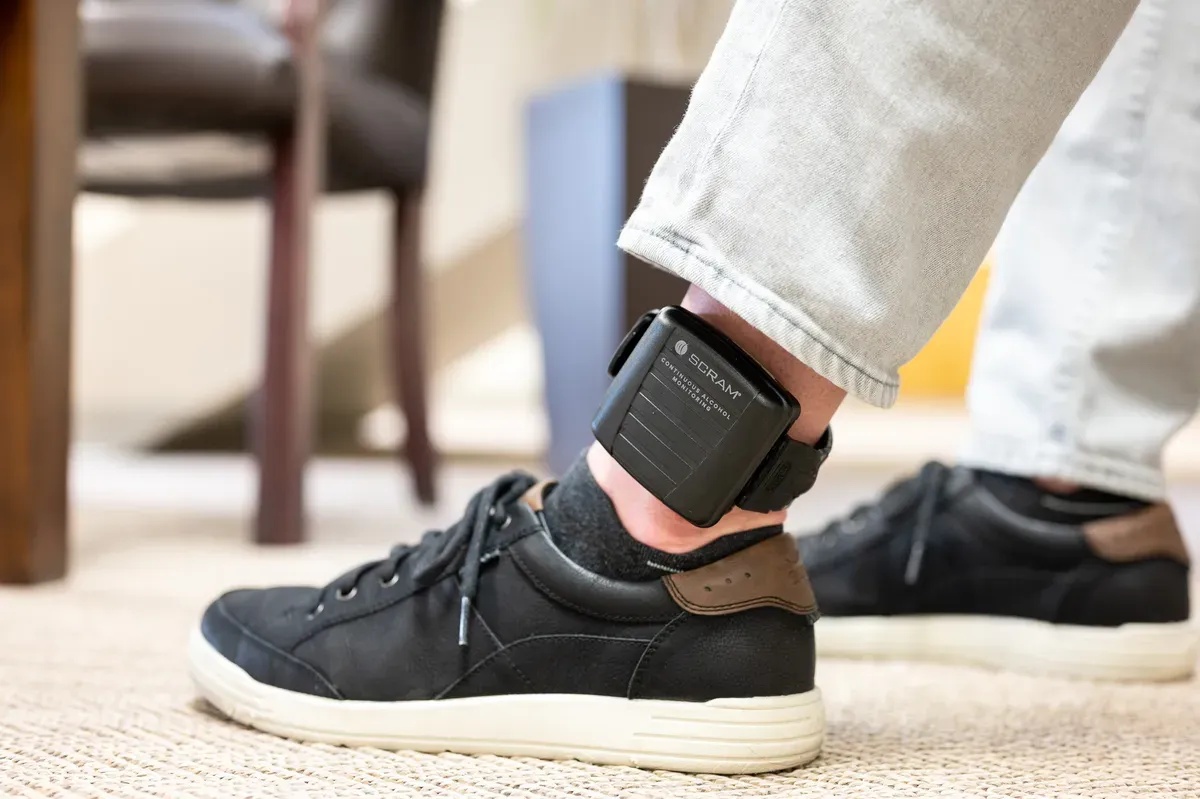
SCRAM CAM uses an electrochemical fuel cell to test insensible perspiration, the moisture on skin that people need not notice. Its sampling schedule produces 48 scheduled readings per full day. That repeated observation is the distinguishing proposition: sobriety conditions can be checked while someone works, sleeps, or spends time with family.
A whole day.Scheduled samples / 24 hours
The original CAM workflow sends readings through a wireless base station into SCRAM’s software. Generated alerts receive trained analyst review against confirmation criteria before confirmed violations are reported. That distinction matters when environmental alcohol exposure, possible tampering, and a person’s liberty are involved. A measurement needs interpretation and documentation.
Installation is another service, not an afterthought. SCRAM offers support with enrollment, equipment management, client communication, and reporting through its managed services and provider network. Departments can choose targeted help or a broader operating arrangement. The choice changes how much work stays inside the agency and how much moves to a contractor.
The company also supplies court reports, training, and testimony assistance. This is where its expertise becomes more specific than making a sensor: engineering, data analysis, and the practical requirements of presenting monitoring results in court. Agencies are buying help with the work surrounding the reading, too.
03 One court. Several questions.
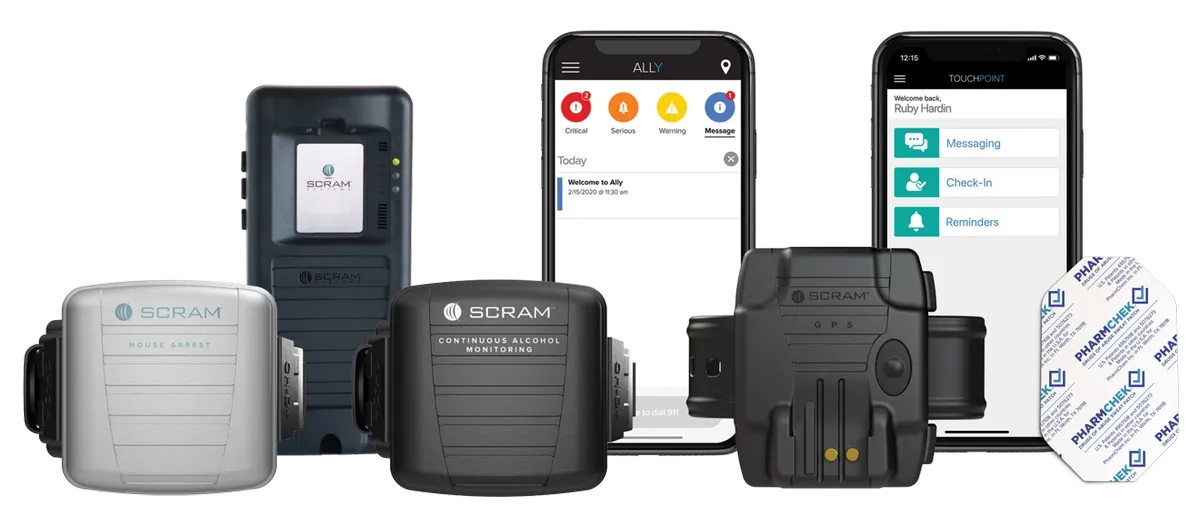
An alcohol reading does not tell an officer whether someone is home. A location point does not establish sobriety. SCRAM’s expansion follows those separate questions. GPS 9 Plus supplies location monitoring; House Arrest uses radio frequency for home curfew. Remote Breath Pro handles scheduled, random, and on-demand alcohol tests, with photo matching to help verify who supplied the sample.
The customers include pretrial programs, probation and parole agencies, treatment courts, and monitoring providers. Some run their own operations; others use local providers for installation and daily support. The wearer, the operator, and the purchasing official can therefore be three different people. A useful procurement conversation has to account for all three.
SCRAM competes with suppliers including BI Incorporated, Track Group, Sentinel, and Securus Monitoring. Its pitch combines its transdermal alcohol specialty with a wider monitoring portfolio and shared software. Optix puts electronic monitoring caseloads behind one login. TouchPoint adds mobile check-ins, messaging, and reminders. The software addresses another kind of gap: information scattered across an officer’s working day.
04 Who pays for the extra freedom?
The business combines monitoring equipment with recurring software, monitoring, and service charges. For participants, SCRAM describes locally variable installation and recurring fees. A universal sticker price would conceal the way these programs are actually assembled.
NHTSA’s overview cites historical electronic monitoring fees of $5 to $10 a day, drawing on 2013 research. That is context, not a current SCRAM quotation. At those rates, 90 days would mean $450 to $900 before other charges. A jurisdiction can spend less than it would on jail while a participant still faces a substantial bill.
For the wearer, the program also has a physical routine. SCRAM’s participant guidance describes a bracelet that stays against the skin, restrictions on products containing alcohol around it, and a provider who handles questions and adjustments. Those instructions make a difference to everyday life. An agency evaluating monitoring needs to consider whether a person can follow the requirements in their actual living and working circumstances.
The practical purchasing lesson is to price the program: installation, supervision, support, replacement obligations, and the participant’s share. The device’s daily rate is only one line. So is the staff time needed to investigate and respond.
“People Can Change.”SCRAM Systems’ stated belief
05 A sober day is a narrow claim
In December 2023, SCRAM announced one million cumulative CAM clients. That measures adoption. England and Wales offer a different measurement: in December 2025, the Ministry of Justice reported that people banned from drinking stayed sober on 97% of their tagged days. That figure describes the government’s tagging program, rather than an isolated experiment on SCRAM hardware.
Neither number proves permanent recovery. NHTSA notes that monitoring does not physically prevent drinking or driving. Its review describes promising results from supervision programs, including SCRAM studies, but the surrounding rules and responses are part of the intervention. A bracelet cannot supply treatment, resolve an unaffordable fee, or decide whether a sanction is proportionate.
SCRAM’s own operational lesson is worth copying beyond corrections: decide who reviews information and what they can do with it before collecting more. Without that capacity, a faster stream of readings risks becoming a faster-growing queue.
06 The next gap is between systems
The company’s portfolio keeps widening. Its 2021 combination with Riverside-backed LMG brought ignition interlock brands including LifeSafer into the business. The August 2025 PharmChem acquisition added PharmChek drug sweat patches. In April 2024, SCRAM and Riverside also announced employee equity ownership through Ownership Works, giving its accountability language a concrete workplace expression.
The next chapter remains partly prospective. January’s 2026 roadmap introduced CAM Connect; its current product page targets 2027. SCRAM IQ, a planned platform connecting client records, testing, payments, and alerts, lists early 2027. The ambition is recognizable: close the spaces between activities that already exist. The test will be whether the people responsible for supervision can act more clearly when the information arrives.