In 1979, an airplane with a wingspan approaching 94 feet crossed the English Channel. Empty, it weighed about 70 pounds. The Gossamer Albatross had no engine. Its pilot supplied the power by pedaling. Built by Paul MacCready’s AeroVironment team, it made a peculiar engineering proposition visible: a very large wing could belong to an extraordinarily light machine.
That proposition helps explain AV, the company now associated with reconnaissance drones and Switchblade weapons. MacCready founded it in 1971. Across the intervening decades, the customers and consequences changed dramatically. The recurring question remained surprisingly concrete: what can you remove from an aircraft before it stops doing the job?
- Portable aircraft bring reconnaissance and strike capabilities closer to small military units.
- BlueHalo expanded AV into counter-drone, space, cyber and directed-energy systems.
- Growth now depends on factories, integration and government buying decisions as well as invention.
01 / The runway is somebody else’s problem
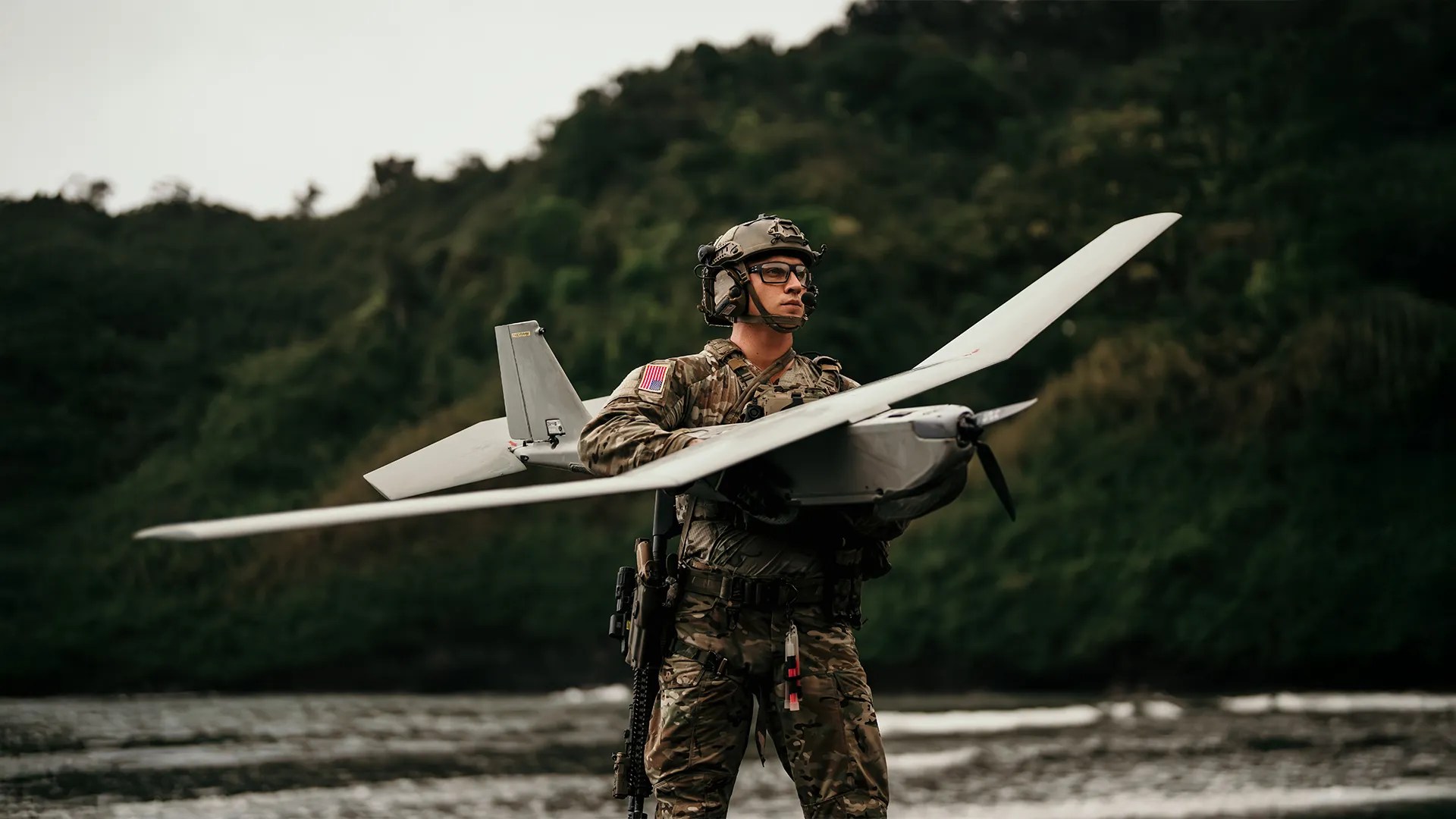
Consider Puma 3 AE. A soldier can launch it by hand. Its waterproof airframe can land on fresh or salt water. The appeal becomes obvious when the alternative requires a runway, a launch trailer or a recovery site that the customer does not possess. The camera matters. So does getting the camera airborne without first building an airport.
JUMP 20-X addresses a related constraint with vertical takeoff and landing, then fixed-wing flight. Its heavy-fuel engine is designed to use fuels already available in military operations. These choices concern the unglamorous surroundings of flight: deck space, fuel supplies, personnel. AV’s expertise includes aerodynamics, sensors and autonomy, but the selling point often lives in the customer’s logistics.
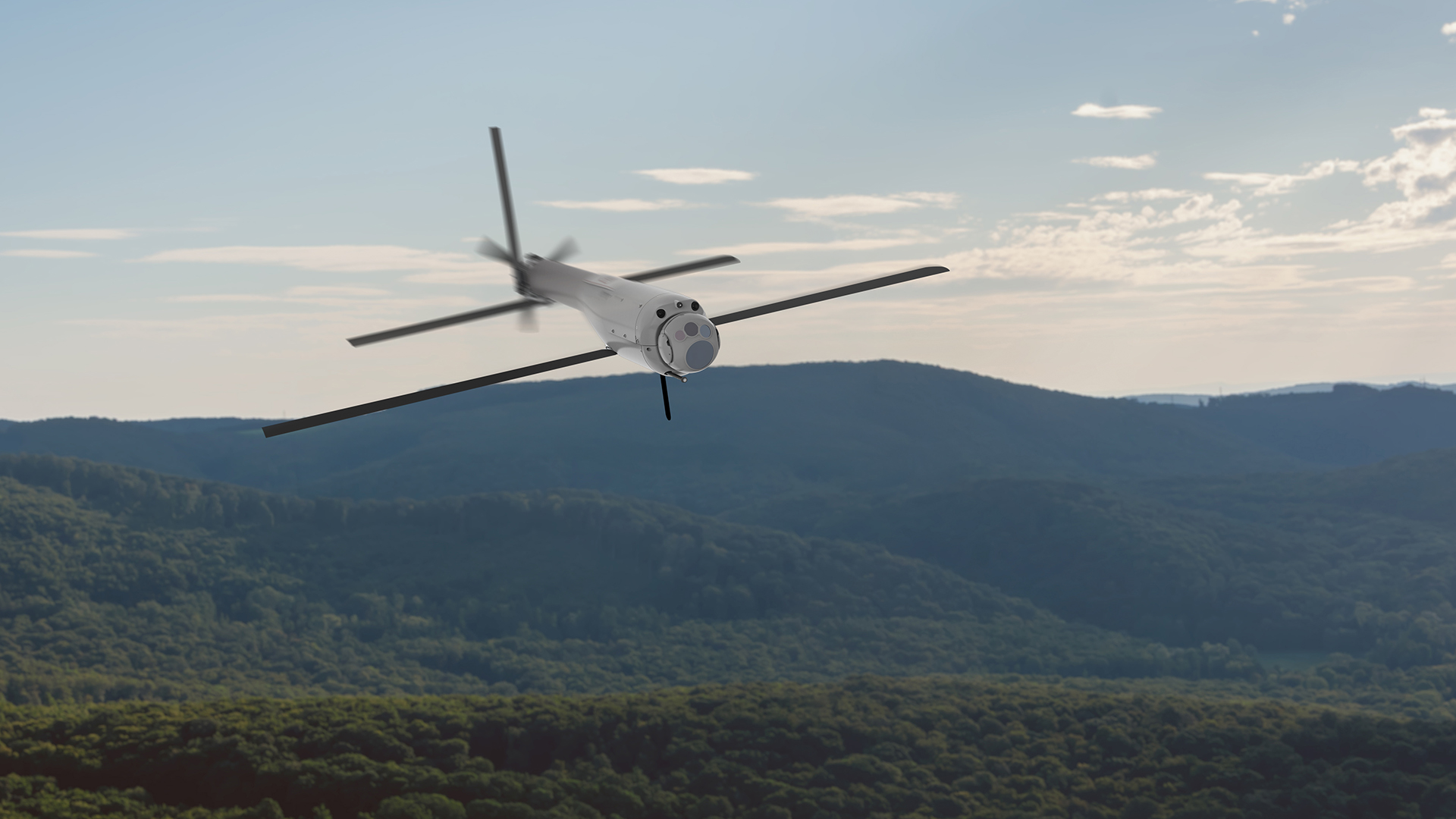
Switchblade changes the purpose. It is a loitering munition, carrying a warhead rather than simply returning with pictures. The 600 combines onboard imaging with an anti-armor payload and advertised endurance exceeding 40 minutes. Small units gain a way to observe and engage targets without relying entirely on larger supporting systems. That is a consequential redistribution of military capability.
02 / A bigger company is a different machine
AV sells primarily into government and defense markets: aircraft and weapons, but also engineering, training, repairs and support. Customers include U.S. military services and allied forces. The business rewards dependable delivery and continuing relationships. A successful demonstration is an opening conversation; procurement and sustainment are the longer relationship.
This also explains why an ordinary reader cannot treat AV like a consumer drone shop. The buyer needs a defined mission, procurement authority and the ability to train operators and maintain equipment. A useful comparison starts with payload, operating environment, communications and support requirements. Comparing two aircraft by their headline range alone misses much of what the customer is actually buying.
In May 2025, AV completed its acquisition of BlueHalo. The deal had been announced at roughly $4.1 billion in enterprise value. Subsequent purchase accounting put consideration, net of acquired cash, at about $3.485 billion. Those figures measure different things. The latter includes shares and settlement of debt; neither is a retail price tag for the technology.
The purchase brought capabilities including counter-drone defense, space systems, cyber and directed energy. AV now supplies both drones and systems intended to defeat drones. In September 2026 it announced a $464.8 million Army award for LOCUST laser systems, support and training. This is a broader industrial business than the familiar image of a backpack aircraft suggests.
FY26: 141% reported growth · 26% organic growth
Acquisitions account for much of the difference. Fiscal years end April 30; values rounded.
Nor does a bigger sales number settle the economics. Fiscal 2026 ended with a reported net loss, including substantial acquisition-related accounting effects and goodwill impairment. The enlarged company has more products to sell and more costs to absorb. Treating the revenue chart as a verdict on the acquisition would skip the difficult part of the calculation.
The distinction matters competitively. Anduril is an alternative in autonomous systems and loitering weapons; established defense primes compete across broader programs. AV’s pitch combines fielded aircraft with an enlarged collection of technologies. Its AV_Halo software is intended to connect different hardware into shared command and intelligence workflows. Whether that breadth becomes useful integration is an execution question.
03 / The air gets a vote
AV’s history contains a useful objection to any tidy success story. Helios, its solar-powered research aircraft, reached 96,863 feet in 2001. Two years later, a modified version broke apart during a test flight near Kauai. NASA’s investigation described turbulence, a persistent upward bending of the wings and increasingly unstable pitching. Structural damage followed as airspeed exceeded the design limit.
What failed first was the aircraft’s stable behavior. The available analysis had not adequately predicted how the changed configuration would respond. NASA’s subsequent technical work called for methods that considered structure, atmosphere, controls and aerodynamics together. The lesson is portable: changing one subsystem can change the entire machine’s behavior. A previous successful flight does not settle the next configuration’s safety.
“We look for new ideas everywhere”
AV’s published core values
Ingenuity supplies a happier example of engineering to an environment. AV built the Mars helicopter’s rotor system, landing gear and solar-panel substrate. NASA/JPL led the architecture and integrated the vehicle. Its first powered flight on Mars came in April 2021. The distinction in credit matters: specialized contributions can be remarkable without making one supplier the author of the whole mission.
04 / The factory is part of the invention
The latest announcements reveal where attention is moving. In October 2026, AV and Elsight announced work to integrate multiple communications networks into Mayhem 10. AV and NIOA separately signed a non-binding agreement exploring Australian manufacturing and support. One concerns keeping a connection; the other, creating local capacity. Neither announcement should be mistaken for a completed deployment.
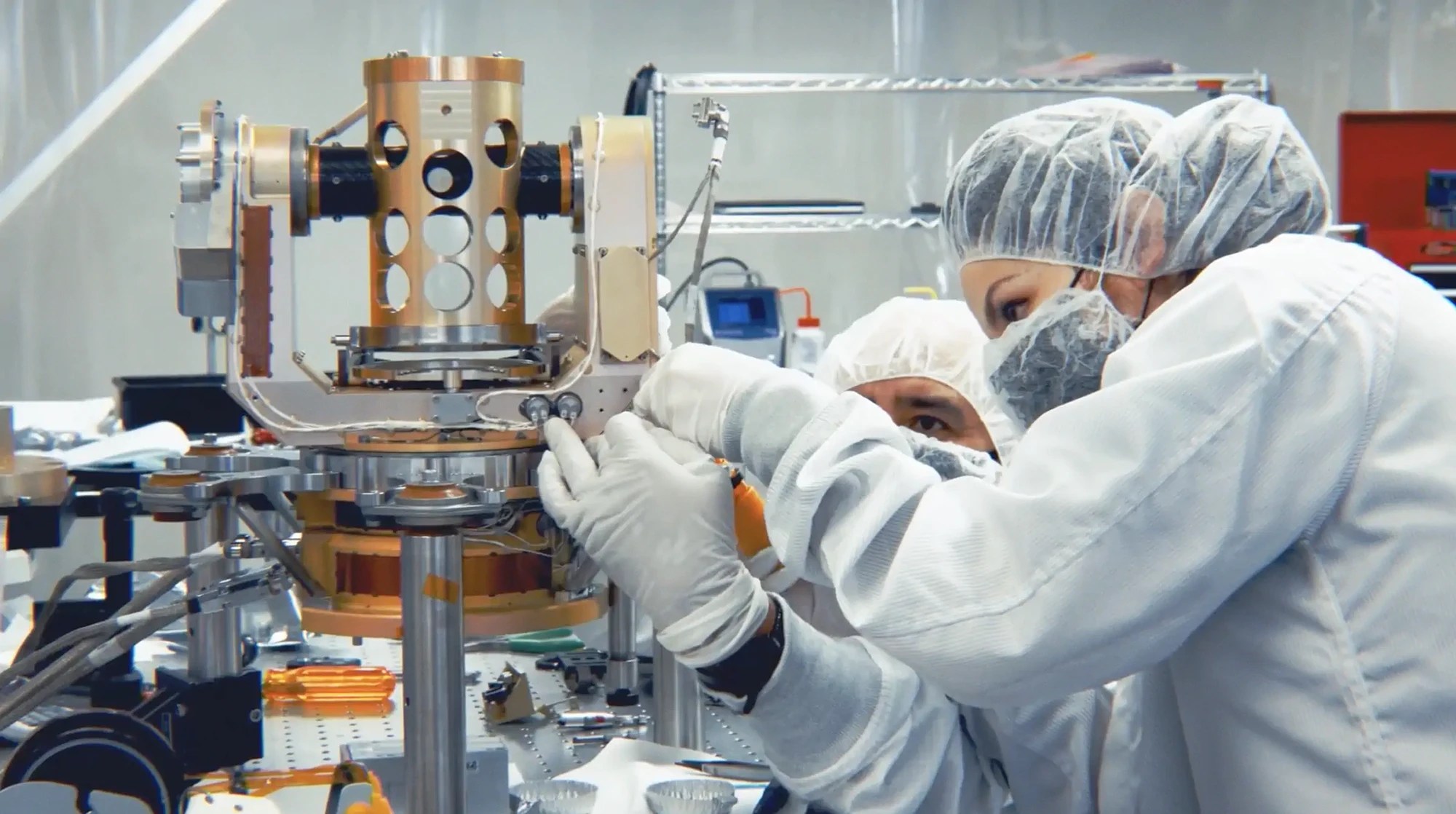
Chairman and CEO Wahid Nawabi’s September update emphasized manufacturing capacity and the supply chain. That is a revealing statement of priorities. Engineering earns the order; production must fulfill it repeatedly. Government budgets, approvals and purchasing schedules can interrupt that sequence even when the hardware works. AV’s proposed local partnerships address parts of this practical problem, while leaving considerable work ahead.
For readers building something less dangerous, the useful habit is clear: specify the operating constraint before choosing the impressive feature. Then test the complete system under changed conditions. AV’s next constraint is its own size. A larger portfolio needs production capacity, compatible software and customers with funded orders. The same discipline applies to any ambitious product team: prove that the surrounding people, processes and infrastructure can support the capability you have just demonstrated. Keeping all of those moving together may demand as much ingenuity as keeping a very light airplane aloft.