Breaking
Kong raises $175M Series E at $2B valuation 20 trillion API requests processed monthly Goldman Sachs names Marietti Most Exceptional Entrepreneur 2024 Kong Insomnia surpasses 1 million users 270 million Kong Gateway downloads Kong crosses $146M Annual Recurring Revenue Kong acquires OpenMeter for AI monetization API Godfather positions Kong as the connectivity layer for the AI era Kong raises $175M Series E at $2B valuation 20 trillion API requests processed monthly Goldman Sachs names Marietti Most Exceptional Entrepreneur 2024 Kong Insomnia surpasses 1 million users 270 million Kong Gateway downloads Kong crosses $146M Annual Recurring Revenue Kong acquires OpenMeter for AI monetization API Godfather positions Kong as the connectivity layer for the AI era
CEO & Co-Founder, Kong Inc.

Augusto "Aghi" Marietti

API Godfather · American Dream Immigrant · Infrastructure Builder

He arrived in San Francisco with $600, a tourist visa, and 90 days to make it work. Today, the company he co-founded from a garage in Milan processes more than 20 trillion API calls every month - and just raised $175M at a $2 billion valuation.

API Gateway Kong Inc. Open Source Cloud Native AI Infrastructure Series E
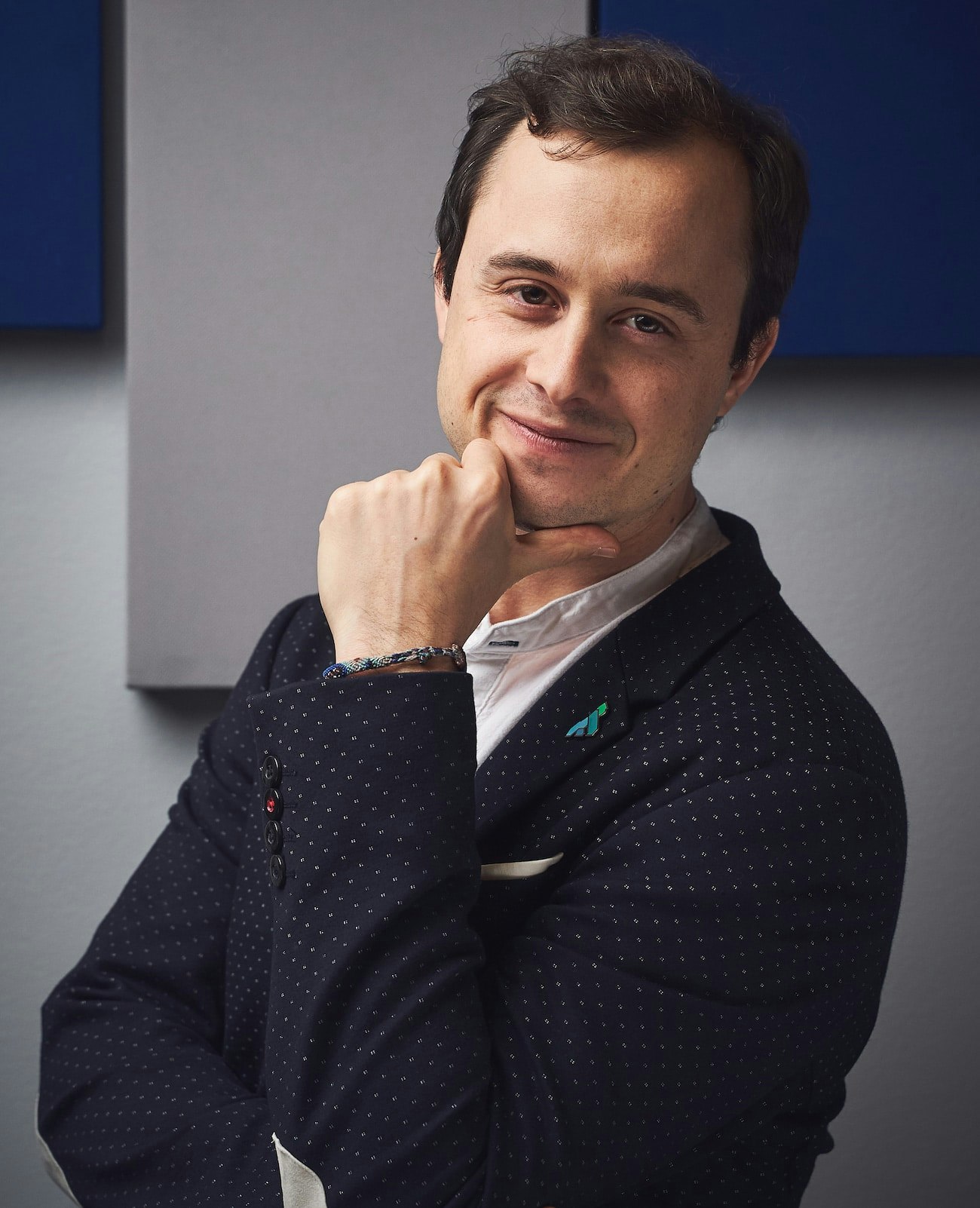
Augusto Marietti, CEO of Kong Inc.
Augusto "Aghi" Marietti — Kong Inc., San Francisco
$2B
Valuation (2024)
270M+
Gateway Downloads
$424M
Total Funding Raised
20T
API Requests / Month

A Milan Garage, a 90-Day Visa, and a Craigslist Couch

The summer of 2009, a 21-year-old from Rome named Augusto Marietti finished tinkering with a startup idea in a Milan garage, convinced himself it was worth betting everything on, and bought a one-way ticket to San Francisco. His co-founder Marco Palladino came along. Together, they had $600 between them and 90 days on tourist visas before they'd have to fly home broke.

The startup was called Mashape - a marketplace where developers could buy and sell APIs. Nobody in Milan could explain what APIs were, let alone fund them. Silicon Valley was different. They pitched at TechCrunch50, which got them in the room but not in a hotel. Housing was solved the way most early Silicon Valley stories get solved: through a Craigslist ad.

Travis Kalanick - then an angel investor, not yet the Uber CEO - had posted an offer to host visiting founders in his home. Marietti and Palladino got the bedroom. The rent arrangement was simple: Aghi would cook carbonara for Kalanick's wife once a week. The Italian immigrant and the startup ecosystem struck a deal on pasta.

Six months later, Marietti was back at that same kitchen table - this time negotiating a $100,000 convertible note with early YouTube employees. Not glamorous. Completely effective. That's been his operating mode ever since.


"We knew that if we couldn't raise, we would go back to Italy broke, and that was it."
Augusto Marietti — on those first 90 days in San Francisco

When the Side Project Was Worth More Than the Business

For most of the 2010s, Mashape was the business. The API marketplace had grown into the largest of its kind, connecting thousands of developers to hundreds of public APIs. Marietti had raised institutional funding, moved his team to San Francisco permanently, and was managing a genuine two-sided marketplace.

But behind the marketplace, something stranger and more durable was happening. The team had built an internal API gateway to manage all the traffic flowing through Mashape. They open-sourced it in 2015, called it Kong, and watched something unusual happen: developers fell in love with the gateway, not the marketplace. Within two years, Kong had accumulated more users, more GitHub stars, and more enterprise attention than Mashape itself.

In 2017, Marietti sold the Mashape marketplace to RapidAPI and raised $18 million from Andreessen Horowitz to focus entirely on Kong. The move looked sharp in hindsight but required conviction in the moment - you had to believe that the plumbing beneath software was more valuable than the software itself.

Marietti believed it. He'd spent years watching APIs become the atomic unit of how software gets built. Every cloud migration, every microservices split, every third-party integration - all of it ran through an API gateway. Kong was the gateway. By the time enterprise companies needed one at scale, Kong had a decade of production hardening that no competitor could fake.

Kong by the Numbers

270M+
Downloads
Kong Gateway is the most downloaded API gateway in the world.
7M
Active Instances
Kong Gateway instances running globally across all deployment types.
20T
Requests / Month
Over 20 trillion API transactions flow through Kong every month.
$146M
Annual Revenue (ARR)
Crossed $100M ARR in 2023, reached $146M in 2024.
700+
Enterprise Customers
Including GSK, PayPal, and NYSE among global enterprise deployments.
$424M
Total Raised
From seed to Series E, backed by a16z, Tiger Global, Index, Balderton, and others.

From Rome to a $2B Gateway

2006
At 18, builds a cloud storage service conceptually similar to Dropbox - before Dropbox exists. Can't raise money in Italy. Files the idea away.
2009
Co-founds Mashape at 19 with Marco Palladino and Michele Zonca in a Milan garage. Pitches at TechCrunch50 in San Francisco. Ends up on Travis Kalanick's couch, cooking carbonara for lodging.
2010
Permanently relocates to San Francisco with $600 and a 90-day visa. Negotiates first $100K convertible note at Kalanick's kitchen table with early YouTube employees.
2011-2016
Builds Mashape into the world's largest API marketplace. Raises funding from Google, eBay, PayPal, Microsoft, Disney, and Jeff Bezos. Internally develops the API gateway that will become Kong.
2015
Open-sources the internal API gateway as "Kong." The developer community immediately responds.
2017
Sells Mashape marketplace to RapidAPI. Raises $18M Series A from Andreessen Horowitz for Kong Inc. Bets the whole business on the gateway.
2020
Raises $100M Series D led by Tiger Global. Kong becomes the default enterprise API gateway for cloud-native architectures.
2021
Goldman Sachs names him one of 100 Most Intriguing Entrepreneurs. Invests in Hugging Face Series B - an early bet on AI infrastructure.
2023
Kong crosses $100M Annual Recurring Revenue. Becomes a rare open-source company to reach this milestone.
2024
Raises $175M Series E at $2B valuation in November. Goldman Sachs honors him as Most Exceptional Entrepreneur 2024. Kong ARR reaches $146M with 800 employees.
The Carbonara Deal

Travis Kalanick had posted a Craigslist ad offering his home to visiting founders. Marietti and Palladino got the room. The arrangement: Aghi would cook carbonara for Kalanick's wife once a week. Six months later, they were back at that same kitchen table negotiating $100,000 in convertible notes. The couch led to the cap table.

Source: TechCrunch, March 2017

The Connectivity Tissue for the Cloud

Marietti's description of Kong as "connectivity tissue" is more accurate than it sounds. Every time software talks to other software at scale, it needs a layer that manages, secures, observes, and routes that conversation. Kong builds that layer.

KG

Kong Gateway

The open-source API gateway with 270M+ downloads. The most deployed in the world. Built on Nginx/OpenResty, extended by a rich plugin ecosystem.

KK

Kong Konnect

The managed API platform for the enterprise. Centralized governance, API lifecycle management, and real-time visibility across any cloud or on-prem deployment.

AI

Kong AI Gateway

The new frontier: managing, securing, and governing AI model traffic. Semantic caching speeds AI responses by up to 20x. Load-balancing across LLMs.

IN

Kong Insomnia

The API development client with 1M+ users. The fastest-growing platform for building, testing, and debugging APIs. Now with AI-powered MCP features.

KM

Kong Mesh

Service mesh for microservices and Kubernetes environments. Built on Kuma, the open-source universal service mesh.

OM

OpenMeter (Acquired)

API and AI monetization capabilities, acquired September 2025. Enables usage-based billing, metering, and AI cost management at scale.


What Marietti Actually Thinks

"Some railroads were deployed ahead of time, but then all the railroads got used. I think in AI, we're just deploying ahead of time, and eventually something will blow up for a little bit, but we would eventually need the infrastructure that we're deploying anyways."

"We're building a kind of connectivity tissue for the cloud, an API platform that allows you to manage, secure and govern all of your APIs from one single place."

"Starting a company is much easier now, but building it is much harder."

"When you fly a plane relying on visual elements and not electronics, you have 30 seconds every minute to assess whether you're going where you really want to go. This is about half your time as a startup - determining if the startup is really going where it should be going."

The Receipts

The API Layer IS the AI Layer

Marietti's current bet is not subtle. As agentic AI moves from proof-of-concept to production infrastructure, every AI model needs to connect to external services through APIs. Every enterprise deploying AI needs to manage, secure, observe, and govern those connections. Kong already sits at that exact intersection.

The Kong AI Gateway released in 2024 isn't a pivot - it's an extension. The same plugin architecture that handles REST and gRPC traffic now handles LLM traffic. Semantic caching, prompt security, AI token management, cost optimization, model switching - everything the enterprise needs to run AI responsibly runs on the same infrastructure they've already been using for APIs.

The railroad analogy Marietti uses is deliberate. He's not selling AI tools. He's selling the track. And if AI traffic grows the way API traffic grew, the track becomes more valuable than the trains.

The November 2024 Series E at $2B wasn't just a funding round. It was institutional validation that the infrastructure bet Marietti made in 2017 - when he sold the marketplace to double down on the gateway - was the right call by a wide margin.

Betting on What Comes Next

Marietti invests in 20+ startups, typically in the $5K-$50K range with a sweet spot around $25K. His early bet on Hugging Face in 2021 - before LLMs dominated the news - signals where his conviction lives: infrastructure for the software stack.

Notable Investment

Hugging Face

Invested in Series B (March 2021). The AI model repository and collaboration platform now valued in the billions - one of the highest-profile AI infrastructure companies.

Portfolio

Supabase, Doppler, Spacedrive

Developer infrastructure plays across database tooling, secrets management, and distributed file systems. A consistent thesis: invest in what developers use every day.

Recent Exit

Quantive (exited May 2025)

Strategy execution platform. One of 2 portfolio exits on record, reflecting a patient, long-hold approach to early-stage investing.

Approach

20+ startups, $5K-$50K range

Marietti invests as an operator, not a fund manager. His typical check is $25K - small enough to spread conviction, large enough to be a real vote of confidence for early-stage founders.

Things Worth Knowing About Aghi

🇮🇹

"American dream immigrant" - his own words in his Twitter/X bio. Rome-born, San Francisco-built, globally deployed.

🍝

Paid his first San Francisco rent in carbonara. Negotiated $100K in a startup's future at Travis Kalanick's kitchen table.

⚖️

Survived on $1,000 a month during Mashape's earliest days in San Francisco. The bootstrap before the blitz-scale.

📱

Invented a Dropbox-like service at 18 - before Dropbox - but couldn't get funded in Italy. The timing was right; the geography was wrong.

🔧

Lead inventor on 5 U.S. patents. The open-source CEO who also holds the intellectual property.

✈️

Uses a pilot analogy for startup strategy: 30 seconds per minute checking instruments, 20 scanning the landscape for mountains ahead.

🤝

Backed by Jeff Bezos and Eric Schmidt in early fundraising. Started his first San Francisco deal on a borrowed couch.

🌍

Returned to Italian Tech Week to talk about Kong's journey, calling it "The Great Awakening of Europe."

"Starting a company is much easier now, but building it is much harder."
Augusto Marietti