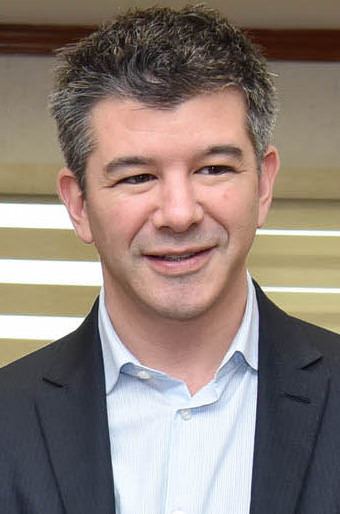
Travis Kalanick runs a robotics company you've never heard of. He's been running it for eight years. While everyone debated whether he'd ever recover from the Uber implosion, he was building Atoms in complete silence.
Not building a comeback narrative. Not doing the redemption tour. Building robots.
In March 2026, he emerged from stealth to announce that Atoms operates across food, mining, and transportation. CloudKitchens, his ghost kitchen empire that everyone thought was his next act, got absorbed. Turns out it was just one vertical in a much larger play.
The approach is vintage Kalanick. He's not building humanoid robots - he calls that a distraction. Instead, Atoms creates a "wheelbase for robots," specialized machines for specific tasks. While competitors chase the sci-fi fantasy, he's focused on what he calls "gainfully employed robots." Machines that work.
He moved to Austin in December 2025. Exactly 14 days before California's billionaire tax took effect. The timing saved him $180 million. When you have $3.6 billion, precision matters.
The Pattern Repeats
This is not his first revenge plot. When the entertainment industry sued his first company Scour for $250 billion in 2000, bankrupting it, he started Red Swoosh. He called it his "revenge business." Same peer-to-peer technology, but this time the media companies paid him for it. Akamai bought Red Swoosh for $19 million in 2007.
Between Scour's collapse and Red Swoosh's exit, he moved back to his parents' house. He complained later that "it sucked because I wasn't getting ladies." The detail reveals more than any corporate bio. Kalanick measures failure in very specific terms.
At 18, he sold Cutco knives door-to-door and started a test prep company called New Way Academy. He dropped out of UCLA in 1998 to work at Scour. The company had 250,000 simultaneous users trading movies and music. Then came the lawsuit. Then came the lesson.
Uber started in 2009. By 2013, it operated in 65 cities. The growth was relentless because Kalanick was relentless. He told employees in a 2013 email: "You better read this or I'll kick your ass." Not a joke. A management philosophy.
The Uber Era
His vision for Uber was simple: "Our whole goal is to drive the cost of taking an Uber BELOW the cost of owning a car." He nearly succeeded. He also built what critics called a "bro culture awash in toxic masculinity." When asked about Uber's effect on his dating life, he joked to GQ that it should be called "Boob-er." The quote followed him like a stain.
In February 2017, a video went viral. Kalanick in the back of an Uber, arguing with his driver about falling income. "Some people don't like to take responsibility for their own shit," he yelled before exiting. The driver had filmed everything.
A few months later, former Uber engineer Susan Fowler published a blog post exposing systematic sexual harassment at the company. The post went viral. Investigations followed. Investors demanded change. On June 20, 2017, Kalanick resigned as CEO.
He didn't disappear. He started the 10100 fund, targeting emerging markets. He invested $150 million in City Storage Systems, becoming CEO of what would become CloudKitchens. And he started building Atoms.
The Atoms Play
Eric Meyhofer runs the food robotics division. He's a former Carnegie Mellon robotics professor who led Uber's self-driving unit. Lab37 operates in Pittsburgh. Kalanick is also acquiring Pronto, an autonomous vehicle startup founded by Anthony Levandowski, his former Uber colleague. The one who later went to prison for trade secret theft. Everyone gets a second act in Kalanick's world.
On the TBPN podcast, Kalanick explained why he stayed in stealth for so long: "You build a culture of people that want to build and do not need to be famous." It's a pointed comment from someone who became globally famous for all the wrong reasons.
He spent 70 days in China one year during Uber's expansion. He heard "no Internet technology company has ever succeeded" a hundred times a day. "As an entrepreneur," he said, "that's the best thing you can hear." He means it. Being told something is impossible is his starting point.
The Libertarian's Paradox
Kalanick is a libertarian influenced by Ayn Rand. He fights regulations like personal enemies. "The regulatory systems in place disincentive innovation," he argues. "It's intense to fight the red tape." Yet he supported Obamacare because it let Uber drivers maintain health insurance as independent contractors. Ideology bends to business logic.
He owns a Castro District townhouse called "the Jam Pad," a NYC penthouse he bought for $36.4 million, and an LA home that cost $43.3 million. He's never been married. He dated violinist Gabi Holzwarth from 2014 to 2016, then Victoria's Secret model Daniela Lopez Osorio. Privacy about his personal life is one of the few things he maintains.
Joseph Gordon-Levitt played him in Showtime's "Super Pumped" in 2022. The show didn't flatter him. He didn't comment.
What Happens Next
Atoms builds robots for industries most people don't think about. Mining. Food production. Transportation logistics. Not the glamorous robotics of science fiction. The grinding, profitable robotics of actual work.
Kalanick has built two billion-dollar companies. Both redefined their industries. Both left wreckage in their wake. Scour died in lawsuits. Red Swoosh barely survived. Uber transformed cities and destroyed his reputation. CloudKitchens operates in shadow. Now Atoms.
The pattern is clear: find a broken system, attack it with technology, ignore the people who say it won't work, survive the backlash, sell or scale. Repeat.
"There is a core independence and dignity you get when you control your own time," he once said. He's spent his career trying to control time itself - shortening commutes, accelerating food delivery, now automating physical labor. The robots are just the latest proxy.
In eight years, we'll find out what he's been building in silence right now.