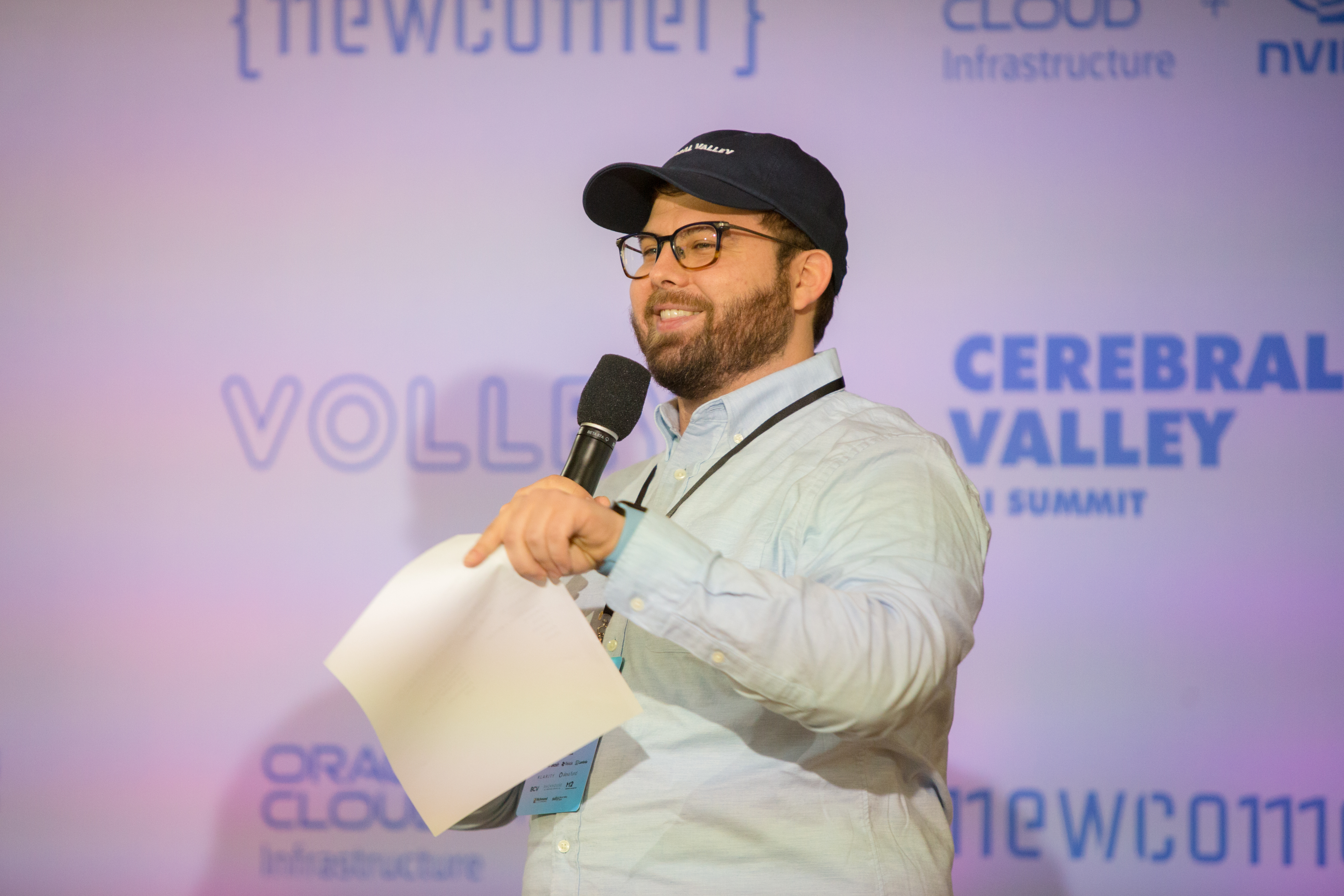
The man who rewired tech journalism from a Brooklyn apartment
In February 2017, Eric Newcomer published a video on Bloomberg. It showed Travis Kalanick, then the most powerful person in transportation technology, screaming at one of his own Uber drivers about falling earnings. The driver - Fawzi Kamel - stayed calm. Kalanick did not. Within weeks, Kalanick was gone as CEO. Newcomer was 27.
That moment tells you everything about how he works. Not the scoop itself - that matters less than the method. Newcomer had cultivated a driver source. He had the patience to sit on footage that could go sideways. He published it anyway. Three years later, he decided the whole apparatus of institutional journalism had started to slow him down, and he quit.
October 2020. The world was mid-pandemic. Most journalists were clinging to staff jobs like life rafts. Newcomer started a Substack newsletter about venture capital and startups, called it Newcomer, gave it the tagline "Your Seat at the Cap Table," and charged $199 a year for the privilege of reading it.
I'm not going to hide my opinions in neutral sounding prose. I'm going to tell you what I think and make arguments while ensuring you have the facts to make up your own mind.
- Eric NewcomerThe thing is: people paid. They paid because Newcomer had spent six years at Bloomberg becoming the reporter that VCs, founders, and operators actually trusted. He knew who Bill Gurley was without explaining it to readers who didn't. He wrote for people who already had a seat at the table and wanted to know what was happening at the adjacent tables.
By year three, revenue crossed $1 million. By year four, $2 million. Year five brought $3 million - and a daughter. He marked the anniversary in a newsletter post that casually announced both milestones in the same breath, which is very Newcomer: the personal and the professional folded together, no pretense about where one ends and the other begins.
He grew up in Macon, Georgia - about as far from Sand Hill Road as you can get culturally. His parents were not in tech. He studied Philosophy at Harvard, not CS, not economics. He worked on The Harvard Crimson and won awards for a four-part series on sexual assault at the university - the kind of grinding, institutional investigation that most student journalists avoid. That instinct - find the uncomfortable thing, report it out, publish it - never left him.
After Harvard, he moved through the traditional path: internships at the South Florida Sun-Sentinel and Tampa Bay Times, a James Reston fellowship at the New York Times, a stint covering D.C. city hall for the Washington Examiner. Then Jessica Lessin called. She was building The Information - a bootstrapped, subscription-first tech outlet - and she needed a hungry young reporter. He turned down the Philadelphia Inquirer to join a newsletter that most people in journalism had never heard of. He was her first employee.
That choice tells you something. When Lessin was building something new, Newcomer wanted in. When Bloomberg came calling with a staff job covering startups and VC, he took it. When Bloomberg started to feel like a constraint rather than a platform, he left. Each move was toward more direct contact with the story and away from institutional friction.
At Bloomberg, he covered Uber before Uber's troubles became obvious. He covered Andreessen Horowitz before a16z became the kind of firm that generates think-pieces. He co-authored with Brad Stone the definitive Businessweek account of Kalanick's fall - a piece that read less like journalism and more like a compressed Silicon Valley novel. His sources were real. His access was earned, not assigned.
"One of the last people to come up the normal reporter path."
Harvard Crimson. Sun-Sentinel. Tampa Bay Times. New York Times internship. D.C. city hall. The Information. Bloomberg. And then: out. Newcomer describes his own career trajectory as almost anachronistically traditional before the pivot to independent media - a pivot that turned out to be the most original move of all.
The Newcomer newsletter works because he understood something early that most journalists still haven't: the readers are the product's superpower, not its charity case. He answers emails. He builds relationships with paid subscribers. He tells people when he's working on a negative story so they're not blindsided. He has strong opinions and doesn't pretend otherwise.
Quentin Hardy, a former Bloomberg colleague, profiled him as "The Influencer Journalist." Newcomer embraced the framing with characteristic directness: "I'd rather be a really well-trusted influencer than hold onto the journalism brand, which lately has come to have a lot of baggage in Silicon Valley." That sentence sounds like heresy from someone with a Harvard Crimson byline. From someone running a $3M media company, it sounds like strategy.
His editorial stance is explicitly pro-capitalism and pro-tech. He writes as if he's at dinner with GPs, not explaining the industry from a balcony. That's not naivety - it's positioning. He covers the dysfunction too, the governance failures, the frothy valuations, the herd dynamics of LP capital. But he does it from inside the tent, not through the window.
I believe there's a valuable and worthwhile business to be built here. And I think building a financially-sound media business is the best way to support good journalism.
- Eric NewcomerThe Cerebral Valley AI Summit is probably the most underrated part of his business. He co-founded it with Max Child and James Wilsterman of Volley - twice-annual, invite-only, held in San Francisco, New York, and London. Past speakers include the CEOs of Anthropic, Scale AI, and Databricks. The summit has spawned fundraising rounds and at least one $1.3 billion acquisition. It generates more than $1.5 million a year - more than the newsletter itself.
That's a useful data point about media businesses. The content is the funnel. The event is the transaction. Newcomer figured this out not by reading about it in a case study but by building something and watching what happened.
His team has grown carefully: Madeline Renbarger, his first reporter hire, came from Business Insider covering early-stage VC. Tom Dotan, who had been at the Wall Street Journal, contributes weekly. Jonathan Weber serves as editor-at-large. Riley Konsella handles the business side. They are searching for a Chief Revenue Officer. By any measure, Newcomer is no longer just a newsletter - it's a small media company with a specific editorial identity and a growing conference brand.
As of April 2026, he is targeting $4 million in annual revenue. He just published the Enterprise 30 list in partnership with Wing Venture Capital. He moderated a conversation with a MiniMax co-founder at HumanX in San Francisco. He has a newborn at home. He says he is still "addicted to the endorphins" of publishing a great scoop.
Philosophy majors often end up arguing about things that don't change anything. Newcomer ended up arguing about the companies, capital, and characters that are changing everything. That's either ironic or entirely logical, depending on how you read the path.