In 2016, Atanu Sarkar and his fellow founders stopped paying themselves. Webskitters was short of projects. Developers had left. The company had made a promise to pay its people on the first day of every month, and the people running it were now borrowing to keep that promise. In Sarkar’s telling, the difficult admission was that management had missed the warning signs. A technology business had been too slow to change.
They took a short break, asked whether they could continue, and decided to try again. There is something disarmingly modest about this turning point. No revelation about a secret market. No glamorous rescue. Just a group of colleagues deciding that the business deserved another attempt, while accepting that their own decisions had helped put it in danger.
Years later, Sarkar still returns to that episode. It explains a recurring preoccupation of the Webskitters founder and CEO: how much a company owes the people who stay when staying is inconvenient. His story has the usual entrepreneurial furniture - computers, international clients, awards, larger offices. The interesting part is who he keeps putting in the picture.
The engineer who had to learn to sell
Before Webskitters, there was an engineering education in Karnataka. Sarkar studied in Bagalkot and attended Visvesvaraya Technological University between 1999 and 2003. Returning to Karnataka for a business summit years later, he remembered being a student away from home, without the reassurance of an elite college pedigree or a neatly drawn career map.
He completed a Bachelor of Engineering in Instrumentation Technology in 2003. Dell in Hyderabad was his first employer; Tech Mahindra, IBM and RS Software followed. In 2010, he began the venture that became Webskitters. The business operated as a proprietorship in 2012 and became a private limited company in 2013. Those dates describe different steps in building the same enterprise.
The early group numbered only four or five, with Sarkar supplying the industry experience. Training inexperienced colleagues was part of getting the company started. So was learning the commercial work that surrounds technical work: finding customers, winning assignments and persuading someone elsewhere to trust a small team. A working computer is useful equipment. It is an unusually quiet sales department.
A client, a screen, a conversation
A useful glimpse of Sarkar at work comes from a customer who needed an educational writing tool. The brief involved a WordPress website, wireframes, text fields and dropdown menus. Students would enter information, then receive a structured paragraph or essay. It was the sort of specific, slightly fiddly assignment on which an outsourcing relationship has to prove itself.
The customer found Webskitters on Upwork, considered the price and portfolio, and dealt with Sarkar as the main contact. That places the CEO inside the ordinary business of explaining, commissioning and delivering software. The founder’s name could sit on a company page; it also appeared on the other end of a client conversation.
For a services company, this closeness has practical consequences. A prospective customer brings an idea, often with incomplete technical knowledge, and asks another team to make it behave on a screen. Understanding the brief becomes part of the product. Sarkar’s public work spans business development and project management as well as technology, a combination that makes sense in this setting. Code needs a customer who understands what has been built.
Ten tickets to Delhi
On a Sunday evening in June 2022, a phone call told Sarkar that Webskitters had won a National MSME Award. He remembers initially wondering whether it was a prank. His response, once he believed the news, was to book tickets for ten members of his core team to travel to Delhi.
The award presentation took place at Vigyan Bhawan on June 30. The official award list names Sarkar and Webskitters in the export-service micro-enterprise category. It is a precise distinction, rooted in the business the company had built beyond its home market. In his recollection of meeting Prime Minister Narendra Modi, Sarkar described the firm through the livelihoods it supported.
There is an appealing detail in those ten tickets. An award ceremony naturally narrows the frame to whoever accepts the prize. Taking colleagues along widens it again. It also fits the version of entrepreneurship Sarkar keeps telling: responsibility accumulates with every person who depends on the organisation. The trip gave that otherwise rather abstract obligation a destination, a date and a shared memory.
Back to Karnataka, with a different brief
On August 1, 2025, Sarkar appeared at the Bengal Chamber’s Tech-E Summit in Bengaluru. The panel concerned homegrown businesses developing global footprints. Other participants came from organisations including Capital Numbers, Ensonic Computech, Wizertech and PwC. For Sarkar, the location supplied an extra connection: he was back in the state where he had studied engineering.
His contribution covered consistency, innovation, customer focus and community. These can sound like conference vocabulary until set alongside his own earlier predicament. A company that had once struggled to retain projects was discussing how to sustain international work. A former student who had worried about his starting point was now invited to explain the route he had taken.
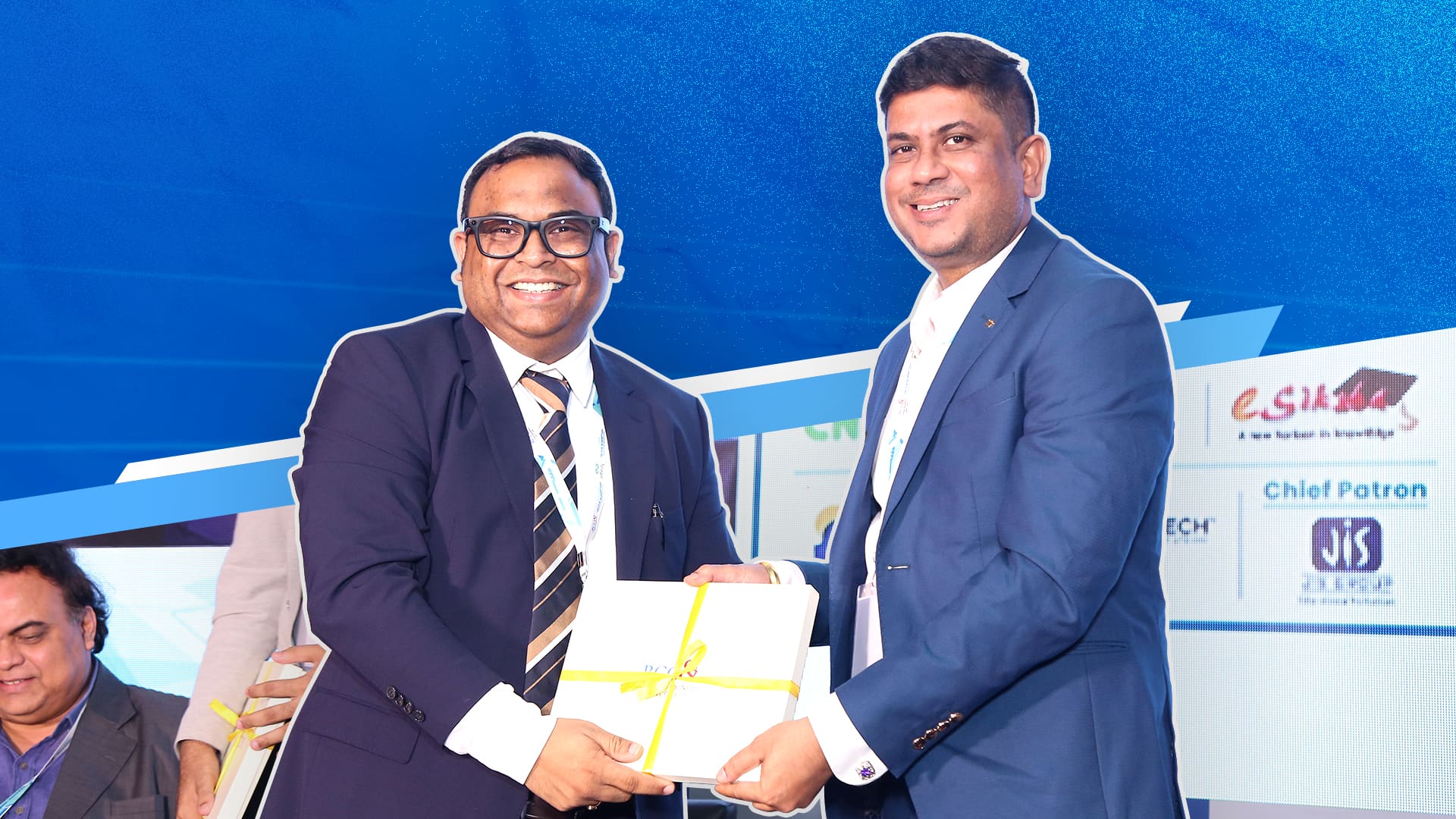
The geography matters without requiring a grand theory about it. Kolkata is the company’s home base. Its work reaches clients abroad; Webskitters also has a UK business. Sarkar’s professional profiles connect him with London. Building across those places asks a founder to keep translating between local teams and distant expectations. The summit made that experience the subject of a conversation, rather than simply another working day.
When the work becomes a classroom
WebSkitters Academy brings the training thread into view. Its curriculum is organised around practical learning, live projects and career preparation. Sarkar identifies himself publicly as CEO of both the technology company and the academy. Arpita Sarkar is a director of the academy; Ayan Sarkar leads technology at Webskitters. The effort sits within a wider leadership group, rather than around a solitary founder at a whiteboard.
The connection between a software services business and a training organisation is concrete. One deals with what clients need built. The other prepares people to do such work. The academy describes access to industry experience and technology practitioners as part of its approach. For a student, that makes the distance between a classroom exercise and a professional assignment a central concern.
In April 2025, Sarkar received ZEE 24 Ghanta’s Udyog-Kriti Samman for contributions to IT and youth empowerment. He also participated in a discussion about the skills gap. The pairing is revealing: the recognition concerned both an industry and the people seeking a way into it. His stated ambition includes creating employment opportunities alongside teaching technical skills.
“Education should inspire innovation, nurture talent, and create opportunities.”
Atanu Sarkar
In 2026, he promoted a two-day developer workshop scheduled for August 1 and 2, focused on practical AI skills. He argued that learning to work with AI would become a major career advantage. The emphasis follows the same line as his earlier training work: as tools change, people need opportunities to learn how to use them in actual assignments.
The handwritten part of a technology company
At the beginning of 2026, Sarkar described writing thank-you notes to team members. The replies included handwritten messages, framed letters and small gifts. He was struck by how personal the exchange felt. In an industry employed to make communication faster, someone had taken the trouble to slow it down.
“Never let growth create distance,” he wrote as part of his promise for the year. It is a compact expression of a familiar organisational problem. A founder can know everyone in a small room. As teams expand, familiarity becomes harder to sustain, and a title starts doing work that a conversation once did. A handwritten note cannot manage a company. It can make gratitude less anonymous.
He has also described sessions called Table Talk with the CEO, where employees discuss motivations, difficulties and what they want Webskitters to become. In his account of the second session, some matters were addressed immediately and others were left to inform later action. The distinction matters: listening produces a list of things to do, with all the inconvenience that entails.
These exchanges place a different kind of demand on a chief executive. An employee who speaks about a difficulty has made it visible. A colleague who writes back has spent time on the relationship. Sarkar’s accounts give those actions space alongside the business milestones. They also give the reader a more specific picture of his working style than a list of leadership adjectives could offer. A room, a conversation and a note are small enough to examine.
There is also the small matter of cricket
Webskitters won the Ei Samay Corporate Cricket Championship on February 8, 2026, in a competition involving sixteen corporate teams. The celebration continued with cake back at the office. Sarkar connected the result to preparation and collaboration, the same qualities he discusses in a business setting. Cricket gave them a scoreboard.
His interest in sport goes back to his student days. In a later reflection on the company’s corporate cricket season, he described playing some matches and waiting for news of others. The pleasure was shared even when someone else scored the runs or took the wicket. A CEO can have a surprisingly limited role in a successful afternoon: waiting for the team’s message.
That is a useful place to leave him. Sarkar’s business story includes a serious setback, a decision to continue, national recognition and a training operation. Alongside it runs a quieter record of travel booked for colleagues, conversations across a table and letters exchanged by hand. In those details, the company becomes easier to picture. Its founder keeps returning to the people who made another try possible.