A pharmacist helps a patient stop smoking. The encounter is clinical, the advice is useful, and then comes the awkward question: how does the pharmacy get paid? At Grants Pass Pharmacy in Oregon, that question required more than a till and a prescription record. It required medical documentation, a claim and someone to shepherd the claim through reimbursement. Healthcare can perform a service beautifully and still misplace its business model on the way out.
- The job: connect care decisions to the people and workflows that carry them out.
- The buyers: health plans, government programs, providers and pharmacies.
- The machinery: modular software, analytics, outreach and pharmacy billing services.
- The test: a recommendation should lead to an assigned action, a documented encounter and a follow-up.
The unpaid appointment
AssureCare occupies this territory between the sensible idea and the completed task. Its software helps healthcare organizations coordinate care across institutions that may know different things about the same person. An insurer has claims. A clinician has a care plan. A pharmacist has medication information. The patient has a life that refuses to organize itself according to any of their filing systems.
The Cincinnati company’s flagship, MedCompass, brings care management, utilization management, medication management and patient and provider portals into a modular suite. An organization can use modules separately or combine them. Deployment can be cloud-based or on-premise. The practical appeal is the ability to begin with a particular operational problem while retaining a route to broader coordination.
For Grants Pass, the immediate problem was medical billing for services such as tobacco cessation and vaccine assessment. AssureCare supplied encounter documentation, medical claims billing and revenue cycle support. That is a modest-sounding bundle. It addresses a consequential constraint: expanding a pharmacist’s clinical role is difficult if the payment machinery still treats the pharmacy principally as a place that dispenses products.
In a 2023 profile published by the National Community Pharmacists Association, owner Michele Belcher described providing assessments through AssureCare’s web platform and payer contracts. Some peers worried about working outside their pharmacy management system. Her reasoning was practical: receiving reimbursement like a medical provider required learning to bill like one. A new source of revenue came with a new administrative habit.
A queue is a quiet kind of invention
The same issue becomes more complicated when repeated across thousands of locations. In AssureCare’s account of an unnamed national retailer with more than 2,400 pharmacies, fragmented information, administrative work and inadequate billing infrastructure constrained clinical services. The company implemented AssureRx, bringing prioritized opportunities, clinical support and claims submission into a connected workflow.
AssureCare reports that clinical opportunities per pharmacist per day rose from 1-1.5 to 11. It also reports more than $15 in return per dollar invested and 25% growth in enhanced-services and value-based contracting revenue. These are vendor-reported results from one customer, rather than a forecast for every pharmacy. The useful detail is the operating change: pharmacists could move through a queue of clinical work with documentation and billing attached.
More clinical opportunities in the working day
This is an unusually revealing way to think about software. A work queue makes a decision about attention: whose problem should come next? Connecting that queue to the paperwork makes the decision easier to execute. A dashboard may be admirable to look at. A queue has the less fashionable advantage of giving someone a job to do.
The insurer’s version of the same headache
AssureCare describes another customer, an unnamed national payer serving more than 28 million members, that wanted to unite Commercial, Medicare and Medicaid operations. Its older infrastructure depended on multiple homegrown systems and repeated manual intervention. The bottleneck was the mismatch between an organization’s scale and the machinery carrying its information.
The implementation consolidated workflows, used APIs to gather information, and configured business rules around the payer’s requirements. AssureCare reports at least $21 million in annualized savings. The number matters; the mechanism matters more. Enrollment, intake, authorization and coordination stopped depending on the same degree of manual assembly. Rules could be configured by state, an essential detail for a national organization.
At least this much in annualized savings, according to AssureCare’s national payer case study.
That places the company in the enterprise population health and care-management market, alongside alternatives such as ZeOmega’s Jiva and HealthEdge’s GuidingCare. ZeOmega also describes combining claims, social information and risk scores with care workflows. Buyers should therefore examine the particular combination of modules, integration work and services their organization needs. AssureCare’s distinctive pitch includes the pharmacy’s route from clinical opportunity to reimbursement, alongside payer and provider coordination.
Its business model follows the work: enterprise software accompanied by implementation and integration, plus services such as pharmacy credentialing and revenue cycle management. AssureRx also offers clinical-resource memberships. Those purchases solve different problems and belong in different budgets. A resource library can support a pharmacy program; a payer platform changes the organization’s operating infrastructure.
Buying the missing pieces
AssureCare has expanded the breadth of that infrastructure through acquisitions. In June 2024 it announced the purchase of technology from Cureatr and SinfoniaRx to extend AssureRx’s medication management capabilities. In September it acquired Clinigence Health, adding provider-focused population health analytics to Akumen. The sequence makes strategic sense: connecting institutions is easier when the platform has useful tools for each of them.

Akumen offers customizable performance indicators, population analysis and predictive insights. Its provider capabilities include identifying care gaps and tracking quality measures; its analytic measures use the Johns Hopkins ACG algorithm. The connection to MedCompass is the important commercial proposition: information about risk can inform the care-management work that follows.
OptimAIzer addresses a narrower task. It uses machine learning, trained on prior authorization review data and customized for each client, to recommend decisions before physician review. That description sets a useful boundary. A recommendation requires evaluation in the customer’s environment, using its data and clinical policies. Speed belongs in the discussion alongside whether the recommendation is appropriate.
Dinner joins the care plan
The newer product breadth reaches into two familiar gaps: whether someone receives the message and whether the care plan fits daily life. Aktivate coordinates outreach through text, email, calls and physical mail. It can operate alone or within AssureCare’s platform. For a care team, that means planning communication across channels rather than leaving each department to assemble its own sequence.
NutraVance moves nutrition into the same operational discussion. It connects assessment and care planning with meal and nutrient analysis, food benefits, patient engagement and reimbursement workflows. A produce prescription sounds simple until someone must decide eligibility, arrange access, record delivery and evaluate progress. The platform’s appeal rests on making those steps manageable within healthcare operations.
In July 2026, AssureCare announced a partnership with CURIS, a consulting firm with community-health-center experience, to support Federally Qualified Health Centers and rural clinics. The combination brings consulting and technology together. That pairing acknowledges a useful truth about enterprise software: adoption includes decisions about how people work, and those decisions rarely arrive inside the software package.
Follow one patient, all the way through
There is a human explanation for AssureCare’s interest in the spaces between institutions. CEO Yousuf Ahmad previously led Mercy Health in Cincinnati and has worked across insurance, physician practice and hospital systems. Co-founder Greg Silence combines studies in biology, microbiology and computer science. The company’s public culture statements emphasize clinical expertise, implementation and cross-functional collaboration - apt disciplines for work that crosses organizational boundaries.
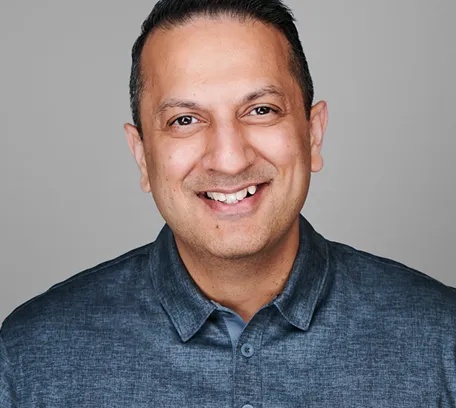
Brian Litten, who joined as EVP of Growth and Commercialization in August 2026, gave a particularly clear account of the problem in a September RXinsider interview:
“they’re all making decisions about the same person in isolation.”
Brian Litten / RXinsider / September 2026
Seeing the platform already operating helped convince him to join, he said. His growth sequence begins by going deeper with existing customers. That is a revealing choice for a business with multiple connected products: a customer already using one part of the platform may have another unresolved handoff nearby.
The lesson a reader can copy is a way of evaluating any coordination tool. Follow one patient journey. Ask where information enters, who receives the next task, how the encounter gets documented, how payment works and who checks the result. Measure a baseline before changing the workflow. Evaluate completion and clinical outcomes separately from the number of opportunities an algorithm identifies.
The conditions matter. Teams need usable data, working integrations and time to act. Pharmacy programs also depend on credentialing, payer contracts and rules governing the services a pharmacist can provide. A nutrition program needs actual access to food. A review model needs appropriate clinical oversight. Software can organize these dependencies; the people and services still have to be there.
AssureCare’s proposition becomes clearest at that level. It sells tools for getting a healthcare decision through its next few awkward steps. The glamorous moment may be the diagnosis. The patient also needs the message to arrive, the medication to make sense and the next person to know what happened. There is considerable work in making care less forgetful.