On April 8, 2025, ten ventures pitched for $10,000 in cash prizes and grant funding at Northeastern’s Pitch-A-Thon. Ashritha Kallem had another reason to remember the evening: she was announced as the next CEO of IDEA, the university’s student-run venture accelerator. For the person moving into the top job, the competition was also a glimpse of the work ahead. Founders needed an audience. An audience needed an event. The event needed a team.
Kallem already knew that last part. She had spent the preceding year as Co-Director of Operations, working on the accelerator’s internal logistics. Her appointment brought a change of responsibility within an organization she had helped run. The title was new; the machinery behind it was familiar.
A pitch is a tidy unit of storytelling. It has an opening, a problem and an invitation to believe in a solution. An accelerator is less tidy. It must make space for ideas that are still awkward, questions that are still unanswered and founders who need to work out what happens next. Kallem’s path through IDEA makes that less glamorous work visible. It is a story with a stage, certainly, but also with recruitment, introductions and the passing of responsibilities from one student team to another.
The people before the program
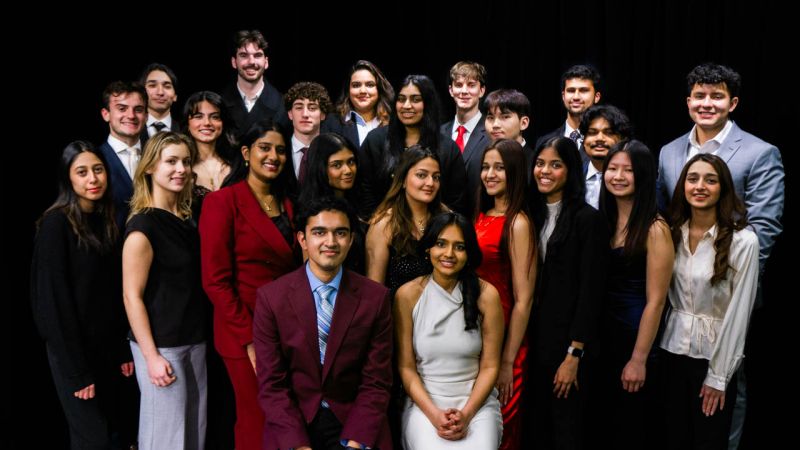
IDEA asks students to do consequential work while they are still students. Its undergraduate teams handle venture support, investments, analytics, marketing and operations. A founder may encounter the organization as a series of meetings or milestones. Behind those encounters are other students carrying out the work of an accelerator.
The CEO’s responsibilities include overseeing operations, setting direction, managing collaboration and representing IDEA in the wider entrepreneurship community. That makes an operations background relevant in a very practical way. A plan needs someone to turn it into tasks. A task needs someone who knows whose job it is. The calendar has a habit of arriving whether the strategy is ready or not.
Kallem’s first months of leadership included assembling the Fall 2025 senior team after a hiring season that drew more than 100 applications. The roles crossed several functions, including venture support, analytics and marketing. Recruiting was part of making the accelerator work: choosing the people who would help other people build businesses.
There is an appealing complication in this arrangement. The students supporting founders are learning leadership themselves. Their responsibilities are concrete, their colleagues are peers and the program has to keep moving. The organization gives them an opportunity to practice decisions that will matter beyond a classroom.
Applications in the hiring season preceding IDEA’s Fall 2025 senior leadership team.
A business begins before its pitch
When Kallem appeared on Inside the Business Pod, she explained IDEA through its curriculum. “We put some structure into that,” she said. The three stages have names that sound as if a race is about to begin: Ready, Set, Go. The actual work involves considerably more questions than a starting pistol permits.
Ready begins with the idea and the work of understanding its market. Set moves into the details of development, including whiteboarding and prototyping. Go brings preparation for pitching and applying for the Gap Fund. Her account gave prospective founders a sequence they could follow, rather than a vague instruction to become entrepreneurial.
The stages make room for different kinds of uncertainty. An early idea needs investigation. A developing business needs a model. A venture seeking support needs to explain what the money will help it do. Treating those as separate tasks makes the work easier to discuss with the people providing feedback.
Understand customers and competitors.
Develop the business and its route to market.
Work toward milestones, funding and revenue.
Kallem’s explanation also keeps the feedback in view. A pitch and its financial assumptions can need revision before a venture moves forward. For a founder, that is a useful description of what support looks like: someone pays enough attention to ask for another version.
An introduction worth organizing
One of Kallem’s IDEA events brought founders together with the Venture Mentoring Network. She hosted it alongside Katrina Brink and Andrea Roman. The analytics team, led by COO Mouad Tiahi and analytics director Ruby Mason, developed a founder-mentor matching algorithm to support the connections.
The detail matters. Mentorship can sound like an abstract benefit until someone has to arrange the encounter. A room full of experienced people and a room full of founders do not automatically produce useful pairings. The matching work made the introduction itself a task the team could approach deliberately.
“Mentorship isn’t optional for student entrepreneurs: it’s foundational.”
Ashritha Kallem
That was Kallem’s description of why the event mattered. It places mentors close to the everyday uncertainty of building something. Experience can help a founder decide which question to tackle first, or see a difficulty in a different light. The encounter still belongs to the people having the conversation; the organizing gives it a place to begin.
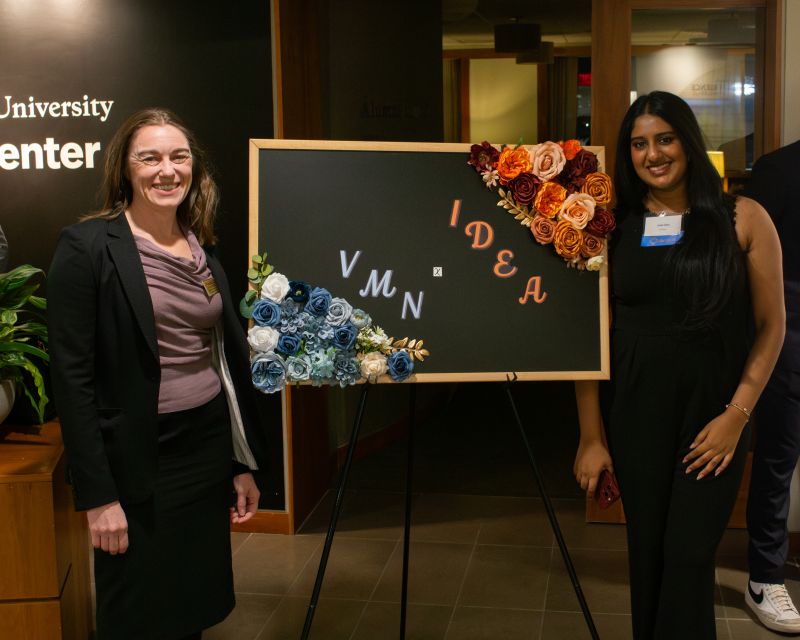
In this part of her story, the work is shared across organizing and analytics. Kallem’s account gives names to the colleagues behind it. The photograph records a meeting; the matching process helps explain the preparation that preceded it.
The evening belongs to more than one person
NEXPO offered another view of Kallem’s leadership. The gathering celebrated ventures and the people around them. Sam Iannone opened the evening; Drizzl founder Khushi Shah and Entrepreneurs Club president Alice Lee were among the speakers. Kallem credited operations director Maya Mehta and marketing director Komal Shah with the work behind the event.
She also introduced five 2025 Venture Fellows: Marina Kan, Aarav Bhat, Tanmay Thaker, Zachary Guan and Andrew Clark. Naming them gives the evening a place in a longer story. These were people within the community, with roles beyond the duration of the program.
An entrepreneurship event has several jobs at once. It gives a venture visibility, brings colleagues into the same room and recognizes the work people have already done. The speakers and fellows make that range visible. The person organizing the evening has to think about all of them.
Thaker’s name would appear again when Kallem looked back on her CEO year. He became the next leader of IDEA. In retrospect, the NEXPO announcement sits beside the succession as another point in the life of the team. The people recognized during one chapter can become responsible for the next.
A year measured in colleagues
On the eve of the first anniversary of her CEO announcement, Kallem reflected on a year spent working with nearly 50 student leaders and supporting hundreds of founders. She identified the team and its culture as central to what she valued about the experience.
Her thanks reached both backward and sideways. She credited program manager Alyn LeBlanc and former leaders Rohan Surana and Izabella Pivo as mentors, and Mouad Tiahi and Andrew Klaey as her COO partners. The account describes leadership as a set of working relationships, with help received as well as responsibility taken.
She then pointed to Thaker and IDEA’s next chapter. The handoff is an especially revealing part of a student leadership story. People move through university; an accelerator must continue supporting founders across those changes. A successful year has to leave room for somebody else to run the next one.
That gives her CEO Emerita title a useful place in the narrative. It marks a completed period of service inside an organization that continues. The current team has its own responsibilities and its own ventures to support. Kallem’s reflection leaves those colleagues in the foreground, rather than trying to make the entire institution fit inside one person’s biography.
The next audience
Her next leadership announcement concerned TEDxNortheasternU. Kallem became Co-President alongside Charitha Kunapuli, returning to an organization she had joined as a freshman in community engagement. She connected the role with her background in speech and debate and her interest in ideas that prompt people to reconsider a perspective.
IDEA and TEDx give an idea different destinations. A venture program helps someone develop a business. A talk brings a perspective before an audience. Kallem’s work in both settings involves the people and preparation around that moment of public attention.
Her earlier TEDx biography supplies a more ordinary detail: the International Business student from Miami chose chocolate ice cream with brownies and fudge as her go-to order. A team page has room for a role, a major and a dessert. The dessert is refreshingly free of strategic objectives.
Across the two organizations, the consistent action is bringing people into the work. Recruit the team. Arrange the introduction. Explain the next stage. Make room for the next leader. These are modest verbs for responsibilities that occupy a great deal of time.
The pitch remains the part everyone can see. Kallem’s story invites attention to the people who help it happen, and to the work that continues after the audience goes home.