The Profile · Higher Education
Joseph Aoun
The Beirut-born linguist who studied syntax under Noam Chomsky now runs the most distributed university in America - and wrote the book on what college is for when the robots show up.
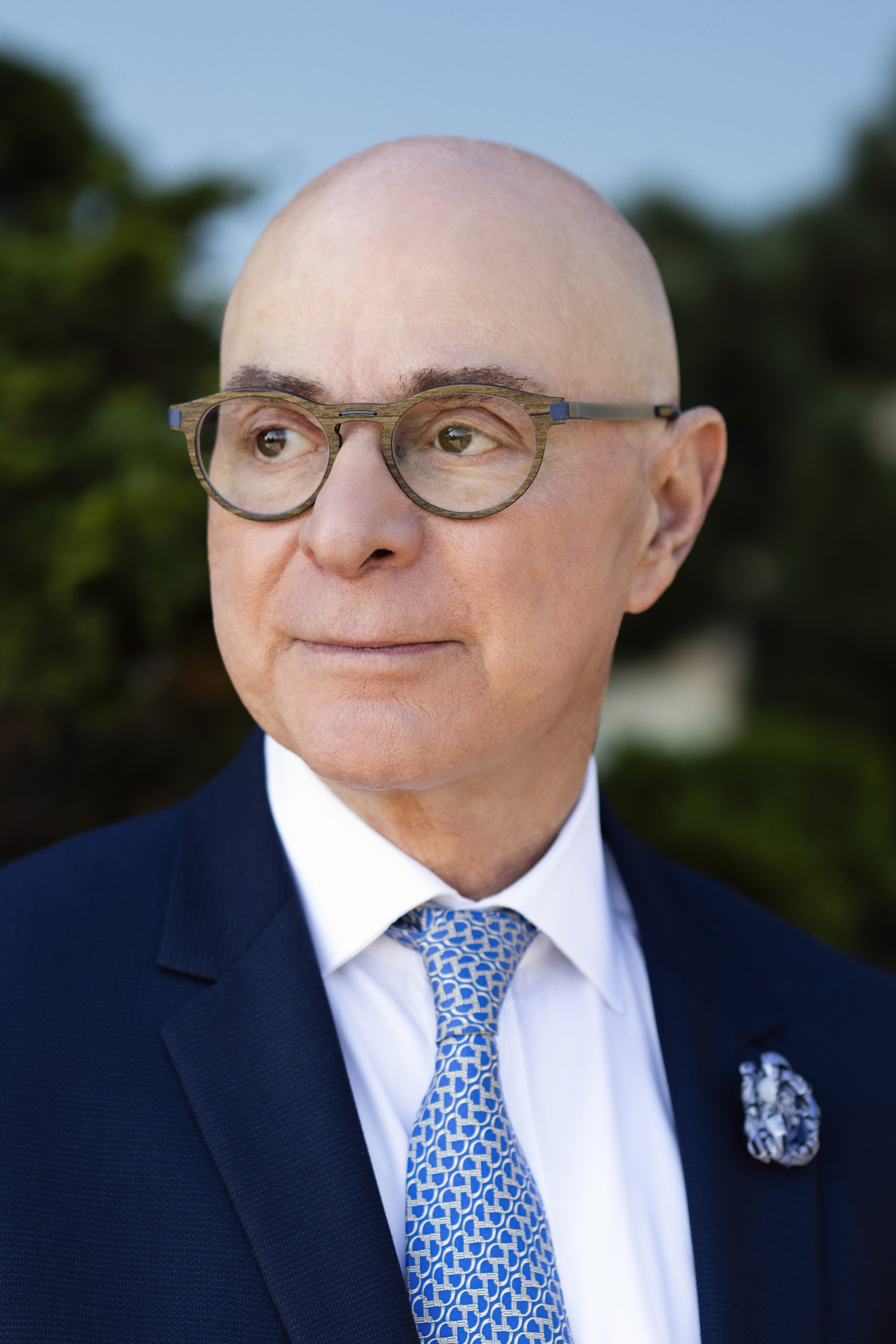
The Beirut-born linguist who studied syntax under Noam Chomsky now runs the most distributed university in America - and wrote the book on what college is for when the robots show up.
Joseph Aoun's first published work was about how sentences hold themselves together. His current work is about how universities do. Both projects share a method: find the underlying structure, then redesign it from the bottom up so the surface can take any shape you want.
For nearly two decades he has run Northeastern University from a small office on Huntington Avenue in Boston. The address is the same one the institution has occupied since the early twentieth century. Almost nothing else about the place is.
When Aoun arrived in 2006, Northeastern was a respectable regional university with a famous co-op program and a so-so national reputation. Today it operates a thirteen-campus global system that stretches from Vancouver and Toronto through Oakland, Boston, Portland, Charlotte, Miami and London. Its co-op program - the same one alums remembered from the 1970s - now drops students into more than 140 countries. External research funding is up sevenfold. More than 800 tenured and tenure-track faculty have been hired during his presidency. The institution's center of gravity moved from "commuter school with a cool internship program" to "global research university with one of the most ambitious AI agendas in higher ed."
None of this happened by accident. The architect is a linguist who finished his doctorate at MIT in 1981 with Noam Chomsky listed as his advisor. He spent the next two decades on the faculty at the University of Southern California, eventually becoming dean of the College of Letters, Arts & Sciences and the inaugural holder of the Anna H. Bing Dean's Chair. Then Boston called.
Joseph Elias Aoun was born March 26, 1953 in Beirut. He took his master's degree in Oriental Languages and Literature from Université Saint-Joseph in 1975, picked up a diploma of advanced studies in general and theoretical linguistics from the University of Paris VIII in 1977, then crossed the Atlantic to MIT. Three degrees on three continents in roughly six years - the geography of his education looks a lot like the geography of the university he runs now.
The Lebanese roots show up everywhere in the work. So does the linguist's habit of looking past the words people use to the structure underneath. When Aoun talks about "humanics" - his proposed new discipline for the AI age - he is not speaking metaphorically. He genuinely thinks the humanities need a grammar.
In 2017, a full five years before ChatGPT entered the popular vocabulary, MIT Press published Robot-Proof: Higher Education in the Age of Artificial Intelligence. The book argued that universities were preparing students for an economy that would not exist by the time they graduated, and proposed a new curriculum built on three literacies: data literacy, technological literacy, and human literacy. He called the framework humanics. The phrase stuck.
A second edition came out from MIT Press in 2024. Almost nothing in the central argument needed revision. The world had simply caught up.
In November 2009, Aoun made the call to shut down Northeastern's football program. The reaction inside higher ed was telling. He later said he was overwhelmed with calls from other university presidents asking how he had managed it without an alumni revolt. The freed-up resources went into academic facilities, including what would become the Interdisciplinary Science and Engineering Complex - one of the most-used research buildings in the city of Boston.
Killing a football program is the kind of decision most university presidents simply will not make. Aoun made it in his third year on the job. The trajectory of the university shifted within a single news cycle.
In 2020, as COVID-19 tore through American higher education and Northeastern's financial planning along with it, Aoun donated roughly twenty percent of his annual compensation - approximately $290,000 - to pandemic relief and research. The gesture was small relative to the institution's budget. It was not small as a signal.
The Northeastern Aoun is building is not really a university in the traditional sense. It is closer to a distributed system: shared faculty, shared research infrastructure, shared co-op pipelines, and a curriculum that assumes a student in Portland and a student in London might do their second year in Toronto and their third in Boston. The model is meant to do for higher education what cloud computing did for software - separate the program from the building.
Whether the model holds depends on questions that universities are bad at answering quickly. Can a credential mean the same thing across thirteen campuses? Can co-op partners in 140 countries deliver consistent quality? Can faculty hired for one location feel ownership of a system? Aoun's bet is that the answers can be made to be yes. His tenure is the experiment.
Watch him in interviews and a small pattern emerges. He pauses before adjectives. He uses the words "structure" and "system" the way other presidents use "community" and "impact." When asked about AI he never describes a tool; he describes a relationship. The framing is consistent enough to feel like training. It is. He spent twenty years on the faculty studying how meaning is built before he ever sat in a president's chair, and the habit of building meaning carefully has not left him.
The fact that the seventh president of Northeastern University was trained as a generative linguist by Noam Chomsky is the kind of detail that would feel made up if it were not true. It explains more about how the institution operates than any organizational chart could.
"AI compels us to nurture our uniquely human qualities." — Joseph Aoun, Northeastern Global Leadership Summit, June 2026
Awarded by the French government.
For service to French culture and education.
Carnegie Corporation of New York.
Elected to the historic learned society.
For distinguished contributions.
Recognition from the discipline he came from.
The chief presidents-of-presidents post in U.S. higher ed.