Before Jacob Hooker had a laboratory, he had a view of the underside of a car. Growing up outside Asheville, North Carolina, he spent time tinkering with his father, a mechanic. It is a pleasing beginning for a chemist: something tangible, something complicated, and a reason to get your hands involved. The later titles would take longer to arrive. The practical business of figuring things out was already there.
The invitation to study chemistry came through textiles. Kent Hester, who worked in student and career services at North Carolina State University’s College of Textiles, visited Hooker’s high-school chemistry class. Hooker went on to NC State with a North Carolina Textile Foundation merit scholarship worth $5,000 a year. He graduated in 2002 with degrees in chemistry and textile chemistry, having already published four papers.
Textiles can sound like an unexpected entry on the résumé of a company chief executive. Yet cloth is a perfectly respectable introduction to the consequences of chemistry. A material has to behave in the world, beyond the page on which its properties are described. That connection between an idea and a useful thing gives this early chapter its interest. The subject was practical; the possibilities were wide.
Berkeley, with a side of burritos
His next move took him to the University of California, Berkeley, where he worked with Matthew Francis and earned his chemistry doctorate in 2007. Leaving North Carolina also meant seeing another part of the country. Hooker has been refreshingly frank about the appeal of California: “And they had the best burritos and wine.” A graduate-school decision can bear the weight of academic ambition and still leave room for lunch.
Francis became his doctoral mentor. Another encounter would change what Hooker wanted to do with his training. In 2006, he heard a presentation by chemist Joanna Fowler. Here was a researcher using the craft of making molecules to open a different set of questions. A discipline he already knew could take him somewhere he had not expected.
There is a modest but consequential distinction between being impressed by a talk and rearranging your next step because of it. Hooker wrote to Fowler. By 2007, he was at Brookhaven National Laboratory, working with her as a Goldhaber Distinguished Fellow. His degree had given him a foundation; an encounter had given him a direction. The route through textile chemistry, Berkeley and Brookhaven begins to make sense when viewed as a sequence of invitations he chose to accept.
- 2002NC State
Two chemistry degrees - 2007UC Berkeley
Chemistry doctorate - 2007Brookhaven
Fowler fellowship - 2009Boston
Independent research
The other long-distance project
Brookhaven also found him occupied with a pursuit that required considerably less glassware. In 2008, he was training for an Ironman triathlon. The distances have the plain, alarming quality of an invoice: a 2.4-mile swim, a 112-mile bike ride, then a 26.2-mile run. Somewhere after the bicycle, the word “then” begins to seem rather casual.
He described training blocks lasting as long as six months, with up to 30 hours a week devoted to preparation. Friends were part of the attraction. They participated together, competed among themselves and cheered one another on. Hooker’s account makes room for company and enjoyment alongside the mileage. It is possible to take an undertaking seriously without making solemnity a condition of entry.
By 2021, he could report three completed Ironman triathlons and many marathons. In that later recollection, he also admitted to sometimes taking on these events “off the couch”. The two accounts belong to different moments. Together they leave a more human picture than a spotless lesson in discipline: substantial preparation in one period, a cheerfully questionable relationship with preparation in another.
A race supplies a finish line that research rarely offers so conveniently. The distance is written down before you start. The experiment has a habit of changing the question. Both demand time, but only one lets you know precisely how much road remains. The appeal of having a finish line, after a day spent with open questions, is easy to appreciate.
Ironman distances. Hooker reported three completed races in 2021.
Recognition has a second column
In 2009, Hooker moved to Boston to begin his independent research career at the Martinos Center. A year later, Brookhaven announced that President Barack Obama had named him a recipient of the Presidential Early Career Award for Scientists and Engineers. He was among 85 scientists and engineers recognized in that announcement, including 13 supported by the Department of Energy.
The citation included mentoring and outreach. That detail deserves to stand beside the scientific recognition. Teaching somebody how to enter a field takes time that could have been spent advancing your own work. It also changes who will be able to do the work next. An award that counts both research and mentorship offers a broader accounting of what a scientist contributes.
Hooker’s record has other recognitions, including selection for the inaugural C&EN Talented 12 in 2015 and designation as a Kavli Fellow by the National Academy of Sciences. Such entries help establish the trajectory. The more revealing question is what happened between the entries: which students were welcomed, which connections were made, and how a laboratory became accessible to someone looking in from outside.
A return ticket for the next student
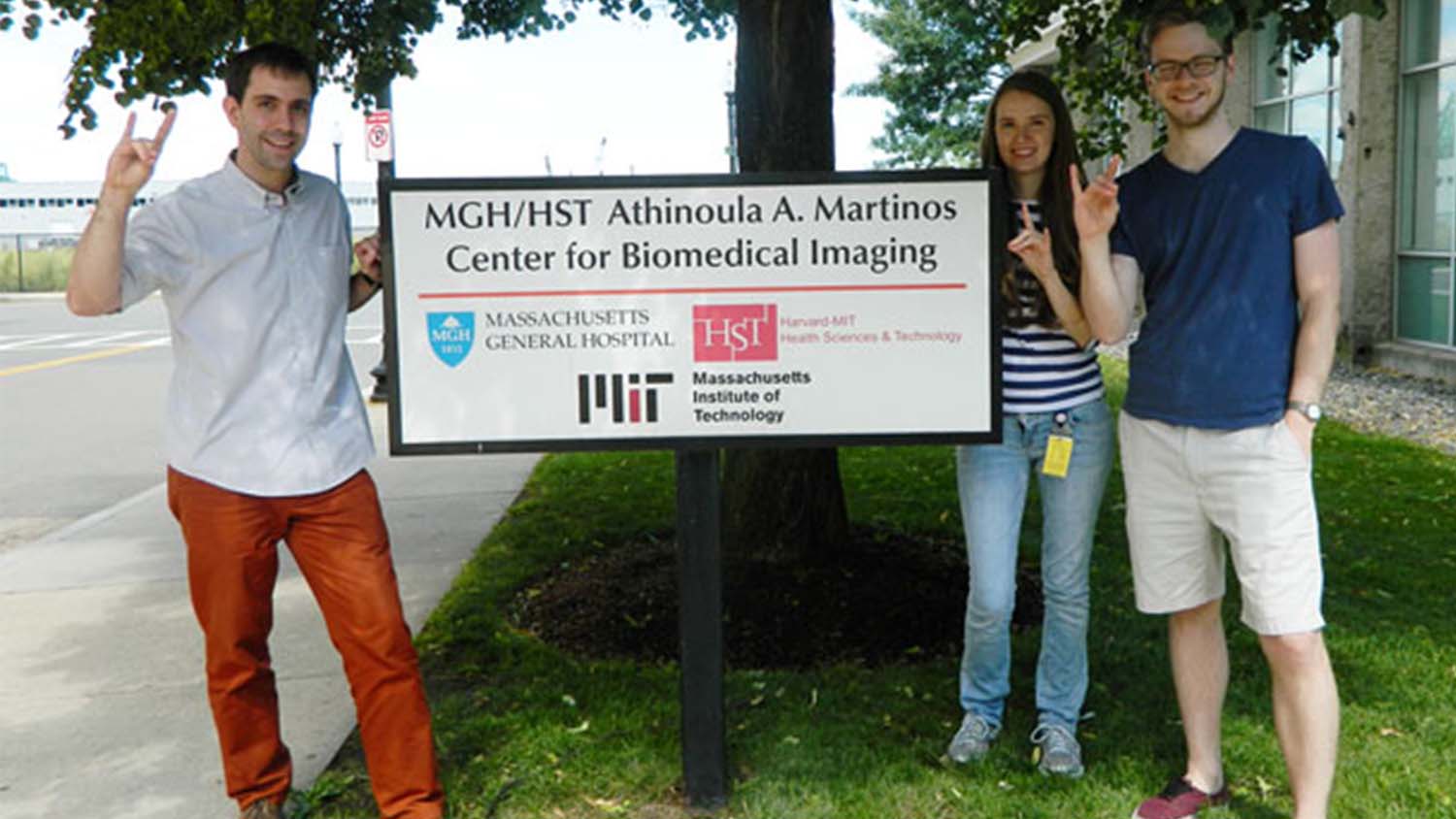
One answer comes from NC State graduate Jaclyn Smith. An introduction from fellow alumnus Ian Hill led her to contact Hooker about a summer internship. She sent her résumé, spoke with him over Skype and secured funding. She worked in his laboratory in the summers of 2013 and 2014, with postdoctoral researcher Genevieve Van de Bittner among the people guiding her work.
Smith described a steep learning curve during the first summer. In the second, she had more scope to design and carry out experiments herself. It is an ordinary progression in research, which is exactly why it matters: opportunity becomes useful through repeated practice. A prestigious address on its own cannot supply that. Somebody has to provide the time, equipment and space to learn.
She later spoke of wanting to offer young students opportunities in the way Hooker had. The connection makes an appealing loop. A visitor to his high-school classroom helped make an unfamiliar field visible. Years later, students from his own university found a route into his laboratory through another alumnus. The machinery of opportunity here is small enough to recognize: an introduction, a conversation, a funded summer, a return visit.
Five applications, then a phone call
Hooker’s own opportunities did not all arrive at the first request. He applied for an MGH research award in five consecutive years beginning in 2011 before being selected as a Rappaport MGH Research Scholar in 2016. The award provided $500,000 over five years. For him, its distinguishing feature was the freedom to pursue work without the usual restrictions attached to research funding.
The arithmetic is simple; the professional experience is less so. Repeated applications sit awkwardly beside the tidy account of a rising career. They require returning to an institution that has already declined you, with enough conviction to ask again. The eventual award lets us know how this sequence ended. At the time, the preceding attempts offered no such assurance.
Hooker has spoken about the award as permission to think across a career rather than within the boundaries of the next application. His question was “How big can I dream?” It belongs to someone who knows that a serious ambition can take decades. There is patience in that formulation, but also an insistence that the pace of daily work should not determine the size of the eventual question.
“How big can I dream?”
Jacob Hooker, reflecting on research freedom
From editing papers to leading people
In 2017, Hooker co-founded Eikonizo Therapeutics. He later co-founded Sensorium Therapeutics, where he is now chief executive officer. Sensorium publicly announced his CEO appointment in July 2025, succeeding Sandra Glucksmann. The company’s current leadership includes fellow scientific founders Stephen Haggarty and Jerrold Rosenbaum. His route into leadership has continued to involve people from different professional backgrounds.
He also took responsibility for another kind of scientific institution. Appointed editor-in-chief of ACS Chemical Neuroscience in 2021, he led the journal through 2025. In July 2026, ACS announced David Olson as the next editor-in-chief, after an interim period led by Michael Kassiou. Hooker’s editorial chapter is now part of his career history, alongside his research and company-building work.
An editor helps decide which work enters a shared conversation. A company leader has to decide how people and resources will be organized to carry work forward. Both roles introduce responsibilities beyond being good at your own specialty. They ask whether other people can do useful work together, and whether the institution makes that work easier to accomplish.
The questions keep company
His public writing gives a direct view of how he thinks about that responsibility. In February 2026, Hooker published an essay on team trust after revisiting Patrick Lencioni’s The Five Dysfunctions of a Team. He looked to organizational research to consider how trust relates to coordination and performance. His argument concerned the working conditions needed when information is incomplete and outcomes remain uncertain.
That emphasis is a useful companion to the scholarship story. Freedom to pursue a question matters; so does the ability to discuss an unwelcome answer. A team cannot make uncertainty disappear by adopting a confident tone. It needs room for disagreement and enough confidence in one another to keep working through it. Hooker’s essay places those conditions within the practical business of leadership.
He has also made space for longer conversations through Aether in Mind and his interview series, The Canopy. Guests have included historian of science Anne Harrington and researchers Bryan Roth, Kerry Ressler and Steve Hyman. An episode with Hyman appeared in September 2026. After years of working in specialized institutions, Hooker is carrying the habit of asking questions into a public format.
For young scientists, his advice has been direct: “Do what excites you and follow your instincts.” His own route gives the sentence some texture. It runs through an applied chemistry degree, a move across the country, a mentor’s presentation, students’ summer visits and repeated funding applications. From under a car to the CEO’s desk, the interesting parts of Hooker’s career have often begun with an opening he could not fully map in advance.
Continue the conversation
Follow Hooker’s writing, interviews and professional work.
- Sensorium Therapeutics
- Jacob Hooker on LinkedIn · X
- Aether in Mind: essays and conversations
- The Canopy on YouTube · Apple Podcasts
- Hooker’s February 2026 essay on team trust
- The early years: a 2015 profile
- Hooker on research freedom and the Rappaport scholarship
- The Chemistry of Competition: Hooker at Brookhaven