Stefan Strein left an empty office and an answered inbox. The new projects were signed and funded. Investment partners had received reassurance. Each member of his team had had a one-to-one conversation. The handoff meetings were finished; the thank-you notes delivered. There had even been farewell parties. In the small genre of executive departure announcements, his inventory of completed chores was unusually satisfying. Someone had remembered to put the chairs back.
He was leaving Cleveland Clinic, where he had arrived in 2015 as its first internal chief investment officer. By the time he announced his departure in 2026, the office he had built had become a place where other investment leaders learned their trade. Several colleagues had gone on to CIO jobs elsewhere. His successor would inherit an organization, rather than a collection of tasks waiting for their owner to return.
That is a useful place to begin with Strein. An investor’s public biography tends to count dollars, titles and prizes. His departure note counted conversations. Both matter. The dollars describe the responsibility; the conversations suggest how he carries it. In June 2026 he joined UNC Management Company as president, chief executive officer and chief investment officer, taking that experience to a university investment organization with its own long history.
An investor before the institution
Originally from Baltimore, Strein holds an undergraduate degree from Washington College and a graduate degree from Johns Hopkins University. His earlier career included work at two mid-Atlantic venture capital firms, investing in seed and early-stage technology businesses. He also worked on licensing and commercializing technology developed at Johns Hopkins and Virginia Tech. Before he managed large institutional portfolios, he worked near the point where an idea tries to become a business.
Those are different vantage points on the same practical problem: deciding what deserves capital. At the early-stage end, an investor considers a company whose future remains largely unwritten. At an endowment, the institution already has a future to protect. The opportunity must fit inside a larger set of obligations. Strein’s career crossed that distance, moving from direct and venture investments into the management of diversified pools serving nonprofit organizations.
He spent a decade as vice president and CIO of the Annie E. Casey Foundation before moving to Cleveland. The foundation’s endowment portfolio stood at $2.9 billion in UNC’s account of his tenure. Then came a different assignment: bringing an already invested institutional portfolio under an internal investment office. The money had not paused its business while the new organization was being assembled. There was a portfolio to oversee and a team to build.
Vice president & CIO
First internal CIO
President, CEO & CIO
Room to think beyond the job title
Strein built and led a team of 23 professionals across investment, research, risk and operations. This was work on the machinery of investing as well as the investments themselves. A portfolio needs decisions, but it also needs ways to measure those decisions, identify risks and keep the institution informed. The organization around the money determines which questions get asked and how quickly a troublesome answer reaches the right person.
His preferred structure gave people room to work beyond a narrow specialty. The team used a hybrid generalist model, with investment staff encouraged to consider opportunities across asset classes. In describing it in 2024, he emphasized preparation for future senior roles, inside or outside the office. He wanted colleagues to learn the whole portfolio. A promotion elsewhere could therefore be evidence that the arrangement had worked.
There is a generous assumption in that design: a person hired to do one job may have something useful to say about another. It also sets a demanding standard. Broader responsibility asks people to understand how their particular decisions fit together. An analyst cannot simply disappear into a specialist vocabulary and hope everyone else finds it reassuring. Expertise still matters; so does being understood by the person across the table.
“Everyone is assigned to be a skeptic of the investments we make.”
Stefan Strein, 2025
A generalist office needs permission to disagree, too. Strein’s instruction that everyone examine investments skeptically makes questioning part of the job. The appealing proposal must survive scrutiny from colleagues who may approach it differently. That is a practical counterweight to the enthusiasm that accompanies any attractive opportunity. A room full of capable people becomes more useful when they feel entitled to ask the awkward question.
The record of colleagues moving into leadership gives this philosophy a concrete shape. Alex Ambroz, Adam Smith, Jonathan Grushkin and Kelli Washington all went on to become CIOs after working at Cleveland Clinic. There is no need to imagine a private mentoring conversation to see the pattern. The names and subsequent roles are enough. An investment office can develop a portfolio and the people who will eventually run other portfolios.
The apprenticeship hidden in the org chart
One role offers a particularly revealing example. When Strein took the Cleveland job, he sought advice from fellow CIO Jason Klein. Klein mentioned wishing he had someone assigned to special projects. Strein made a note and included such a position in his organization from the beginning. The resulting stakeholder-engagement role sat close to the CIO and gave its holder a view of how an investment office fitted into the wider institution.
Jon Mecoli held the original role and subsequently moved to a managing-director position at the Mott Foundation. When the position opened again, Strein described it as a route for someone who wanted to become a CIO. Investment experience was required. The work included understanding and helping articulate portfolio construction while participating in discussions across asset classes. It had been designed as a stage in someone’s development, with movement onward built into its purpose.
The arrangement recognizes a part of investment leadership that a spreadsheet cannot teach by itself. A CIO has to explain decisions to people with different responsibilities and different reasons for caring about the portfolio. Boards, executives and external partners need a coherent account of the same organization. Spending time where those conversations meet offers a kind of education that is difficult to obtain by selecting investments alone.
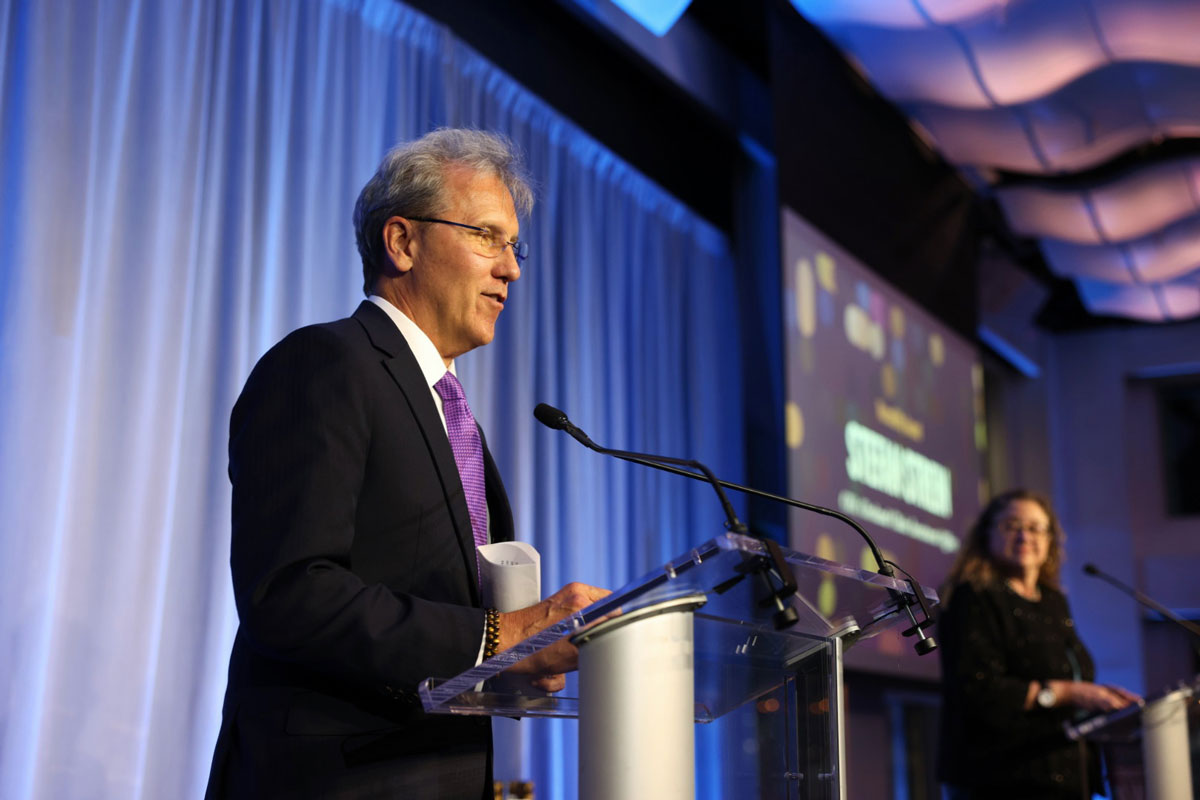
Learning goes both ways
Strein’s committee work places him in other rooms where investment decisions carry an institutional purpose. His roles include the Western Reserve Land Conservancy, New Covenant Trust Company and the W.K. Kellogg Foundation and Trust. He also participates in Sponsors for Educational Opportunity’s limited-partner advisory council and Accelerate Investors’ CIO Council, whose activities include a mentorship program for aspiring chief investment officers.
Those commitments extend the question of who gets to develop an investment career. Sponsors for Educational Opportunity provides education-to-career pathways into the industry. Accelerate’s mentorship work supports future CIOs. They connect with the more immediate task of giving employees experience across a portfolio: preparation can happen within an office, and access to that preparation can be widened beyond it.
His own description of service at the Cleveland Foundation has a modest emphasis. Ronn Richard was the first professional connection he made on arriving in Cleveland, and welcomed him into the business community. In 2026, as he completed his third and final investment-committee term, Strein thanked colleagues for the experience. He said the work had made him a better-informed investor. Even the person responsible for teaching others has somewhere to go to learn.
Arriving after the first chapter
At UNC, Strein succeeded Jonathon King, who had led the management company for more than two decades. This assignment begins with an existing team and established investment partnerships. In his first-day announcement, Strein acknowledged what he was inheriting while pointing to opportunities to evolve and learn. The distinction matters. Building an office from its beginnings and taking responsibility for a mature organization require different kinds of attention.
UNC Management Company invests for the university system, its constituent institutions and affiliated endowments and foundations. Its commingled UNC Investment Fund held nearly $17 billion as of June 30, 2026. Pooling assets puts institutions of different sizes inside the same investment vehicle. Strein’s current role therefore joins investment judgment to the task of serving multiple participants, each with its own institutional commitments.
Long-term assets pooled for participating institutions, endowments and foundations.
In September 2026, he discussed a result that illustrated the time horizon he had inherited. The fund returned 37.8 percent for the fiscal year ending in June, with roughly half its growth attributable to SpaceX. The original exposure came through a venture capital fund in 2009. Seventeen years separated that early commitment from the gains Strein was explaining to a trustees’ committee.
He had joined UNC in the final month of that fiscal year. The return belongs to a much longer institutional history. Treating it as a quick result for the new chief would erase the very point of the investment. His task was to explain why an organization able to commit capital for many years could participate in opportunities whose outcomes take time to arrive.
For someone whose earlier work involved young technology companies, the example draws together two ends of a career: the uncertain beginning of a business and the patient ownership of an institution. It also makes a sober demand on the present. Long-term portfolios pass between leaders. Their decisions outlive the meeting in which they were approved, and often the people who approved them.
Strein’s answered inbox belongs in that story. So do the individual conversations and completed handoffs. His public record offers a view of leadership concerned with what other people can carry forward. In Chapel Hill, he now has an inherited portfolio and an inherited team to steward. Leaving a useful organization behind starts, inconveniently, long before the farewell party.