The revealing number in Ascend Consulting Group’s story is eight months. That is how long the firm said it had been working with Takes, a sports media startup, on an engagement it initially expected to last 60 days. Perhaps 90, if things went well. A short pilot had become a continuing relationship. Somewhere along the way, asking students what they thought had become part of building the product.
- Student researchers help consumer teams test concepts, interfaces and messaging.
- Findings feed into recurring conversations with product decision-makers.
- The fit is strongest when college consumers are the audience and the team can act on feedback.
There is a small organizational puzzle here. Companies want access to young consumers. Students want access to companies. Ordinarily, those desires meet at a careers fair, where everyone practices saying impressive things. Ascend arranges a more practical encounter: give the students something unfinished, let them investigate it, and bring their findings back to the people who can change it.
Sixty days became eight months
In Ascend’s account, Takes had already spent two years trying to collaborate with students across functions including marketing, analytics and product. Then came a pilot with Ascend. The students learned the product, gathered views from peers and kept showing up. By the time Ascend described the relationship publicly, Takes had introduced FanPlay, another part of its sports fan experience.
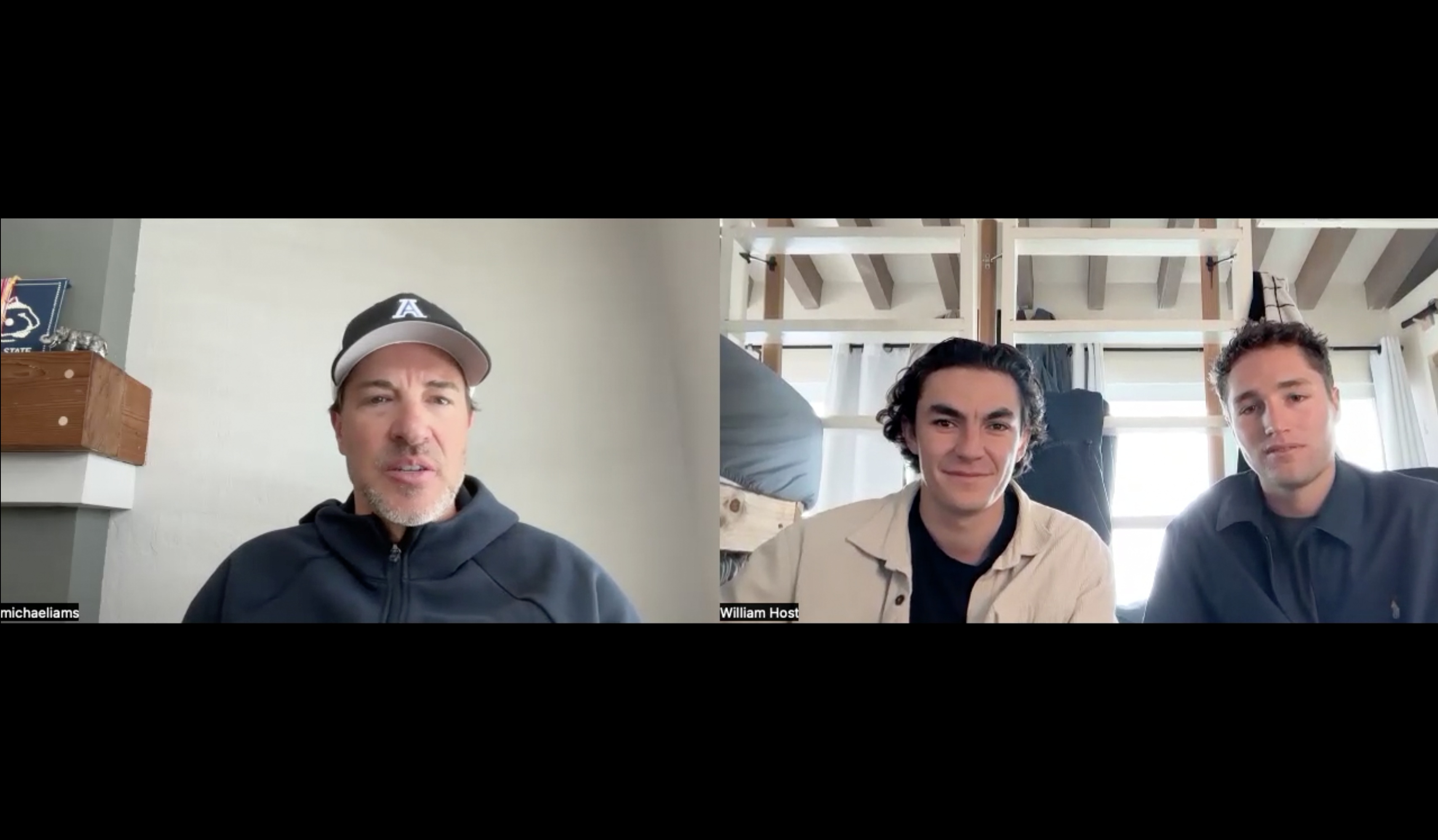
The interesting evidence is the client’s explanation. In a video shared by Ascend, Takes CEO Michael Iams talked about communication and cultural fit. “You also meshed really well with our culture,” he said. That is a modest but useful description of why research might become a recurring engagement: the people delivering it understand how the receiving team works.
“You also meshed really well with our culture.”Michael Iams · CEO, Takes
This does not establish that student feedback caused a launch or produced a particular revenue result. It supports a narrower conclusion. The relationship lasted beyond its expected window, and the customer described the team as fitting into its working culture. For a consulting business, being useful enough to invite back is a meaningful test.
The campus is doing two jobs
William Host and Malcolm “Mac” Cutler founded Ascend in 2024. Its early chapters were at UC Santa Barbara, UCLA and Northwestern. In January 2025, the firm announced chapters at Michigan, Boston College and UC Berkeley. The expansion gave a geographically scattered research operation more places to recruit and more student communities to hear from.
Today, its LinkedIn description reports more than 450 vetted and trained students across 10 university hubs. Treat that as a network figure. It describes the reach of the student operation rather than a conventional office full of salaried consultants. The campus supplies both the people carrying out the work and proximity to the consumers whose habits interest clients.
The student proposition helps explain why that arrangement might hold together. Ascend’s recruiting site describes six weeks of training, followed by work presented directly to founders or executive teams. Students get practice turning observations into recommendations. Leadership roles add responsibility for teams and client relationships. The firm’s stated values emphasize ownership and collaboration, qualities the operating model actually requires.
Across 10 university hubs, according to Ascend’s public company profile.
A camera makes the idea tangible
Consider Dijie, an early client developing a point-and-shoot digital camera with a companion mobile app. Ascend says its students in Santa Barbara tried handmade prototypes, gave feedback on the hardware and software, and took some of the first photographs. This is a particularly concrete version of consumer research. There is an object to hold, an interface to navigate and an experience to discuss.
Founder Jake Lewin’s response, as quoted by Ascend, was pleasantly specific: “The student team was actually really engaged and thoughtful.” The attraction is easy to understand. A young audience can inspect an unfinished product before its maker commits to the next version. A camera also reminds us that Ascend’s potential work extends beyond the familiar exercise of commenting on app screens.
The useful unit is next week
Ascend sells research and consulting to businesses. Its buyers include startup founders and enterprise product, design and leadership teams. Interviews, concept evaluation and UX feedback are the services; recommendations and repeated discussion turn that work into a commercial relationship. A prospective buyer should start with a defined decision and ask for scope, cadence and a quote.
Its published cases show several versions of that decision. BeReal’s concerns involved retention and messaging. Coverd’s involved positioning and user experience. PFF needed complex sports statistics to make sense on mobile. Find needed structured reactions to a social dating concept. These are company-reported accounts of work and direction, rather than controlled measurements of business impact.
- 01 Frame a question
- 02 Watch and listen
- 03 Compare findings
- 04 Choose a change
The market alternatives are familiar: hire an internal researcher, commission an agency, recruit through a panel, or run the interviews yourself. Ascend’s distinctive offer combines student access with an ongoing team relationship. That makes it worth considering when the obstacle is keeping a particular audience close to a changing product.
Borrow the appointment
The practical lesson is available without joining a campus network. Choose a question narrow enough to answer. Put the product in front of relevant people. Separate what they do from what they politely say. Assign someone to turn the findings into a decision, then schedule the next conversation. This is an editorial inference from Ascend’s approach, and a useful discipline for any product team.
The audience still needs careful definition. College students can illuminate college life; their experiences cannot automatically represent every young consumer. A team serving a different population needs different participants. And recurring feedback has little practical value when nobody has time or authority to change the product. Ascend’s proposition becomes most interesting at that intersection: a relevant audience, an unfinished question and a team ready to listen again.