The export button is a small act of editorial judgment. Somewhere inside a company, a marketer opens the reporting system, looks at the dashboard someone has carefully built, and downloads the data into a spreadsheet. The expensive software has delivered its answer. The person doing the work has another question.
Arun Srinivasan has built much of his professional argument around that moment. As co-founder and CEO of Clarisights, he works on marketing analytics for enterprises. His interest is unusually close to the operator's chair: what can the person responsible for a campaign actually see, change, and understand before more money gets spent?
His career began on the buying side of advertising. That gives the reporting problem a particular urgency. A delayed answer is attached to a live budget. The chart may be beautifully finished; the decision can still be late. In Srinivasan's account of digital marketing, the distance between those two things keeps returning.
The advertisement before the machinery
Srinivasan says his entry into online advertising came through a college internship at PartyGaming, introduced through a friend of his brother. He researched websites where the company might advertise. The research became media buying, and the internship became a full-time role. Finding an audience involved locating sites and dealing with their owners.
He recalls reading about the young Facebook in Wired and contacting it about advertising. The campus audience looked promising for poker. Negotiations followed through an outside advertising representative. Clarisights dates his early Facebook buying to 2004; he describes the resulting campaign as one of the platform's first paid experiments.
The lesson he carried forward concerned the speed of learning. Digital advertising let a buyer try something, inspect the response, and adjust. That early arrangement also put responsibility in a recognizable place. Someone chose the audience, spent the money, and had to decide whether the experiment deserved another round.
A customer, then a subtraction
Years later, Srinivasan met engineer Ankur Gupta at a startup program in Bengaluru. Gupta remembers extended discussions before Srinivasan took him to see a campaign manager's difficulties firsthand. Their earlier venture, AdWyze, combined marketing automation and optimization. Customer conversations gradually pushed them toward reporting.
They removed work from the proposition. Gupta recalls their concern that advertising platforms would eventually provide the automation features themselves. A reporting business crossing platform boundaries offered a different basis for the company. There is a modest but consequential discipline in that decision: completed engineering does not automatically deserve a permanent place in the product.
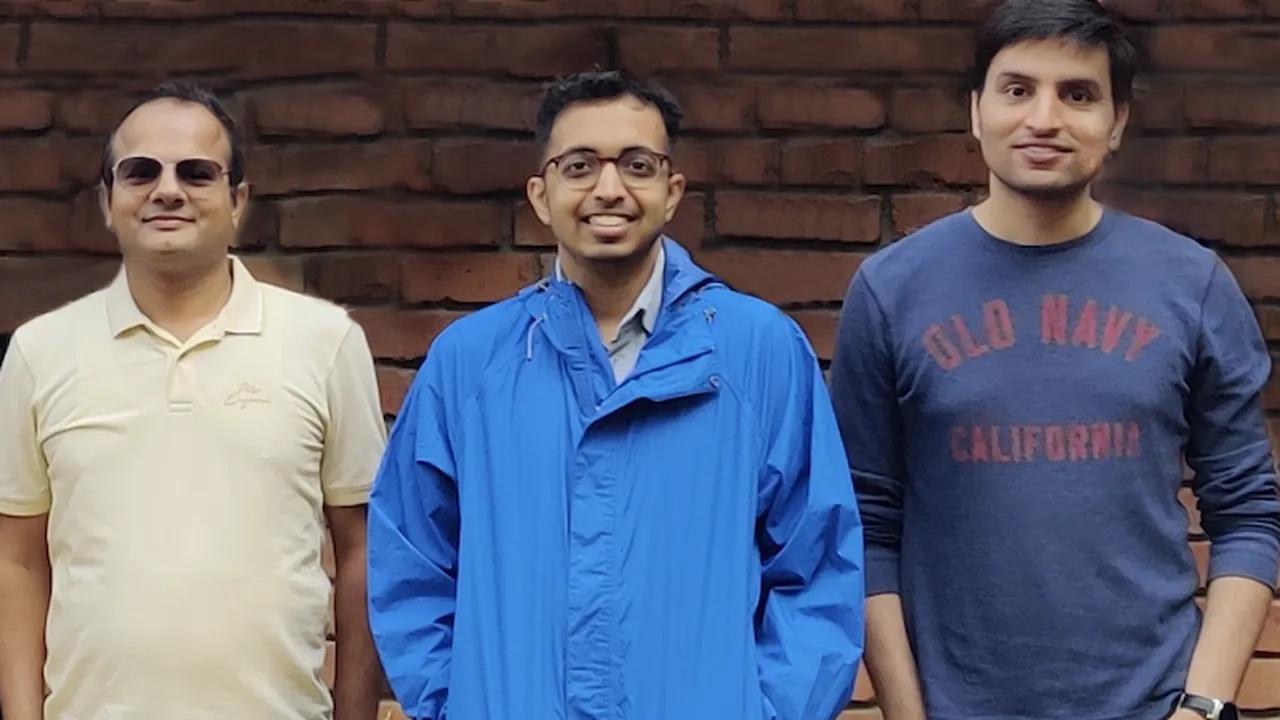
The partnership joined a marketer's understanding of the working day with engineering experience. Clarisights now lists Srinivasan, Gupta and co-founder and CTO Ashu Pachauri together in its leadership. The company describes Gupta's background in Google advertising technology and Pachauri's work on databases at Meta. Srinivasan supplied experience from the other side of the screen.
The spreadsheet returns
By the end of 2017, Srinivasan was publicly arguing that business intelligence would develop more specialized tools for individual functions. His comparison was with customer relationship management: a database acquires value through the context and workflows built around it. Marketing, he thought, needed the same attention to the particularities of its work.
“A vertical solution will be less wide and a lot deeper.”
Arun Srinivasan, The Inflection Point for BI Platforms
That sentence describes a product choice and a sales choice. A general reporting platform can address many departments. A marketing tool has to earn its place through what it understands about marketing. It must justify the narrower field by being useful inside it. The buyer's daily questions become a measure of the design.
In his May 2024 writing, Srinivasan described a progression that explains the stubborn spreadsheet. Young companies can sensibly begin with simple reporting. Growth brings a warehouse, a data team, and shared dashboards. More growth adds channels, markets and specialist teams. The questions multiply, and operators start building their own reports again.
His point is that the return to spreadsheets can express a need for flexibility. A person steering a campaign wants to change the breakdown, add a calculation, or follow a suspicion. The ability to do that immediately has value. An export button can become the side door through which the actual analysis leaves the official system.
- 01Start simpleSmall teams work in sheets.
- 02CentralizeA data team builds shared dashboards.
- 03Get specificMore markets create new questions.
- 04Export againOperators recover flexibility in sheets.
A bigger customer changes the brief
Clarisights' focus on enterprise customers came through revision too. Srinivasan says the original expectation was that smaller companies would need help consolidating reporting. Successful startups could go on to build internal data teams; unsuccessful ones could reduce spending or disappear. Either outcome complicated the business.
Delivery Hero brought a different problem, spread across a large advertising operation. Srinivasan has dated his first conversation with its marketing leader Filippo Gallignani to 2020. The relationship helped clarify demand among teams whose scale made reporting difficult even when they had considerable internal resources. Complexity became part of the customer qualification.
That is a useful distinction for understanding Srinivasan's work. The opportunity was among organizations already trying seriously to solve the problem. A larger engineering budget does not settle every question about a marketer's next decision. Sometimes it produces more machinery between the question and the answer.
Clarisights announced a round led by Sequoia Capital India, with OMERS Ventures and other investors participating.
In October 2021, Srinivasan announced the funding alongside a reported fourfold increase in revenue over the preceding year and profitability. He described a team of 20. Those figures belong to that point in the company's history. They capture a business that had found customers while still explaining why its category should work differently.
The ambition combined several jobs usually spread across tools: collecting data, transforming it, storing it for analysis, and giving people a flexible workspace. That is a substantial technical commitment for a company selling ease of use. The customer encounters a report. The builder inherits everything required to make that report dependable.
The distance between a model and a decision
Srinivasan's 2023 writing on analytics treated delivery as a distinct problem. A team can collect information, build models and visualize results, yet struggle to get those models used. The moment that matters is the business user's decision. Infrastructure has to survive that final, very human examination.
He described the friction of changes that travel through a connector, a warehouse and a visualization tool, sometimes involving separate teams. Marketers can request an update or construct an alternative report themselves. Neither choice automatically preserves the benefits of all the analytical work already done. An organization can possess valuable knowledge and make it awkward to use.
This is why his argument reaches beyond dashboard design. The question is who gets to explore. If every follow-up requires another handoff, the working pace depends on a queue. A reporting product must account for the conversation people have with data as they discover what they need to ask.
In a September 2023 conversation with Anna Nadeina on saas.unbound, Srinivasan discussed another consequence of serving enterprises: balancing their requests with core product principles. A large customer provides evidence about demanding work. It also has its own priorities. The roadmap has to carry that evidence without becoming a collection of unrelated promises.
Putting the company on a schedule
Gupta remembers Srinivasan comparing the early operation to a “Punjabi wedding”: disorganized, yet somehow coming together. It is an affectionate description of a company running on intuition. The comparison also leaves room for the less festive sequel. Once customers rely on the result, somebody has to know who is doing what before the music starts.
The need for structure reached Clarisights' own operations. A June 2025 hiring account published under Srinivasan's name describes formalization beginning in early 2022. Earlier interviews depended heavily on which founder was available. Candidates could experience quite different processes. A growing company needed a more consistent way to make decisions.
The account describes an applicant tracking system, an initial culture conversation, functional interviews and a collective debrief. Candidates who complete the rounds receive feedback, including when the decision is negative. This is an unglamorous piece of company building, and a revealing one. A founding team's instincts eventually need procedures other people can understand.
The article reported growth from 12 to 70 people over several years. Headcount is one way of seeing that transition. Another is the change in who must coordinate with whom. Improvisation becomes harder to repeat when every decision involves more calendars. Even a company devoted to answering questions needs a system for deciding who asks them.
The chat box inherits the problem
By May 2026, Srinivasan was applying his argument to language models. In an essay about a marketing data plane, he questioned the idea that conversational access alone could replace reporting. The requirements he outlined included granular data, context for metrics, efficient queries and output that humans can inspect.
His reasoning keeps the working organization in view. A chat can help one person investigate a question. Teams also need shared reporting and ways to examine the results. The appeal of a new interface does not settle how data gets prepared, what a metric means, or whether colleagues can verify the answer.
There is continuity here with the young media buyer's education. An experiment becomes useful when someone can understand what happened and make a choice. As the systems around that choice have grown, Srinivasan has kept returning to the person making it. His business depends on reducing the distance without discarding the detail.
The spreadsheet remains an exacting competitor. It lets people rearrange a problem until the answer starts to make sense. Srinivasan's task is to preserve that freedom inside the complexity of an enterprise. Somewhere, a marketer is about to click Export. The question is whether the next piece of software gives them a reason to stay.