On January 31, 2018, Aric Coffman inherited a job with more than forty years of someone else’s history attached to it. Rick Cooper was retiring from The Everett Clinic. Coffman would become chief executive and market president, moving from leadership in New Mexico to an institution in Washington that had been around since 1924. Some appointments arrive with a clean sheet of paper. This one came with a very full filing cabinet.
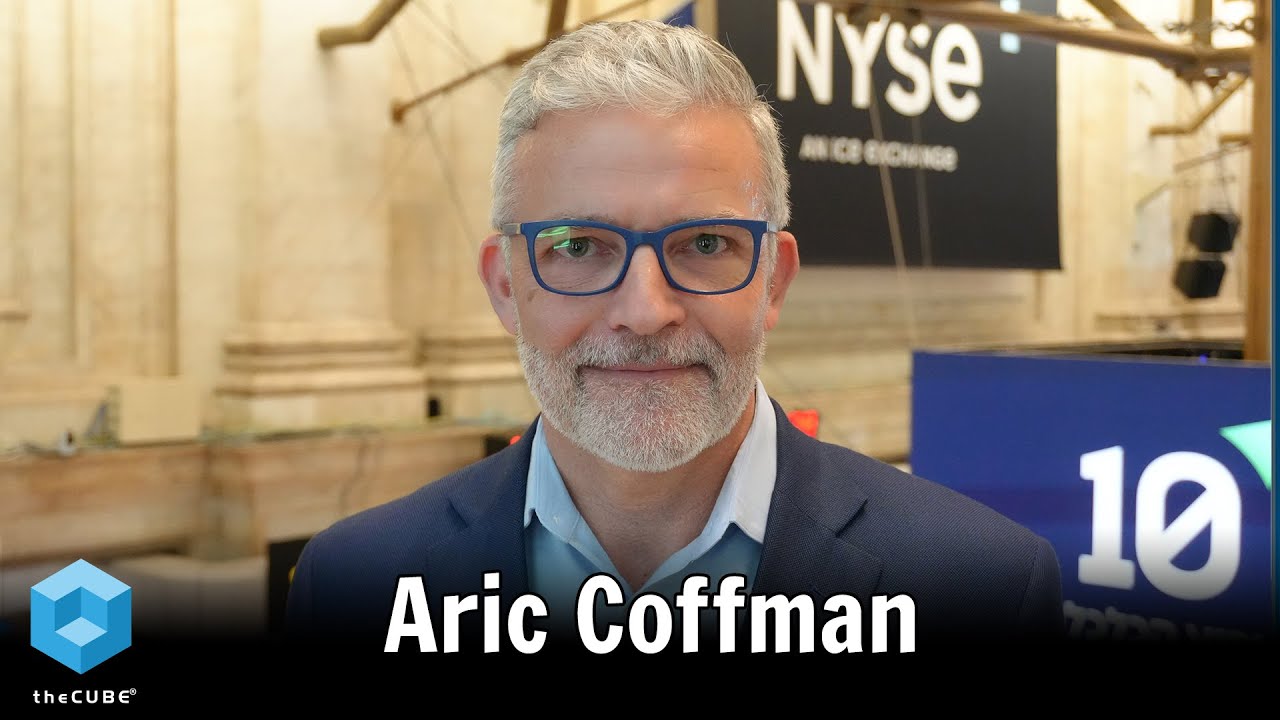
Six years later, he would accept another job shaped by its previous occupant. In May 2024, P3 Health Partners named him chief executive, succeeding co-founder Sherif Abdou. Between those two handovers came an acquisition, a wider regional remit and a startup called Honest Medical Group. The recurring assignment was taking responsibility for an organization at a moment when its next version was still being decided.
That gives Coffman’s career an interesting shape. The familiar executive biography moves upward, title by title. His also moves between different kinds of institutions: an established regional organization, a business changing owners, an early-stage company and a publicly traded enterprise. Each has its own history. Each hands the incoming leader a different set of keys.
Forty years in the rearview mirror
At Everett, Cooper’s departure made the passage of time unusually visible. Four decades of service is longer than many businesses survive. Coffman was stepping into an organization whose employees, routines and reputation had developed over years. The transition followed recent openings in Bothell and Woodinville. He was arriving while the organization was expanding, with both continuity and further growth on the agenda.
The scale was substantial. Everett then employed about 2,400 people across 30 locations. Numbers like those put a useful boundary around the word “leadership.” Whatever a chief executive intends has to travel through many other people before it becomes an ordinary working day. An appointment announcement can fit on one page; the organization it describes rarely behaves so neatly.
Coffman’s public response acknowledged the person before him. “I’m thrilled to follow in his footsteps at The Everett Clinic,” he said. It was a statement of succession, with the emphasis on following. For an incoming executive, acknowledging the existing institution is part of the work. The future may require changes, but the past is already at everyone’s desk.
The education between the titles
Coffman brought a longer apprenticeship than the new title alone suggested. His earlier New Mexico positions included residency program director, associate medical director, senior medical director and chief medical officer. He also became president of DaVita Medical Group New Mexico. The sequence matters because it places his executive work inside an organization he had served in several capacities.
His formal education crossed disciplines too. At the University of Oklahoma, he earned a bachelor’s degree in chemistry and a medical degree. Later came an MBA at the University of Texas at Dallas, completed in 2015. By the time of the Everett appointment, the business qualification sat alongside years of organizational responsibility.
It would be convenient to turn those degrees into a theory of personality. The documented career offers something more concrete: a series of roles with different scopes, followed by a move to a different region. Education supplies credentials. Taking responsibility for another organization tests how much of the previous experience will travel.
New Mexico and Washington belong to the same résumé, but they are separate places with separate working relationships. Moving between them changes the setting in which authority has to operate. Coffman’s next chapter would add another variable: the name of the owner.
When the owner changes
DaVita Medical Group became part of Optum in 2019. Coffman continued as chief executive of The Everett Clinic and, from December that year, served as executive vice president of the Pacific Northwest. An ownership transition and a continuing appointment appear side by side in his career. The business changed hands; his responsibility carried on.
His regional accountabilities also included The Polyclinic in Seattle. His work in the Northwest encompassed integrating Everett with an independent physician association and growth initiatives along the I-5 corridor. The geography had widened, and so had the collection of organizations involved.
An acquisition has the pleasing certainty of a date. Integration has a less accommodating relationship with the calendar. The first records the legal event. The second concerns how separate operations work together afterward. Coffman’s Northwest years placed him on both sides of that distinction, leading an established organization while the larger corporate arrangement around it changed.
There is a particular kind of executive experience in staying through that process. A new owner does not make an organization new overnight. The continuing leader has to work with what exists while the surrounding expectations shift. In Coffman’s chronology, that period leads directly to a different proposition: a company still in its early years.
A startup chapter, then another handover
In December 2021, Coffman became chief executive and a director of Honest Medical Group, a Rubicon Founders portfolio company. He remained in those roles until April 2024. After the established institutions of the Northwest, this was a startup setting, with the practical demands of securing funding and building operations.
During his tenure, Honest expanded across two states. The contrast with Everett is useful: one appointment involved inheriting a long institutional history, while the other involved helping an early business establish itself. Coffman’s career contains both kinds of work. Neither can be reduced to the title on the office door.
On April 29, 2024, Honest announced Robert Bessler as his successor. Coffman would remain a senior advisor. The next CEO arrived with his own long operating history, including founding Sound Physicians. For Coffman, this was another transition, this time from the other side of the handover.
A week and a little more later, his P3 appointment took effect. The dates bring the change into focus: an outgoing CEO at one company, an incoming CEO at another. Succession was becoming a recurring feature of his professional life, rather than a single event at Everett.
- 2018Everett CEO and Washington market president
- 2019Continues through Optum acquisition
- 2021Honest CEO and director, from December
- 2024P3 CEO and president, from May 8
- 2025Joins P3’s board on July 8
Familiar faces at a new desk
P3’s handover combined a new chief executive with existing relationships. Coffman had previously worked with members of its leadership, including Abdou, co-founder Amir Bacchus and operating executive Bill Bettermann. He was joining a different company, but some of the people were already familiar.
Abdou initially stayed involved as an advisor and board member. The arrangement preserved a connection to the company’s founding leadership as the new chief executive took responsibility. It also made the transition more gradual than the appointment date alone might suggest.
In April 2025, Coffman described his ambition as building “a scalable, sustainable platform.” His explanation emphasized execution, alignment and accountability, along with technology used where it could add value. Those are operating commitments. They invite attention to the company’s subsequent performance, rather than asking an audience to admire the ambition by itself.
“we are focused on building a scalable, sustainable platform”
Aric Coffman · April 2025
That same month, he sat down with analyst David Schneider. Among the questions were what investors should measure and how to recognize progress toward profitability. A public company gives leadership an audience beyond the organization. The questions keep returning, and eventually another quarter supplies new figures.
The additional chair at the table
On July 8, 2025, P3’s board unanimously approved Coffman’s appointment as a director, filling the vacancy created by Abdou’s resignation. His term was set to expire in 2028. The successor had now taken on a board role as well as the executive one.
The distinction has practical meaning. The CEO runs the business; the board oversees it. Holding both positions places an executive inside both conversations. P3 specified that Coffman would receive no additional compensation for the board seat. Because he was employed as CEO, he did not qualify as an independent director.
It was another step in a relationship that had begun with the May 2024 appointment. At Everett, the handover had been framed by a predecessor’s four decades. At P3, the chronology included the co-founder’s advisory period, departure from the board and Coffman’s appointment to fill the vacancy. Institutional change had unfolded over more than a year.
The quarter after the promise
By August 2026, P3 was reporting a different set of figures from the prior-year quarter. Second-quarter revenue was $386 million, up 9 percent. Net income was $15.7 million, compared with a $43.7 million net loss a year earlier. These were company results during Coffman’s tenure, rather than personal accomplishments that could be detached from the organization.
The distinction between measurements matters too. P3 reported adjusted EBITDA of $54.4 million, a non-GAAP measure. It also noted favorable payer settlements and prior-year development in the quarter. Its raised full-year adjusted EBITDA outlook was a forecast. A quarterly profit, an adjusted measure and a forecast each describe something different.
Coffman said the business was executing according to plan. The next reporting period would provide another occasion to test that claim. This is where the succession story meets the ordinary discipline of running a listed company: promises acquire dates, and dates bring numbers.
His career has repeatedly brought him to that point after the introduction, when the appointment has ceased to be news and the organization still needs to work. The keys have changed hands. The filing cabinet remains. What follows is the job.