A pump is an awkward dinner guest. Ask what it does and someone may begin discussing impellers. Ask why one design deserves your money and the explanation can acquire enough moving parts to require its own maintenance schedule. The machinery may be perfectly sensible. Getting another person to see the sense in it is a separate job. Ari Zahavi has made that job his business.
Zahavi is the co-founder and CEO of California Technical Media, the Irvine studio he founded with Elena Borodina. He directs production and client strategy. The work includes technical animation, illustration, and interactive visualization: ways of opening a product or process to someone who cannot inspect its inner workings. His professional background adds an unexpected tool to that assignment. He holds a J.D.
That combination gives his career its particular shape. Legal reasoning asks how facts support a conclusion. Technical visualization asks how someone can follow the connection. Zahavi works where those questions meet. A machine can be accurate on screen and still leave its audience puzzled. A presentation can be handsome and still leave the important relationship unexplained. His business concerns the distance between those two results.
A law degree with a visual assignment
California Western School of Law appears in Zahavi’s education. His subsequent work has placed legal training alongside production rather than leaving it as a credential in a biography. Within CTM’s litigation practice, his responsibilities include working with counsel and experts, identifying what a decision-maker must understand, and arranging that material into a sequence.
Consider the difference between owning a stack of facts and being able to explain what happened. A timeline can establish order. An animation can show how parts interact. A diagram can make a relationship visible that would otherwise require several paragraphs. None of those formats decides which facts matter. That decision comes first, and it requires someone to understand the argument before choosing the picture.
The studio describes Zahavi’s role in terms of case strategy, storyboards, and the foundations for exhibits. His remit reaches beyond choosing attractive images. There is a useful discipline here for any communicator: before asking whether a picture looks convincing, ask what proposition it actually explains. Otherwise, the production may arrive beautifully dressed for the wrong occasion.
His presenter biography also describes the use of LiDAR and photogrammetry for precise three-dimensional models. Those methods bring measurement into the image-making process. A reconstruction therefore involves decisions about the underlying information as well as the viewpoint from which an audience will see it. For a viewer, the result is an image. For the production team, it also represents a chain of technical choices.
What must the audience understand before the next image makes sense?
The butler gets an alibi
In an October 2025 essay, Zahavi approached persuasion through an unexpectedly domestic cast: someone passing the salt, someone letting another person go ahead, and a butler accused of a crime. The examples share a question. What makes a request or conclusion seem sensible to the person receiving it?
His butler is useful because the story changes when an alibi enters the picture. The accusation no longer fits the listener’s understanding. Challenge the alibi and the conclusion becomes possible again. Zahavi uses this miniature mystery to describe how facts and relationships assemble into a framework. An audience needs connections it can follow, rather than a procession of isolated assertions.
His essay argues that visuals can carry those connections, including nuance and sequence. It also rejects the idea that generic graphics will do the job for every case. The argument is recognizably consistent with his production work: first understand the particular explanation, then decide how to show it. The butler has earned his place in the presentation. At least someone remembered to give him a motive and a calendar.
“Jurors remember this structured framework.”
Ari Zahavi, 2025
A pump, a powertrain, a point
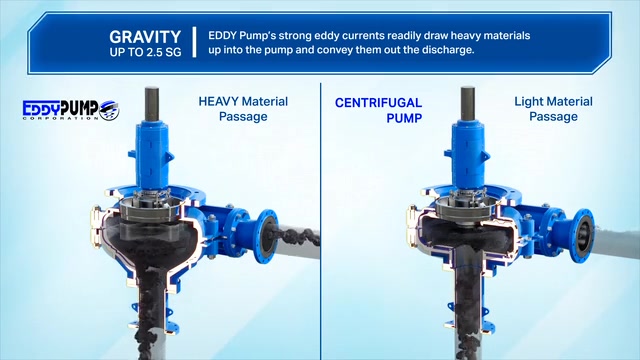
CTM’s industrial portfolio includes an Eddy Pump comparison, a hybrid electric powertrain, cold pilgering, and pipeline renewal. These are subjects with a practical obstacle in common. Their useful behavior happens inside something, across a sequence, or at a scale that makes a casual demonstration inconvenient. A photograph can show that equipment exists. It may leave the reason to choose it concealed.
The Eddy Pump work uses a comparison format. Elsewhere, an installation sequence or a cutaway has a different assignment. Putting the mechanism into view lets the explanation spend its time on the relevant difference. This is where the studio’s technology advertising work becomes concrete: a product’s operation supplies the material for the presentation.
For Zahavi, that creates a bridge between production and client strategy. The viewer might be evaluating a purchase, learning a procedure, or considering a technical proposal. Each audience brings a different question. The image has to earn its place by answering that question. Moving machinery can occupy a screen indefinitely; understanding requires a little more editorial judgment.
Two founders, different responsibilities
The company dates its founding to 2013. Zahavi and Borodina have built it around complementary responsibilities. He directs production and client strategy; she leads operations, production coordination, and client management. Their partnership places the explanation and the means of delivering it alongside each other.
A clear idea still needs review, revisions, and a finished file. CTM describes Borodina’s responsibilities as carrying the pipeline from briefing through delivery. The distinction matters in a small studio. A client buys an explanation, but also needs to know when it will arrive and which version the reviewers approved. The calendar is part of the product, even if nobody puts it in the demo reel.
There is a lighter example of their collaboration in a client account of a Virtual Burning Man project. David Richardson described commissioned Unity VR assets that included a castle and a rocking unicorn. His account credited Elena and Ari together and mentioned small surprises added to the castle. Technical constraints and playfulness evidently had room in the same assignment. Even a unicorn must respect the polygon budget.
The virtual project offers a useful change of scenery because the constraint remains visible even in a playful setting. Richardson described a low polygon requirement for the assets. The castle had to look the way the client intended while fitting that limit. A budget for geometry may sound less romantic than a castle, but the two had to coexist for the assignment to work.
The unglamorous business of getting it right
CTM publishes a production sequence with four stages: scoping, script and storyboard, an animatic, and the finished film with its associated assets. Two review gates sit before final production. Message and sequence are reviewed at the storyboard stage; timing and camera choices are settled in the animatic.
That order gives disagreement somewhere useful to happen. It is easier to question a sequence while it remains provisional than after everyone has become attached to the finished version. An animatic makes the timing visible early enough for reviewers to respond. For a studio selling understanding, the review process has to make its own decisions understandable too.
The delivery can include a master film, a silent trade-show loop, short social cuts, stills, and training clips. Those formats recognize that an explanation has several working lives. A booth visitor has different circumstances from someone watching a presentation with sound. The studio also transfers source files and copyright on delivery. Such details rarely produce a stirring anecdote, but they determine whether a client can keep using the work after the applause has ended.
- 01Scope
Define the assignment - 02Storyboard
Review the message - 03Animatic
Review the sequence - 04Deliver
Film and asset set
Taking the explanation to the classroom
Zahavi’s work also extends into professional education. In January 2026, he was listed alongside Alex Kulikov for a Celesq program on trial demonstrative exhibits and their foundations. The pairing puts his visual communication practice into a teaching setting, with the construction and use of exhibits as the subject.
The same presenter listing includes programs dated January 21 on civil RICO, January 29 on scam typologies, and February 3 on synthetic identity fraud. These appearances broaden the public record of his professional activity beyond the animation portfolio. They also show him working with another presenter across a set of defined legal topics.
There is continuity between teaching and production without needing to pretend they are identical activities. Both require choices about what comes first and what the audience must grasp before proceeding. In a film, the next image arrives on schedule. In a classroom, the explanation has to survive the possibility of a question. Either setting exposes a missing step rather quickly.
An audience on the other side
Zahavi’s career connects people who know a subject intimately with people being asked to make sense of it. The first group has spent years acquiring shorthand. The second has a decision to make. His place between them helps explain why law, machinery, visual storytelling, and client strategy recur in the same professional life.
The demanding part is choosing what to leave visible. Include every detail and the audience inherits the expert’s entire filing cabinet. Remove too much and the explanation loses the relationship it was meant to preserve. CTM’s emphasis on working through the logic before production is a practical response to that tension. The picture begins with a decision about understanding.
A pump, a courtroom timeline, and a virtual castle make an unusual collection. Together they offer a more particular portrait of Zahavi than a title alone could provide. There is a person responsible for deciding how the parts will make sense to somebody else, and a production partner responsible for getting the work through. The audience eventually sees the result. Ideally, it also sees the point.