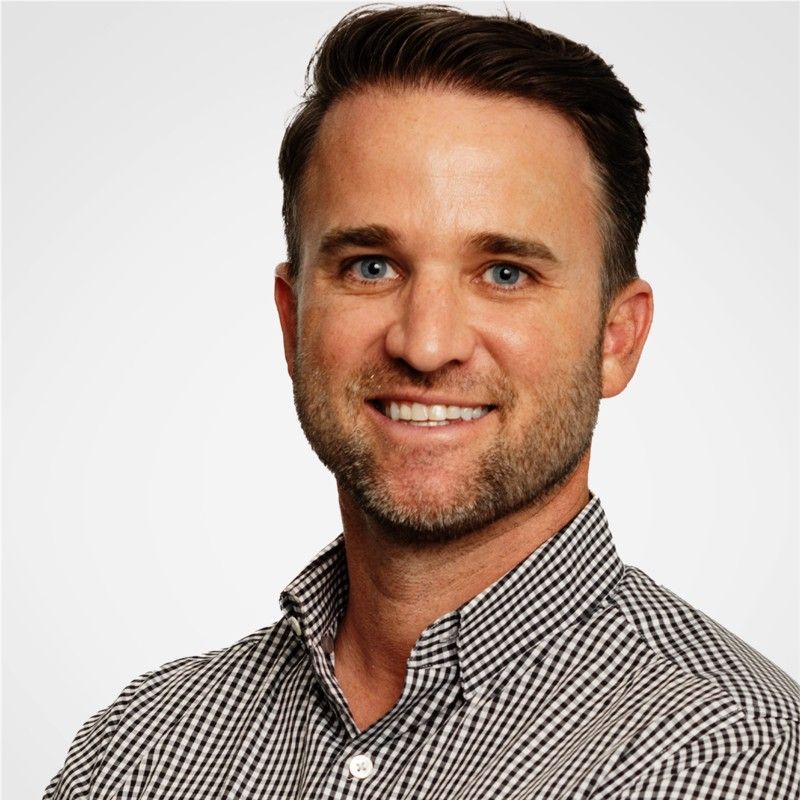
Walk into one of 5,000 medical practices - a plastic surgeon in Beverly Hills, a fertility lab outside Boston, a hearing clinic in a strip mall - and at the moment a patient hears the price and hesitates, Todd Watts is in the room. Not literally. His software is. PatientFi runs a soft credit check, returns a monthly payment plan, and turns a flinch into a yes. He has done this for roughly 320,000 people and more than $3 billion in care that insurance never intended to cover.
Watts co-founded PatientFi in 2017 and runs it as CEO from Irvine, California. The company now employs about 130 people and is operating at a $140 million annual revenue run rate. It is the category leader in financing fertility and IVF, a market it entered almost as an experiment and then took over. The thesis is unglamorous and enormous: a huge share of American healthcare - aesthetics, dentistry, ophthalmology, fertility, audiology - is paid out of pocket, at the counter, by people who would happily say yes if "yes" came in installments instead of a lump sum.
The unglamorous part is the point. PatientFi does not sell a procedure or a promise of beauty. It sells the boring infrastructure underneath the decision - underwriting, bank partnerships, point-of-sale software, and the training that teaches a front-desk coordinator how to talk about money without flinching herself. Watts likes to describe the work as training sales teams to market financial options, partnering directly with banks and credit unions, and running first-and-second-look underwriting so that more patients qualify. It is plumbing. Very profitable plumbing.
He did not arrive here by accident. Watts earned a B.S. from the University of Southern California, studied consumer economics at IESE Business School in Spain, and took an MBA from Yale. Between the degrees he learned the trade. From 2009 to 2012 he was an investment banking analyst at J.P. Morgan, advising on mergers and capital raising across healthcare, consumer, and retail - the exact seam where medicine meets money. Then he went operator: five years as Senior Vice President and Head of Operations at Alphaeon Credit, a Newport Beach healthcare lender, where he learned how patient financing actually behaves when real people and real procedures are involved.
By 2017 he had seen enough to make the jump. "Like anybody else who wants to do something that's going to really make a big impact, you have to make a big jump," he has said, and he means it as a description of risk, not a motivational poster. He left a senior operating role to start a company with a handful of people in a small Irvine office. The bet was that the point-of-care moment - the precise second a patient decides whether a treatment is affordable - was being handled badly by everyone, and that whoever handled it well would own a category.
The growth that followed reads like a misprint. PatientFi landed at number 54 on Deloitte's Technology Fast 500, reporting better than 2,000% sales growth over three years. It made the Inc. 5000. It raised on the order of $100 million in total funding, including a Series B in early 2024, and it kept widening the aperture. When it pushed into fertility, sales in that segment grew more than 65% in a year and PatientFi partnered with Boston IVF and its two dozen-plus labs across the U.S. and Canada. "It proves we can take our solution, and it can work in a very different medical specialty," Watts said - the satisfaction of a man watching a thesis survive contact with a brand-new market.
Then audiology. Hearing aids cost around $5,000 and get replaced every five years, almost always in cash, in a sector with thin payment options. PatientFi onboarded close to 1,000 audiology clinics. In aesthetics it extended its LaserAway partnership across all 143 U.S. clinics, integrated with practice-management systems serving thousands of providers, and built Privi, a membership and loyalty platform for the medical-spa crowd. Each move rhymes with the last: find a high-cost, cash-pay specialty insurance ignores, and slide a financing rail underneath it.
For all the expansion, Watts the CEO sounds less like a growth-at-all-costs founder and more like a student of his own mistakes. Asked what he wished he had known, his answer was a management cliche he had to earn the hard way: "As soon as possible, work ON the business, not IN it." PatientFi's early lean, bootstrapped hiring kept it nimble, he says, but he now believes bringing experienced managers on sooner would have accelerated things. He does not regret the scrappiness in principle. He just watched, in real numbers, what experienced leadership did once it arrived.
The recognition has piled up to match. EY named him an Entrepreneur Of The Year 2024 Pacific Southwest Award winner. The Orange County Business Journal handed him its Excellence in Entrepreneurship Award in 2025 and featured him in its OC50. He sits on the YPO board for Southern California and on the Orange County Sheriff's Department Sheriff Advisory Council. A self-described history buff, he is the rare fintech CEO whose idea of a good story has dates in it.
What he is building toward is less an exit than an inevitability. He is not chasing a sale, but he has said an acquisition or public offering within a few years is plausible. The deeper ambition is structural: to make the point-of-care financing rail so standard that paying for elective healthcare in installments feels as ordinary as paying for anything else. If he gets it right, the most consequential thing about Todd Watts will be invisible - a quiet "yes" appearing on a screen in a waiting room, somewhere, every few seconds.