Hollywood spends lavishly getting people to look at a screen. Arenas Group built its business around a more awkward question: which people had the industry failed to invite? For founder Santiago Pozo, U.S. Hispanic audiences were a commercial opportunity worth organizing a company around. The agency’s history runs through Selena, network television, theatrical experiments and streaming sponsorships. It also contains a useful warning for anyone selling cultural expertise: understanding an audience does not make every release a hit.
Arenas occupies the space between an entertainment company with something to launch and viewers whose attention it wants to earn. The customer buys strategy and execution: publicity, creative work, media placement, promotions and experiences. The viewer encounters a television appearance, an advertisement, a community event or a familiar personality. Done well, the machinery stays backstage. The invitation feels like it belongs.
A bakery, a movie ticket, a $6,000 start
Pozo’s introduction to that exchange was unusually literal. He recalled that his father’s bakery displayed posters for a nearby cinema in return for tickets. The boy who went to those films wanted to make his own. Later came filmmaking, a Fulbright scholarship and the University of Southern California’s Peter Stark Producing Program. The commercial side of cinema became part of his education.
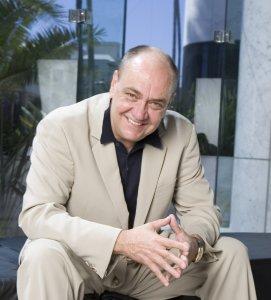
After working in minority marketing at Universal, he left to establish Arenas in 1988. In his telling, a management change had made the studio job feel bureaucratic. His opening balance was modest: “$6,000 in the bank, a phone, and me.” That is a founder’s recollection of starting resources, not the cost of reproducing the business today. His experience and relationships had already taken years to accumulate.
“$6,000 in the bank, a phone, and me.”
Santiago Pozo, recalling the start
The move also answered a creative frustration. A film needed a route to its audience. Making it was only part of the job.
The audience becomes a line in the budget
Arenas’s anniversary retrospective identifies Robert Redford’s The Milagro Beanfield War as its debut project. Its later credits included Like Water for Chocolate, My Family and Selena. The last of those received what the retrospective describes as a multimillion-dollar Spanish-language multimedia campaign. By 2001, the company was working on films including The Fast and the Furious.
The consequential change was organizational. A dedicated campaign means somebody has to choose outlets, commission materials, arrange appearances and commit money. An audience stops being a hopeful footnote in a release plan. It gets a brief. That is the piece of this history another marketer can copy without copying a single advertisement: assign responsibility before launch, while there is still time to change the work.
Film and television campaigns in the agency’s history. A measure of experience, not a count of independently proven hits.
Ugly Betty did not need a language switch
ABC’s 2006 appointment of Arenas as Hispanic agency of record gives that proposition a sharper edge. The assignment covered strategy, media planning and buying, and creative. Two named programs were Ugly Betty and Desperate Housewives. These were English-language shows seeking a larger Hispanic audience.
The announcement explicitly discussed bilingual and bicultural viewers. Pozo also spoke about reaching English-speaking Hispanic viewers. That distinction matters because “Hispanic” describes a population, not a single language preference. A Spanish-only media plan would have been a poor substitute for understanding the actual brief.
This was work for a network seeking viewers, rather than a consumer buying an agency product. Arenas’s value lay in making choices across several disciplines for the same audience. For a commissioning executive, the practical question becomes: which viewers are we missing, and what would make this particular program worth their time? That is a more demanding assignment than translating the same message and hoping for the same response.
From the press desk to the pizza table
The agency’s service menu reflects that breadth. Creative teams can originate materials or adapt existing ones. Publicists work through traditional and digital media contacts. Media planners arrange paid exposure across traditional, digital and social channels. Experiential work gives people something to attend; influencer work puts a creator between the property and prospective fans.
For a studio, this offers a way to coordinate several parts of a release through a specialist. For a brand, sponsorship and product placement provide different entry points. The business is professional services and negotiated campaign work, with custom sponsorship offerings alongside it. Buyers should separate the agency’s work from the media, production and event resources a campaign consumes when comparing proposals.
Consider the agency’s account of its Teenage Mutant Ninja Turtles: Mutant Mayhem activation in Venice Beach. Artist Levi Ponce worked with local artists and children on a film-inspired mural, while families got pizza from Pizza Hut. A franchise with an established pizza habit had found a reasonably literal way to feed its audience. The campaign offered participation as well as something to photograph.
Another example went inside the entertainment itself. Arenas says it arranged Johnnie Walker product placement in the Netflix series El Rey, Vicente Fernández, with the product appearing in multiple scenes. An event asks viewers to enter a promotional space. Placement brings the brand into a story they are already watching. Neither description, by itself, proves incremental sales; each shows what the agency actually makes happen.
Nicotina puts a price on the experiment
The wider Arenas history also includes film distribution, a business with different risks from running a client campaign. In 2001, a venture involving Universal and Marco Polo Investments set out to acquire, produce, finance, market and distribute films for Hispanic audiences. That historical film-label venture should be distinguished from the marketing agency’s present service offering.
By 2004, Arenas Entertainment was preparing a U.S. release of Nicotina, the Diego Luna crime comedy. Contemporary trade reporting described a $2 million broadcast media buy concentrated entirely in Spanish-language outlets. The proposition was explicit: could a Spanish-language film reach beyond the narrower art-house route through a concentrated audience campaign?
Different measures: advertising expenditure and gross ticket receipts. Neither is a calculation of distributor profit.
The Numbers records about $1.1 million in domestic box office, including a roughly $447,000 opening weekend. Those receipts were below the reported broadcast spend alone. The comparison makes the commercial difficulty visible without pretending to reconstruct the film’s complete accounts. Ticket receipts also pass through exhibitors; international and later viewing windows belong elsewhere in the calculation.
The weak point in this experiment was theatrical revenue relative to the advertised spending ambition. It illustrates a limit of the thesis: a reachable audience still needs to want the particular film, at the particular place and time it is offered. Cultural relevance cannot erase distribution constraints or make attention equivalent to a purchase.
A different owner, a different conversion
The next major ownership chapter came in December 2020, when d2H Partners announced its acquisition of Arenas. The rationale paired Arenas’s entertainment strategy, publicity and creative experience with d2H’s media, direct-response and consumer-insight capabilities. Subscription entertainment was part of the explanation offered at the time.
Pozo was to leave the CEO role while remaining involved in creative and strategic work. He described wanting more time for writing, filmmaking and helping other creators. “I have other mountains to conquer,” he said. That is a stated reason for handing over leadership, rather than a story of a founder abandoning his original market.
The commercial implication is straightforward. Selling an opening weekend and acquiring a subscriber are related jobs with different measurements. d2H’s current offering includes connected television, digital campaigns, subscription marketing and lead generation. In that setting, entertainment expertise can inform the invitation while response marketing helps judge what the invitation produced.
The next invitation comes from the wrestling ring
Lucha Plus makes the shift tangible. Arenas markets sponsorship packages around the lucha libre streaming platform, including branded content, program sponsorships and activations. Its public materials describe Platinum, Gold and Silver Mask packages. The naming department, at least, has stayed close to the ring.
The agency’s public posts also promote opportunities around Café del Ring and the interview series Máscaras y Confesiones. A brand can consider a presenting role, a segment or an integration tied to programming. The proposition is a recurring relationship with fans, extending the agency’s remit beyond a single film’s release date.
Its people also reflect the combination of audience strategy and creative craft. The team page identifies Marcelino Miyares Jr. as managing partner and Mauricio Marín as creative director. Marín’s biography spans copywriting, art direction and work across the U.S. Hispanic market and Latin America. It also identifies him as a Colombian coffee grower: an unexpectedly agricultural footnote to an advertising résumé.
Buy the judgment, then test the result
Arenas operates in a competitive market. Allied Global Marketing offers entertainment and multicultural marketing services; My Code offers multicultural media and advertising. Those alternatives overlap with parts of the brief. Arenas’s distinctive case rests on the concentration of its work in Hispanic entertainment and the continuity of that experience across film, television and streaming.
For a prospective client, the useful lesson is to make the assignment specific. Define the audience’s language habits, the entertainment being offered and the intended response. Ask how publicity, paid media, creators and events will support that response. A lively event and a busy comment section can be worthwhile, but the buying decision should establish what they are meant to achieve.
Pozo’s original wager was that viewers deserved a deliberate invitation. Decades later, the durable part of that idea remains practical: know who the story is for, give them a reason to care, and put the invitation somewhere they will actually encounter it. Then count what happens.