Golf is the rare sport where the amateur and the professional play the same course, on the same day, under the same rules - and know almost nothing alike about how they actually played it. The tour pro walks off the 18th with a caddie who logged every yardage, every miss, every club that let him down. The weekend golfer walks off with a hunch and a scorecard. Arccos Golf was built to close that gap, and it did it with a sensor small enough to hide inside a grip.
The Stamford, Connecticut company makes a set of 14 lightweight sensors - one for every club a golfer is allowed to carry - that screw into the top of the grip and quietly record every shot. Paired with the Arccos Caddie app, they turn a normal round into a stream of data: distances, dispersion, strokes gained, and the kind of hole-by-hole advice that used to belong to people who carry someone else's bag for a living. The company's own line sums up the whole thesis: knowledge equals lower scores.
A business-school idea that refused to stay theoretical
Arccos started in 2012, not in a lab but at the Yale School of Management, where co-founders Sal Syed and Clinton Grusd met during their MBA. Syed - a scratch golfer with a background in advanced mathematics - kept circling the same frustration: every other performance sport had drowned itself in data, and golf, of all games, had almost none for the person actually playing it. He pulled in a third founder, childhood friend Ammad Faisal, and the trio set out to build the measurement layer the sport was missing.
The first product, launched in 2014, was deceptively humble: small Bluetooth sensors that clip into grips and talk to a phone. No buttons to press, no shots to log by hand. You play; it records. That "automatic" part is the whole trick. Golfers had tried manual trackers for years and abandoned them, because nobody wants to tap a screen 90 times a round. Arccos removed the friction and, over time, the data started to compound.

The moat nobody else bothered to dig
Every shot logged by every member feeds the same engine. That is the quiet genius of the model. A 15-handicapper hacking around a muni in Ohio is, without knowing it, making the next golfer's club recommendation a little smarter. Multiply that by more than 22 million rounds and 418 million GPS mapping points across 40,000-plus courses, and you get something no competitor can shortcut: golf's largest performance dataset, and it grows every weekend.
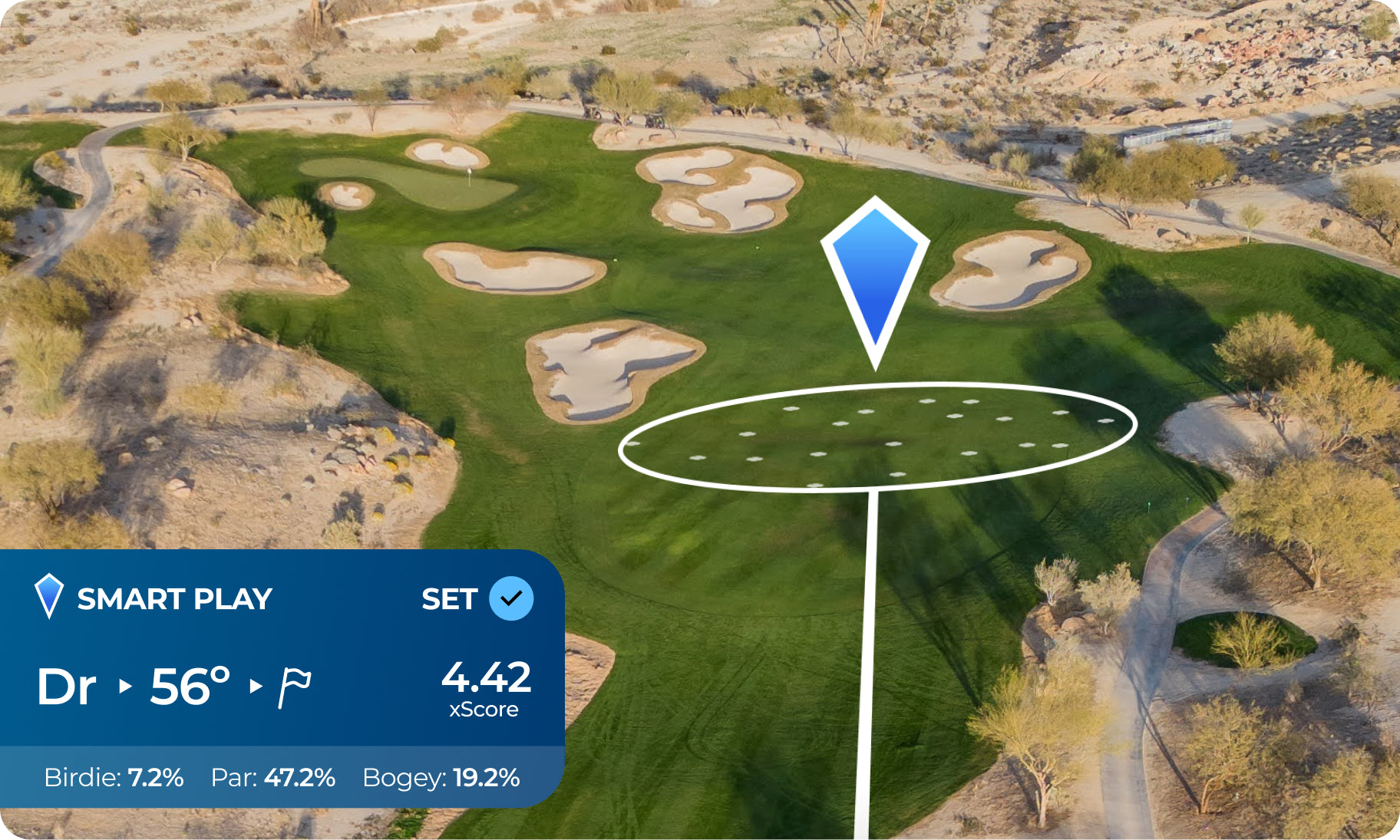
In 2017 Arccos put that dataset to work. Partnering with Microsoft, it built Arccos Caddie on Microsoft Azure and billed it as golf's first artificial intelligence platform. Instead of just showing you where your ball went, the app began telling you where to aim - factoring in your own tendencies, the hole, the wind, and the accumulated wisdom of millions of other rounds. It was strokes-gained analytics, the stat that runs professional golf, finally handed to people who don't have a tour card.
"We set out to give every golfer the kind of data that used to belong only to tour pros and their caddies." The founding thesis behind Arccos Caddie
How the thing actually works
The payoff is not vanity stats. It is decisions. Most amateurs lose shots not because they can't hit the ball but because they aim at flags they have no business aiming at, and reach for clubs they hit well roughly one time in five. Arccos replaces that optimism with a number. The company reports that members improve by an average of 4.2 strokes in their first year - and that some see the gains inside five rounds, mostly by making duller, smarter choices.
The day golf's rivals agreed on something
For most of its life Arccos grew the hard way, one sensor sale at a time, with early backing that included a $1.5M check from Connecticut Innovations in 2015. Then, in August 2023, it did something rare in a fiercely tribal industry: it got golf's biggest, most competitive names to sit on the same cap table. A $20 million Series C brought in the PGA TOUR, PING, TaylorMade, Cobra Puma Golf and Topgolf Callaway Brands - brands that spend the rest of the year trying to beat each other - and made Arccos the Official Game Tracker of the PGA TOUR.
Why would rivals fund the same startup? Because Arccos had quietly become the neutral data layer they all needed. When PING and Cobra embed Arccos sensors directly into the grips of complete club sets, the club maker sells a smarter product and Arccos gets distribution it could never buy. That is the business model in one sentence: sell the hardware, charge a membership for the intelligence, and let the club industry itself become the storefront.
"Arccos Caddie is golf's first artificial intelligence platform - a caddie for any player, anywhere." Arccos, on the launch of Caddie
Where it fits, and who it is fighting
Arccos sits at the intersection of hardware, subscription software and a genuine data monopoly. Rivals exist - Shot Scope sells a similar sensor-plus-app package, Garmin bakes tracking into its watches and tags, and app-only players like 18Birdies and Golfshot handle GPS and rangefinding. Game Golf, an early pioneer of the category, faded. What none of them own is Arccos' decade-long head start in data, or the endorsement of the tour that defines the sport. The sensor is copyable. The 1.2 billion shots behind the advice are not.
Making the barrier smaller, then smaller again
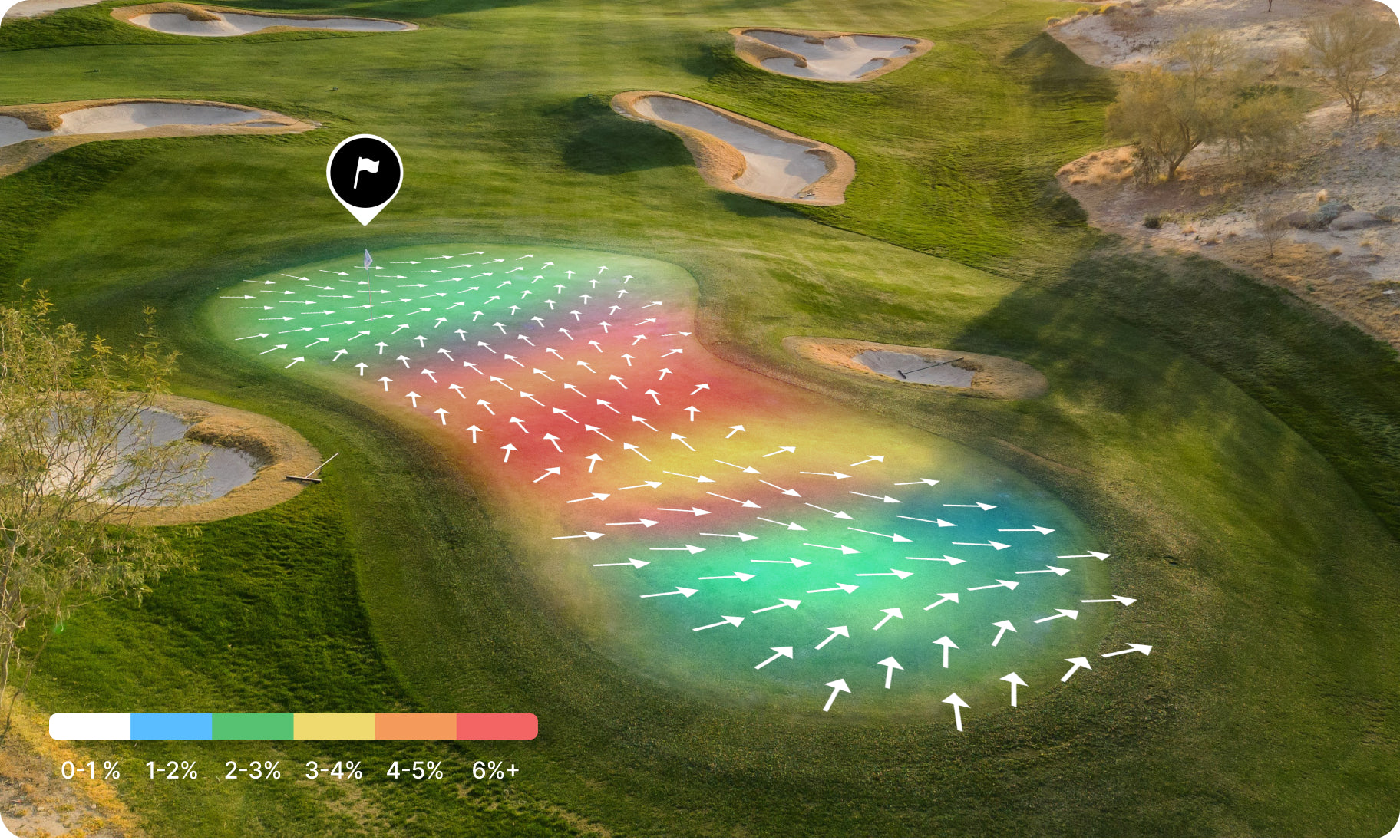
The recent roadmap is a steady march toward less friction. In 2025 Arccos rolled out Gen 4 Smart Sensors, next-generation course mapping, a global partnership with Titleist, and golf's first AI-powered smart laser rangefinder - pulling handheld distance measurement into the same data brain. In early 2026 came new Green Maps and, most notably, Arccos Air, a pocket-sized device that packs the full AI tracking system into a single unit small enough to forget you're carrying it. Each release chips away at the same objection: that tracking is a hassle. The less golfers have to do, the more they track, and the smarter the whole system gets.
For a company of roughly 64 people, the footprint is outsized. Arccos does not make clubs and does not sell a fantasy about the driver that will fix your slice. It sells the opposite - a clear, unsentimental account of how you actually play - and it turns out plenty of golfers will pay to hear it. In a sport built on feel, Arccos made a business out of proof.