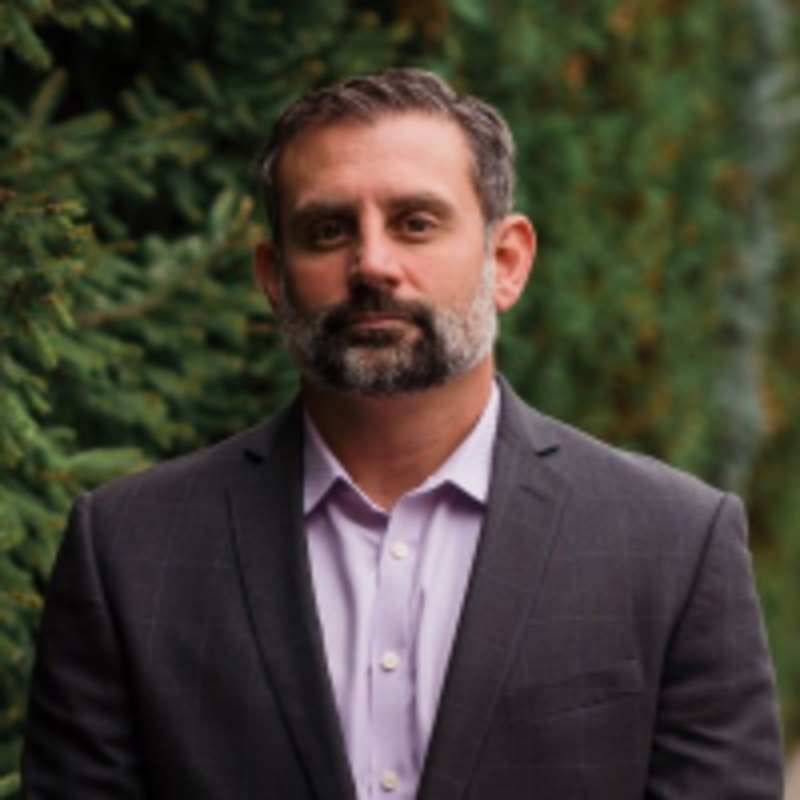
Anthony DeMartino entered crypto by way of the least romantic corner of finance: the plumbing. Before tokens, he traded repo, Treasury bills and government-agency debt. Before vaults promised yield around the clock, he sat on desks where liquidity could disappear before lunch. His career has followed markets into their difficult rooms, the places where a handsome return meets an awkward question about who pays when the assumptions fail.
He has a phrase for the route: “following the wave of volatility.” It began at UBS with short-term interest rates and financing. In 2007, he moved to the agency desk and traded Fannie Mae and Freddie Mac through the financial crisis. He later described the experience with traderly economy: a front-row seat to his first disaster. There would be others. Markets are generous teachers, but they charge tuition in real time.
From UBS he went to Barclays in 2012, first in a similar agency role and then into emerging-markets macro trading. In 2018, he moved deeper into that world at HSBC, leading Latin American local-markets trading across Brazil, Mexico, Argentina and Chile. The instruments changed, the currencies changed and the political weather certainly changed. The recurring craft was the same: locate the risk, price it and do not confuse calm with safety.
The useful outsider arrives
In February 2021, DeMartino joined Coinbase as a director in institutional trading. He went on to lead risk strategies, institutional DeFi and derivatives trading. Crypto was noisy, fast and full of novel nouns, yet the hazards beneath them were familiar: leverage, liquidity, counterparty exposure and the human appetite for treating a recent price as an eternal law.
His timing was almost too neat. The industry was moving from a euphoric expansion toward the cascade of failures that made 2022 a museum of broken confidence. DeMartino left Coinbase to lead Matrixport's U.S. business that June. At year-end, he wrote about “the beauty of zero” - the small psychological relief traders feel when a bruising calendar finally resets. It was an unusually tender image from a risk executive. A zero can mean ruin, but on January 1 it can also mean permission to begin again.
“I think my career can be defined by following the wave of volatility.”Anthony DeMartino
The next beginning was Trident Digital, the crypto-native firm DeMartino co-founded to work on lending, structured products, stablecoin adoption and safer forms of yield. The pitch carried his past inside it. Crypto did not merely need another lender. It needed financing built by people who remembered that collateral has to be sold, liquidity has moods and a promise to repay is only as useful as the structure around it.
A merger of complementary scars
Sentora arrived in May 2025, not from a garage or a miraculous napkin, but from a merger. Trident combined with IntoTheBlock, an on-chain analytics company whose systems had run hundreds of quantitative strategies and more than a thousand risk models across dozens of protocols. Trident knew how to structure products and liquidity programs. IntoTheBlock knew how to observe a market that never closes. The new company raised a $25 million Series A led by New Form Capital, with investors including Joint Effects, Tribe Capital and Ripple.
DeMartino became CEO, while IntoTheBlock co-founder Jesús Rodríguez became chief technology officer. The pairing made strategic sense because institutional DeFi has two separate problems that enjoy dressing as one. The first is access: moving assets across wallets, bridges, chains and protocols. The second is judgment: deciding which route, collateral and counterparty deserve the capital. A clean interface can conceal the first problem. Only serious risk work can address the second.
“It shouldn't be this hard,” DeMartino said of the repeated need to learn a new chain, new protocols and new operational rituals. Sentora's answer is to package that complexity through curated yield strategies, risk monitoring, tokenization, lending and hedging tools. It is an attempt to make DeFi feel less like a self-guided expedition and more like an institutional service - while leaving the underlying positions visible.
Risk is a film, not a photograph
DeMartino's clearest idea is also his least glamorous: an audit happens at one point in time, while risk continues moving. In a 2026 discussion about DeFi security, he compared relying on an audit with putting a lock on a house and declaring the house permanently safe. Markets demand the cameras, sensors and attention that come afterward. Code changes. Governance changes. Liquidity drains. A collateral token that behaved politely yesterday can discover bad manners overnight.
The risk stack beneath a displayed yield
That framework explains his attention to vault curation. A vault gathers deposits and allocates them according to a defined strategy. The rate is the visible output, like the temperature on an oven. The curator's actual work sits behind the number: choosing markets, setting limits, assessing collateral, tracking liquidity and changing exposures when the facts change. This is where DeMartino sees a role for banks, asset managers and specialized risk firms. Their advantage is not proximity to a fashionable protocol. It is the capacity to operate a repeatable process.
He is equally particular about tokenized real-world assets. Putting private credit or long-duration debt on a blockchain does not magically make it suitable collateral. An asset may be acceptable to own for years and terrible to liquidate in minutes. DeFi's composability makes that distinction urgent because one weak link can travel. DeMartino returns to a plain opening question: “What, precisely, backs this token?” In a market fond of abstraction, precision becomes a kind of rebellion.
The person beyond the terminal
His public record has a local counterweight to the global markets. In Fairfield, Connecticut, DeMartino has coached tackle football, flag football and Little League baseball. He has served in finance work for a local church and on the resource development committee board of the Wakeman Boys & Girls Club. Those roles should not be recruited into a tidy leadership parable; community work is allowed to be community work. Still, they add scale to a biography otherwise measured in countries, capital and crises.
He also writes with the instincts of someone who still watches the whole board. His subjects range from tokenized equities and perpetual futures to digital-asset treasury companies, bank vault curation and the global debt cycle. The recurring concern is market structure: where revenue moves, where leverage collects, which participants misunderstand the bargain and what happens when an asset designed for holding is pressed into service as collateral.
That concern has only sharpened as Sentora has grown. In 2026, DeMartino argued that AI-related borrowing was pulling capital toward a vast debt buildout and away from other creditworthy companies. His proposed opportunity was characteristically connective: use stablecoin capital to finance overlooked borrowers while offering depositors a different source of yield. Old credit markets on new rails, with the risks named in advance.
“The future of finance is decentralized - but not disorganized.”Anthony DeMartino
The ambition hidden inside caution
Risk managers are often mistaken for professional pessimists. The better ones are conditional optimists. They do not kill an idea; they identify what must be true for it to survive. DeMartino's ambition for Sentora is large: a unified layer through which funds, treasuries, exchanges, fintechs and asset managers can use decentralized markets at scale. The caution is not a retreat from that ambition. It is the engineering specification.
His path matters because crypto has spent years staging a false contest between old finance and new finance. DeMartino's career makes the border look porous. Traditional markets contributed expertise, licenses and scars. DeFi contributed transparent rails, programmable products and a pace of experimentation that a bank committee could envy from several floors away. Sentora's wager is that the useful future borrows from both without romanticizing either.
The final product may look almost disappointingly normal: a client sees an opportunity, understands the exposures, allocates capital and receives continuing information about what changed. Behind that calm sequence sits a noisy orchestra of models, monitoring, legal structures and human judgment. Finance tends to call this plumbing when it works and news when it does not.
DeMartino has already seen enough news. He traded the agencies through 2008, crossed volatile emerging markets, entered crypto before a historic washout and built again afterward. The lesson he carried forward is less about predicting the next disaster than about refusing to let yesterday's calm certify tomorrow's safety. DeFi wants institutional capital. Anthony DeMartino would like it to bring a seat belt.