The least interesting thing about Anteriad is that it changed its name. The consequential thing is what had to happen before the new name made sense. The company began in 2000 as MeritDirect, working in the unglamorous but lucrative machinery of business lists and database marketing. Over the next quarter-century it acquired analytics, audience data, buyer-intent signals, programmatic activation, content syndication and multilingual sales teams. In 2022, those pieces were finally placed behind one sign: Anteriad.
Today, the New York-based company occupies an awkwardly useful patch of the market. It is part data provider, part software platform, part performance-marketing agency and part outsourced sales floor. A customer can buy B2B records or programmatic audiences, build segments in Anteriad Marketing Cloud, ask a managed team to run email and media, measure the resulting pipeline, then hand prospects to BDRs and SDRs who work across 26 languages. Most rivals sell one or two of those layers. Anteriad's wager is that fewer handoffs make the whole machine easier to operate - and harder to blame.
The roll-up was the product roadmap
Anteriad did not build every capability from a blank screen. Its history reads like a shopping list with a thesis. Dovetail arrived in 2016 with a proprietary database platform and analytics. Mountaingate Capital invested in 2019, explicitly backing organic growth and acquisitions. Compass added owned data and compilation expertise in early 2020. Later that year, 180byTwo brought more digital and intent data, ABM and programmatic audiences. True Influence followed in 2021 with demand generation, content syndication, Marketing Cloud and lead verification. BNZSA, acquired in 2023, expanded the operation into multilingual outsourced sales development.
That sequence explains Anteriad better than the usual martech taxonomy. The firm sits between Bombora or ZoomInfo on data, 6sense or Demandbase on ABM, performance agencies on media, and specialist firms on sales development. It is not necessarily a substitute for every one of them. It is an argument against stitching them together yourself.
“The inputs are controllable, and the outputs are measurable.”Brent Wiltz, RTIC Custom Shop
What failed first: the old signal
The case studies are most revealing before the happy ending. Lenovo had sophisticated tools and a large database, but its predictive models were not converting enough leads. Expensive ads did not fix the problem, and buyers were tuning out its emails. SHRM leaned on costly direct mail when members increasingly expected a quicker, more personalized digital cadence. A nonprofit-management company had tried multiple PPC agencies, yet broad targeting kept wasting spend. U.S. Plastic wanted to invest more in search but could not isolate whether extra budget would produce extra business.
In each case, the first failure was not a missing dashboard. It was a weak link between audience, channel and outcome. Anteriad's answer was to make the test narrower. Lenovo layered intent signals into domain scoring, triggered nurture emails and digital ads, then tracked marketing-qualified leads, sales opportunities and dormant contacts. The reported result included a 25 percent lift in opens, a 50 percent lift in click-throughs, 20 percent more website leads and 32 times return on closed business.
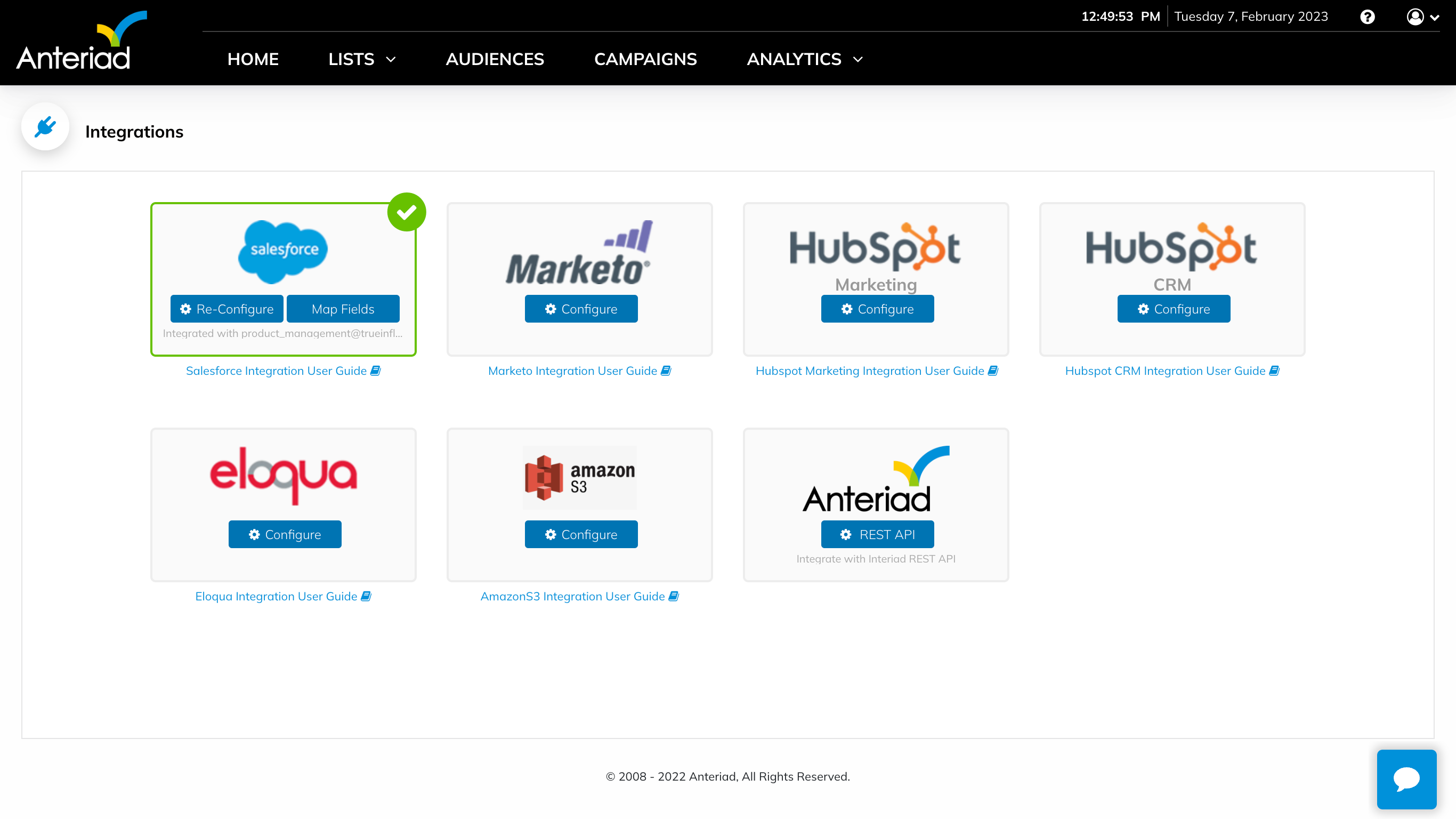
ServiceNow offers the cleaner version of the playbook. It began with one product line, one industry vertical, one audience and two email tracks. Once that worked, the program expanded to ten product lines, four verticals, thirteen audiences and eleven email tracks, with 150 emails per quarter. Anteriad says the scaled program contributed about $25 million in pipeline per quarter and that 91 percent of added contacts were new to the campaign database. The point is not that every buyer will produce those numbers. The point is that the giant program started as a small, legible bet.
Identify accounts
Read intent
Activate media
Measure lift
Start conversations
The metric with teeth is incrementality
Clicks are abundant. Causality is scarce. Anteriad's more interesting product work is built around the question finance departments ask after the campaign recap: how much of this revenue would have happened anyway? Growth Accelerator combines email and programmatic outreach with match-back analysis, holdout groups and incrementality testing. It is aimed at B2B marketers and at consumer brands trying to open a business-sales channel.
RTIC Outdoors supplied the showcase. Its custom shop had a product and early demand but wanted proof before increasing investment. Anteriad built audiences from firmographic, intent and third-party data, coordinated channels, and compared exposed buyers with a holdout. Within six months, RTIC reported $2.7 million in incremental revenue, 11 percent growth in the B2B business, 6.7 times incremental return on ad spend and $8.5 million in new quotes. The measurement changed the conversation because it separated new customers from customers who merely saw an ad on the way to a purchase.
The costs are less transparent. Anteriad publishes no standard price list, and the consideration for its acquisitions was not announced. Its services are enterprise-scoped. One anonymized IT-channel case is unusually concrete: a reseller partner spent $48,000 on a digital pilot and generated more than $300,000 in new business, a reported six-times return. That is evidence for a particular campaign, not a menu price.
AI makes clean data more valuable - and more fragile
Anteriad says its data architecture embeds AI and analyzes more than 500 billion buyer-related signals per month across an intent taxonomy of more than 8,000 topics. The company uses the signals to infer when an account is researching a subject and to assemble dynamic buying groups rather than targeting a single heroic decision-maker. In 2026, Forrester named it a Strong Performer among marketing and sales data providers and gave it the highest possible score for buying-group detail. Later that year, Forrester listed Anteriad as a notable vendor in the B2B intent-data landscape.
The timing contains a tension. AI answer engines increasingly let buyers research products without visiting a vendor site. That weakens the web signals intent providers traditionally watch. Anteriad's defense is breadth - multiple data types, contact and company attributes, publisher activity, media signals and customer data - plus human campaign expertise. CEO Rob Sanchez puts the premise plainly: “AI is only as good as the data behind it.” If the identities are stale, permissions unclear or buying groups wrongly assembled, automation only makes the mistake travel faster.
The copyable part is smaller than the company
A marketing team does not need five acquisitions or 900 employees to borrow the useful behavior. It needs the discipline to define a test before buying reach. Anteriad's best work begins with an audience narrow enough to understand, a channel plan tied to that audience, a control that preserves the counterfactual, and a revenue event that sales and finance both recognize.
Borrow this operating loop
- Choose one product, one segment and one commercial outcome.
- Clean and match the account data before adding intent signals.
- Hold back a comparable group or market so lift can be measured.
- Connect exposure to quotes, orders and closed revenue - not only clicks.
- Review with sales, change the weak step, then expand the budget.
The conditions matter. The model is a poor fit for a tiny addressable market, a very short campaign, a business without enough conversion volume to form a useful control, or a sales organization that cannot follow up consistently. It also loses force when CRM data is dirty or when privacy constraints prevent reliable matching. A full-funnel provider can reduce operational seams, but it also concentrates dependence. Buyers should insist on data provenance, portability, suppressed-audience controls and a measurement design they can audit.
There is also a revealing management choice behind the product. In 2025, Anteriad added product leadership to CMO Lynn Tornabene's job and created a Product Leadership Council. The logic was practical: its own marketers use the same data, platform and services sold to customers, so campaign friction can become roadmap input. That loop is easier to describe than to maintain in a company built from acquired teams. It requires shared definitions of an account, a lead and a conversion across software, service and sales operations. Anteriad says its client programs produce Net Promoter Scores ranging from 74 to 100. The range is company-reported, but the operating idea is sound: the bundle only feels integrated if the customer does not have to arbitrate among the parts.
Anteriad's business has moved from mailing lists to buying groups, from channel delivery to causality, and from an American database specialist to teams across four continents. Its newest local operation in Japan will test whether global scale and local market knowledge can coexist. The company says international intent and location intelligence grew more than 110 percent in the year before that launch. Scale gets it into the room. Proof keeps it there.