Anshu Avinash remembers solving a maths problem as a child, then turning to the back of the book. His answer matched. The small satisfaction of that moment has survived a career in software: the pleasure of reaching an answer, and the separate pleasure of discovering that it holds up. Today, as Head of Artificial Intelligence at DevRev, he works in a field where an answer can arrive almost instantly. Checking it, explaining it and deciding what to do with it remain rather more demanding occupations.
He described the answer key as a way to verify his work, and the match as the source of the pleasure. It is an ordinary moment that has stayed with him: a book, a problem and a child pleased that the two ends of an argument meet. The book also has a useful feature that a fluent chatbot does not automatically inherit: its answers are supposed to be correct.
Avinash’s public work offers several ways into that distinction. There is the engineer who has built database and communications systems. There is the AI leader concerned with search, context and the cost of getting useful responses. And there is the writer experimenting with fiction, technical books and illustrated explanations. These pursuits keep returning to a practical question: how much understanding can fit around an answer?
“The answer key was a verifier; the joy was in the match.”ANSHU AVINASH · A CHILDHOOD MATHS RECOLLECTION
Before the chatbot, the plumbing
At IIT Kanpur, Avinash completed a BTech-MTech dual degree in computer science and engineering in 2015. His master’s thesis involved a Haskell library for large binary objects, with concurrent access that did not require locks. Two years earlier, a Facebook internship had taken him to Menlo Park to work on a common framework for canary services. In software, a canary is a limited deployment used to expose trouble before it reaches everyone. It is a rather sensible bird to keep near the machinery.
His 2014 Google Summer of Code work took him into MariaDB’s query optimizer, replacing fixed constants with coefficients that could tune themselves. At LinkedIn, from July 2015 to June 2016, he worked on outbound communications, including SMS provider integrations and a Kafka-based retry mechanism. At AdWyze, where he became a senior software engineer in July 2016, his work included advertising integrations and backend performance.
The subjects sound less glamorous than generative AI, but they establish the scale of the problem he would later approach. An application has to choose how to fetch information, handle failure and keep moving when something outside its control misbehaves. Users experience the final response. Engineers inherit everything that happened on the way there. A message that never arrives and a query that takes too long are both excellent ways for infrastructure to introduce itself.
The database beneath the conversation
DevRev connects customer-facing work with the people building a product. Avinash is identified as a founding engineer, and his explanations of its architecture begin below the conversational interface. Different microservices manage their own databases and collections. Managed database operations reduce the work of keeping that layer running; automation with Atlas and Terraform also allowed the team to put more engineering effort into features customers could use.
The telling detail is how he describes growth. Database capacity can expand without bringing the application down, while storage can scale automatically. For large customers, workloads can be separated through sharding. These are decisions about the continuity of someone else’s working day. A customer will probably never compliment a database upgrade that went unnoticed. That silence is part of the intended result.
In describing DevRev’s experience, Avinash put development velocity at three to four times what it would have been with alternative databases. That is his assessment of a particular stack, rather than a universal promise about software teams. Its interest lies in the destination of the saved effort: more time for customer-facing work. Even in an AI company, a useful innovation can begin with fewer chores.
Reported development velocity compared with alternative databases. A contextual engineering estimate, not a controlled benchmark.
Search sits above this foundation. DevRev’s AgentOS uses vector search to bring domain-specific information into responses generated by language models. That arrangement makes the whereabouts and relationships of company knowledge part of the product. A well-written answer about the wrong customer, the wrong ticket or an obsolete document is still the wrong answer, however politely it announces itself.
Finding the connection between two facts
Avinash has publicly recruited engineers to work on search across structured, unstructured and conversational enterprise data. His list of interests included context-aware retrieval and reranking at scale. These terms describe work that happens before the answer appears: finding candidates, judging which ones matter and supplying the model with something worth reading. The company’s records are only useful if the system can find the relevant ones.
He is also a coauthor of BrowseNet, a research collaboration between DevRev and IIT Madras published at ICLR 2026. The framework addresses questions whose answers require connections across multiple pieces of information. It builds a graph of document chunks, breaks a question into connected subqueries and follows those relationships to retrieve context. The code is public, making the mechanism available for inspection rather than leaving it inside an attractive diagram.
One way to picture the distinction is a question that needs two documents. A conventional search can return passages similar to the question’s wording. A connected retrieval system also tries to follow the relationship that makes a passage in the second document relevant. The difficulty is deciding which connection deserves attention. Every additional step can consume time, money and context, so the route matters as well as the arrival.
That concern with cost appears elsewhere in his public work. The January 2026 AWS AI Conclave agenda listed him in a session about balancing cost, performance and reliability at enterprise scale. DevRev’s search challenge, meanwhile, offered leading student contributors a mentorship session with Avinash and colleague Prakhar Agarwal. The invitation asked people to improve a baseline against a real enterprise dataset. The answer key, in this setting, has become an evaluation set.
A technical leader with a fiction shelf
Avinash’s personal site is unusually varied for an engineering portfolio. Alongside work on context attribution and inference systems sit short stories, essays and a fictional CTO’s account of an AI inflection point. In September 2026, its recent-work list included an illustrated guide to technical support engineering and an examination of software release gates. The form changes according to the question: some ideas become a presentation; others need a character who is having a difficult afternoon.
In Six Months, that character is Vikram, a fictional CTO facing a change in the economics and practice of software work. Avinash explicitly identifies the company and protagonist as fictional, and the story as an exploration of patterns he has observed in the industry. It is a way to make organizational delay visible. A technical specification can describe what a system should do. Fiction can spend time with the person who has to admit that the old arrangement has stopped working.
Conjecture puts a mathematician in conversation with a machine. Its opening turns on a flawed sketch and a human who can recognize the flaw. The scene belongs to fiction, but the choice of scene is revealing: the drama begins with an objection, a correction and another question. Mathematics supplies a stern editor. It rarely accepts a beautiful paragraph as a substitute for the missing step.
Avinash also uses AI tools in making explanations. After discussing research on why language-model inference can produce different outputs even at temperature zero, he shared a NotebookLM-assisted educational video. In another experiment, he asked DevRev’s Computer to assemble a magazine-style page about the product from internal materials and brand guidance. His account described a person and an AI working on the same object. The medium was part of the experiment, not merely its packaging.
The colleague who cannot take responsibility
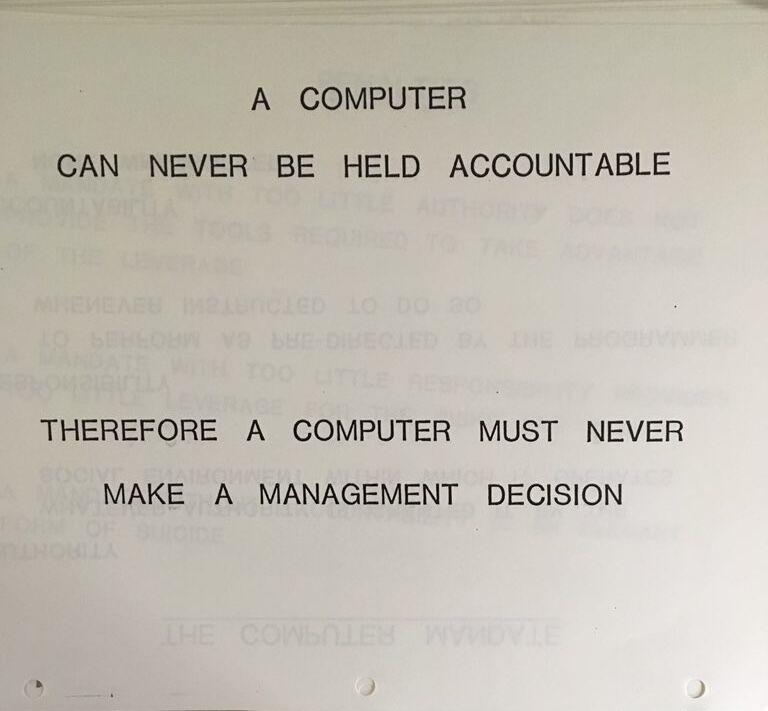
A question at a Samsung EnnovateX panel gave his work a sharper boundary. Should an AI agent be regarded as a teammate or a manager? Avinash brought up an old IBM training statement about computers and accountability, and argued for Computer as a teammate that assists people while responsibility remains human. The distinction has practical consequences: assistance can be delegated; answering for a decision still requires someone who can be held to it.
His September 2026 essay The Gates Are Moving carries that concern into software delivery. Drawing together reporting on engineering teams, it examines how quality checks move into automated tests, rollout systems, telemetry and rollback paths. Coding agents can participate in those mechanisms. The essay nevertheless asks what independent evidence a change must produce before it reaches more users, and where the accountable person or team sits.
The connection across these projects is an editorial reading of his work, rather than a claim that every career decision followed a single plan. A canary deployment, a search evaluation and a release gate each create an opportunity to discover that an apparently good answer has a problem. His fiction makes room for a related difficulty: even after a machine produces something useful, people may need time to understand what has changed.
The child at the maths book could turn a page and settle the matter. Avinash’s present work involves messier books: company knowledge, distributed software and teams making decisions together. The pleasure of a match remains easy to recognize. So does the obligation to keep checking. An AI colleague may be able to finish a sentence, retrieve a document or write a feature. Someone still has to read the answer at the back.
Follow the questions
- Anshu’s writing and technical projects ↗
- LinkedIn: Anshu Avinash ↗
- GitHub: igniting ↗
- DevRev ↗
- BrowseNet: paper ↗
- BrowseNet: public implementation ↗
- Six Months: a fictional CTO’s reckoning ↗
- The Gates Are Moving ↗
- Watch: Conjecture video shared by Avinash ↗
- Watch: his AI inference explanation ↗
- DevRev’s database architecture ↗
- AI Conclave: January 2026 agenda ↗