The software that runs a practice tends to announce itself only when it fails. A reminder goes missing. A schedule becomes a puzzle. A payment lands somewhere between the processor and the ledger. When everything works, the technology recedes and the day moves on. Annie McBride has built a career around explaining, selling and shaping precisely this sort of invisible machinery.
In 2025, she became chief marketing officer of PracticeTek, a San Diego software group whose products sit behind chiropractic, vision, dental and wellbeing practices. It was a move closer to the front desk after three years in the C-suite at PointClickCare and a decade inside ResMed. The scale changed. The recurring question did not: how do you make a complicated collection of products feel coherent to the people who use them?
McBride's answer has never been confined to advertising. Her public career reads like a patient tour through the rooms marketing leaders are often told to stay out of: product management, data integration, strategic partnerships, acquisition strategy and portfolio design. By the time she reached the top marketing job, she had learned where the pipes ran.
A reporter's instinct, carried into product
McBride earned a degree in journalism and business from the University of Oregon in 2001, then an MBA in marketing and new media from Fordham in 2008. The pairing is almost suspiciously tidy in hindsight. Journalism teaches the hunt for the useful fact. Business teaches what happens after somebody finds it. Product marketing lives in the awkward middle, translating what builders made into language buyers can trust.
Before ResMed, her work crossed digital agencies, consumer brands and medical products. Her professional biographies connect her to Zimmer, Crest Spinbrush and Trojan. Those are very different shelves, but shelves teach discipline. A consumer gets seconds to understand a promise. Enterprise software offers more time, then spends it lavishly on diagrams.
At ResMed, where she arrived in 2012, McBride accumulated range through movement. She worked in replenishment, global data integration and strategic partnerships, SaaS strategy and mergers and acquisitions, then North American product marketing. In 2018, she described an integration that placed device data inside the record system clinicians already used. The elegant part was not another dashboard. It was the removal of the swivel between dashboards.
By the end of that decade, her remit touched a $2 billion North American portfolio spanning physical products, connected applications, interfaces and acquired software. The number is impressive; the mixture is more instructive. A device can be photographed. A data connection cannot. A subscription lives over time rather than at checkout. Marketing all three together requires a story elastic enough to cross categories and specific enough to survive a product demo.
The translation career
The progression matters because it made technology tangible. Interoperability is an imposing word for a modest human wish: please let this information appear where I already work. The product leader sees the systems. The journalist sees the sentence. McBride learned to keep both in frame.
“Organizations need to ensure they build and optimize the brand to demand muscle, to capture the full value of their investments and resources.”Annie McBride, 2024
The first CMO gets no inherited furniture
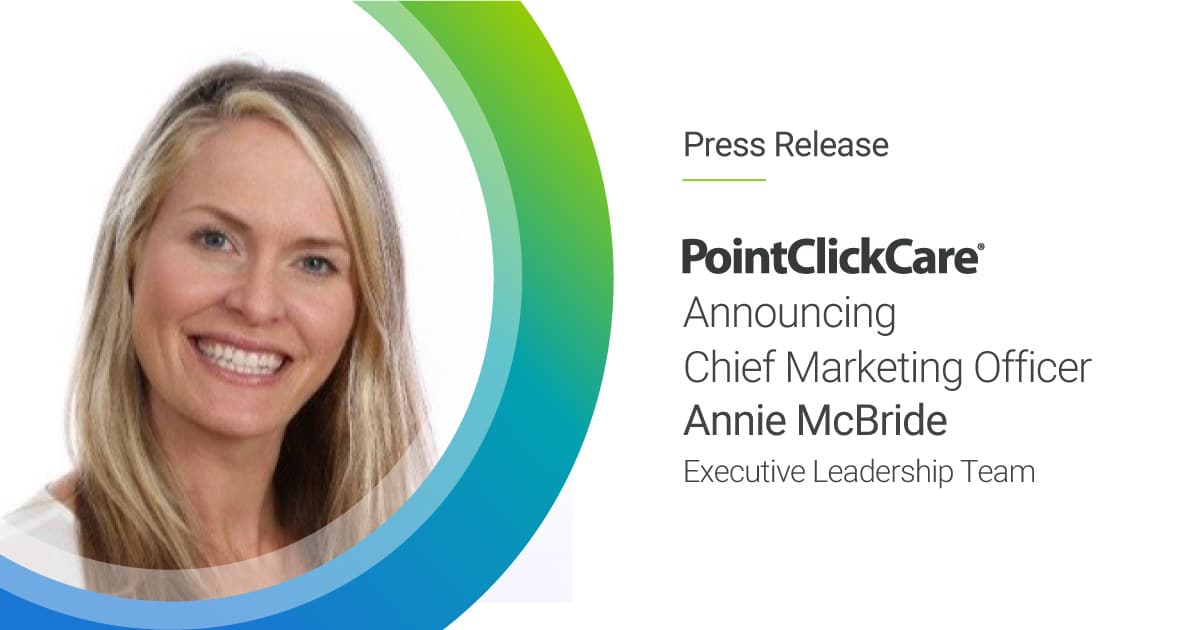
PointClickCare hired McBride in 2022 as its first chief marketing officer. Firsts sound ceremonial, but in an organization they are architectural. The role arrived with a mandate to bring customer voice, data, marketing technology and collaboration into a shared growth system. She joined after ten years at ResMed and took responsibility for a 114-person marketing organization.
The company had grown through acquisitions, leaving the ordinary but consequential work of unification. A brand in that situation cannot simply choose a new color and declare consensus. Product names have histories. Sales teams have habits. Customers have loyalties. McBride's remit was to make the collection legible without sanding away what made each piece useful.
memory + meaningDemand
attention + action
One planning rhythm. One view of the customer. One set of outcomes.
Her own shorthand was to stop discussing brand and demand as separate budgets. It is a practical objection to a stale argument. Brand gives demand somewhere credible to land; demand gives brand evidence that somebody moved. The useful unit is the outcome, not the departmental border drawn around the spend.
That philosophy also changes the internal calendar. A campaign cannot be an island assembled after the product roadmap is fixed. Customer evidence has to travel in both directions: into positioning before launch, then back into product and service once the market responds. McBride's career across those functions gave her permission to ask operational questions without treating them as somebody else's meeting.
She also turned the company's annual SUMMIT into a conspicuous expression of that system. More than 2,000 leaders attended the flagship gathering during her tenure. In 2025, McBride moderated a fireside conversation with Rob Lowe. The recap remembered the humor, including Lowe's tale of declining a television role that later became famous. McBride remembered the team, the customer stories and, with a wink, a helicopter ride involving colleagues and creative partners.
That detail is revealing. In her farewell, she named the functions with the affection of someone reading a lively cast list: product marketers, demand strategists, data miners, martech magicians, project managers, creatives and storytellers. Former colleagues answered with references to her care, fearlessness, laughter and banter. Executive biographies usually sand people into adjectives. The replies restored the noise.
Closer to the front desk
McBride left PointClickCare in 2025 with a place on Becker's list of 100 women in health IT and a line that could serve as a hinge for her career: “The mission remains personal. The challenge is new.” PracticeTek offered the new challenge. Its portfolio serves independent practices through software for scheduling, documentation, communication, payments, reporting and other daily operations.
Two months into the job, she was at the Florida Chiropractic Association meeting in Orlando watching customers react to Rheo, an AI assistant in the ChiroTouch product line. Her post was exuberant, capitals and exclamation points included. Beneath the launch-day voltage was a familiar operating test: were practitioners spending less time at keyboards and more time on the work in front of them?
That question has become the central marketing problem for AI software. Capability arrives faster than confidence. Every company can announce intelligence; customers still need to know what disappears from their Tuesday. PracticeTek's releases during McBride's tenure have stayed close to that ledger: faster documentation, fewer missed inquiries, clearer payments, less manual follow-up. The product story is written in chores removed.
“When practitioners tell me they are spending more meaningful moments with patients instead of their keyboards, we know we are delivering on what matters most.”Annie McBride, on the Rheo launch
Portfolio marketing makes the task harder. Chiropractic software cannot be dressed up as optometry software and sent to the party in different shoes. Each specialty has its vocabulary, workflow and professional culture. Yet the products can share a grammar: simplify the work, connect the steps, make the business easier to understand. The CMO's job is to find that coherence without forcing sameness.
The distinction can seem academic until a portfolio tries to cross-sell. A customer who trusts one product does not automatically understand the parent company's other tools. Names multiply, interfaces vary and every acquired team carries its own origin story. Coherence is earned through the experience: a handoff that feels intentional, an integration that saves a second login, a support answer that recognizes the rest of the workflow. The brand arrives after those details, wearing their reputation.
McBride's long volunteer relationship with San Diego's Ocean Discovery Institute adds another quiet line to the portrait. Public records place her in communications work there as early as 2010, and her LinkedIn profile lists marketing strategy and brand management service beginning in 2009. It is a local commitment that has outlasted several corporate titles.
The story under the software
There is a temptation to describe an executive career as a staircase. McBride's looks more like a widening lens. Consumer marketing taught compression. Product management added detail. Strategic partnerships revealed the handoffs between systems. M&A exposed the work of joining products after the deal. The first-CMO role turned those lessons into organization design. PracticeTek now brings the lens to a more fragmented market.
Her public voice remains more caffeinated than the average executive statement. She recruits with jokes about San Diego weather, calls her specialists magicians and gives launches the punctuation of a stadium announcer. The playfulness works because it sits beside fluency in the unglamorous parts: budgets, integrations, data, workflows and adoption.
Good marketing is often mistaken for making noise around a product. McBride's career suggests a more demanding craft. Listen closely enough to carry the customer's reality into the company. Understand the machinery well enough to name the part that matters. Give teams language they can share. Then return to the floor and watch what people actually do.
When it works, the story behaves like useful software. It removes a swivel, shortens a task and lets the real work continue.