Before Anna Lindow ran a national company, she learned how attention moves. Her first jobs were in the machinery of media: partnerships at RealClearPolitics, audience development at the New York Observer, strategy work for the personal-finance startup Bundle, and a consulting turn creating educational content for Betterment. It was the late 2000s, when every publication was discovering that putting words on the internet did not guarantee that anyone would find them. Distribution was becoming a discipline.
That lesson followed her into adult education. Lindow joined General Assembly in 2011, when it had one campus, and stayed for seven years as it grew into an international business. She moved through special projects and operating assignments, eventually becoming vice president of partnerships. Public biographies credit a team she led with multiplying the business fivefold in three years. More useful than the number was the view from inside: growth did not arrive as a trumpet blast. It arrived as classrooms, city launches, instructors, employer relationships and dozens of stubborn details agreeing to work at the same time.
When she began thinking about a company of her own, Lindow left New York for Florida. She gave Refresh Miami a founder's answer for the move: the lower cost of living created more runway. Miami offered warmth, certainly, but warmth is not a line item. Rent is. The choice sounds almost comically practical beside the usual founder mythology. It also previews her style. Lindow's career has repeatedly favored the operating constraint over the fashionable story.
01 / A useful rejectionThe office nobody wanted to rent
Brave Health began in 2017 with Lindow and Jake Schwartz, her former General Assembly colleague and the education company's co-founder. Their early office hunt went badly. Lindow later recalled that landlords kept rejecting the budding company because of the field it planned to enter. A real-estate agent noticed her deflation, pulled her aside and urged her not to abandon the idea. The need had touched the agent's own family. A tedious property search had become an accidental piece of customer research.
There are two ways to hear a closed door. One is as a verdict. The other is as information about the building. Lindow heard the second. The company continued, but its eventual shape would make the office less important anyway. A virtual-first model could gather demand and licensed professionals across a state instead of asking every person to live within a sensible drive of one address.
“Over the past few years in virtual behavioral health, necessity has been the mother of adoption.”Anna Lindow, reflecting after ViVE 2022
The timing helped. Brave started working with health-plan partners in Florida in 2019, before remote appointments became ordinary. The pandemic did not invent the underlying technology. It changed the public's willingness to use it. Lindow's neat twist on the old proverb captured the difference: invention is only the beginning; adoption is the part where people alter their habits.
A video call is the last link, not the first
Brave's visible service takes place on a screen. The business Lindow built around it is less photogenic. It requires insurer contracts, state-by-state permissions, community referral relationships, staffing, scheduling, outreach and follow-through. The screen is where the appointment happens. The real product includes everything required to make sure a person can reach that screen and use the insurance already in their wallet.
That orientation came naturally to someone formed by audience development and partnerships. In media, the article is not useful to a reader who never encounters it. In education, the course does not change a career unless the right student discovers it, trusts it and enrolls. At Brave, the stakes and regulations were different, but the distribution question had a familiar outline. A theoretically available service can remain practically absent.
Many venture-backed companies choose customers who are easy to identify, reach and bill. Lindow chose a population served by government-sponsored insurance and then designed the company around the resulting complexity. Brave worked through health plans, hospitals and community organizations rather than expecting a glossy consumer campaign to perform magic. Local relationships were not a marketing garnish. They were part of the delivery system.
The approach attracted capital after it had started to prove its shape. Brave announced a $10 million Series B in 2021. A year later, Town Hall Ventures led a $40 million Series C, joined by existing investors including Union Square Ventures and City Light Capital. At the time, Brave said it worked across 18 states and covered more than 65 million lives through insurer relationships. Coverage, of course, is a possibility rather than an appointment. Lindow's operating argument was that a serious company must measure the distance between the two.
03 / Scale without glitterThe unglamorous compound interest of follow-through
Lindow talks about team-building with the tone of someone who has watched org charts become organisms. On The Game-Changing Women of Healthcare podcast, she connected Brave's evolution to lessons from past workplaces and stressed the importance of cultivating teams. That is founder language with the romance removed. National expansion means the person who started the company cannot personally arbitrate every handoff. The organization has to learn.
Her academic path mirrors the same appetite for translation. Lindow earned a bachelor's degree in American Studies and Writing from Columbia, later added a master's degree in psychology from Walden University, and completed a University of Florida graduate certificate. She also completed a 200-hour meditation teacher training. None of these credentials turns an insurance contract into a completed appointment. Together, though, they suggest a founder comfortable crossing between narrative, behavior and systems.
Partnerships, audience development and strategy roles across political media, publishing and personal finance.
Seven years at General Assembly, ending as vice president of partnerships after the company's global expansion.
Co-founded Brave Health with Jake Schwartz in Miami.
Led successive financing rounds as Brave expanded its plan relationships and footprint.
Passed the CEO role to longtime Brave operator Sarah Tilton.
There is a playful symmetry in the résumé. The Columbia student involved with the Daily Spectator learned to write. The media operator learned to find an audience. The General Assembly executive learned to grow a network of people and places. The Brave founder combined those skills in a business where the missing connection between institution and individual was the central problem. Careers look tidy only in retrospect, but this one has a recurring verb: connect.
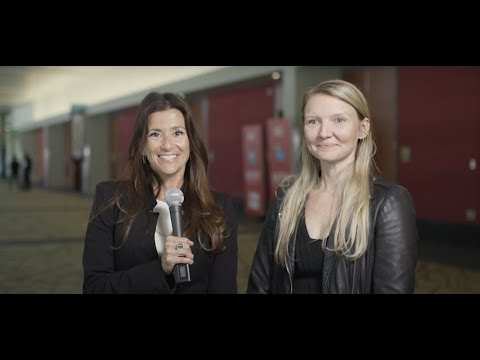
Watch Anna Lindow on The Game-Changing Women of Healthcare
A founder makes room for the next operator
In July 2026, Brave Health named Sarah Tilton chief executive. Tilton was no parachuted celebrity. She had spent six years inside the company, moving through marketing, partnerships and operations before serving as president and chief operating officer. Brave credited her with helping expand the model across 14 states and more than 200 health-plan partnerships. Its announcement thanked Lindow and Schwartz for the vision, leadership and trust that made the next chapter possible.
Succession is an awkward test of founder seriousness. The mythology says the founder is the company. The institution needs the company to be more than its founder. Lindow had spent years building a route from distant systems to individual people; eventually she built a route for leadership, too. Installing a proven internal operator suggested that Brave's next phase required accumulated context rather than a theatrical reset.
The change also clarifies Lindow's achievement. She did not merely launch a telehealth brand during a season when video calls were fashionable. She helped turn a rejected office idea into a national organization with payer relationships, an employed clinical workforce and an operating bench deep enough to produce its next CEO. Funding headlines are easy to count. Institutional adulthood is harder, and usually quieter.
The founder's final product may be an organization sturdy enough to stop borrowing her title.The lesson inside the 2026 handoff05 / What builders can steal
Design for the person who never reaches the button
Lindow's most portable lesson is not specific to healthcare. Start with the user who disappears before the conventional funnel begins. Ask who already has that person's trust. Identify the payment system that determines whether the product is real or merely available. Map the handoffs. Then treat every broken handoff as product work, even when it resembles operations, compliance or a phone call.
The second lesson is to let experience travel as judgment, not dogma. General Assembly taught Lindow about rapid growth, but Brave could not be a classroom business with clinicians pasted in. Media taught her distribution, but patients were not page views. Florida offered financial runway, but the company still needed a national map. Each chapter contributed a tool; none supplied a complete blueprint.
And the third lesson is unusually humane for a startup profile: listen carefully to the person who pulls you aside. The real-estate agent did not have a venture fund, a keynote slot or a theory of network effects. She had proximity to the problem and a simple request that Lindow keep going. Companies often begin with a pitch. Brave's origin also contained a quiet vote of confidence in an empty office corridor.
Lindow kept going. Then, nine years after co-founding Brave, she let a colleague carry the title forward. Persistence built the first chapter. Judgment made space for the next one.