Ankit Ratan’s homework has proved unusually difficult to finish. While taking an entrepreneurship course on Coursera, he developed a case study for a company called Signzy. Most classroom companies enjoy a brief, agreeable existence: a name, a presentation, perhaps a financial forecast in which everything goes well. This one acquired co-founders, customers and the obligation to work when a bank needed it.
The assignment arrived at an awkward point in his working life. Ratan had already helped build an enterprise analytics business called Crosslink. It had customers. Financially, he recalled, it was doing reasonably well. But it was becoming a services business, and he was questioning whether he wanted to keep running it. “I didn’t have my heart in it,” he said. An enterprise can be viable and still leave its founder looking at the exit.
Signzy offered another direction. Founded in 2015, it brought together Ratan, his twin brother Arpit and Ankur Pandey. Their subject was the administrative business of establishing trust: identifying people, checking documents and making agreements acceptable online. It is work that rarely receives applause from the person filling in the form. Successful paperwork tends to be remembered chiefly by its absence.
A lawyer walks into an engineer’s argument
There was a family conversation behind the business as well as a classroom exercise. Ankit, the engineering graduate, and Arpit, the lawyer, had been debating why legal documentation involved so much effort. Their professional training gave them different ways of looking at the same irritation. A document could be technically easy to send and legally difficult to rely on. Making it convenient required attention to both.
The early Signzy concept concentrated on digital contract signing. Its name played on the idea of making signing easy. Pandey joined as the third co-founder responsible for technology. The product’s scope widened toward digital onboarding, the sequence through which a financial institution decides whether to accept a new customer. A signature sits near the end of that sequence. Quite a lot has to be established before it deserves anyone’s confidence.
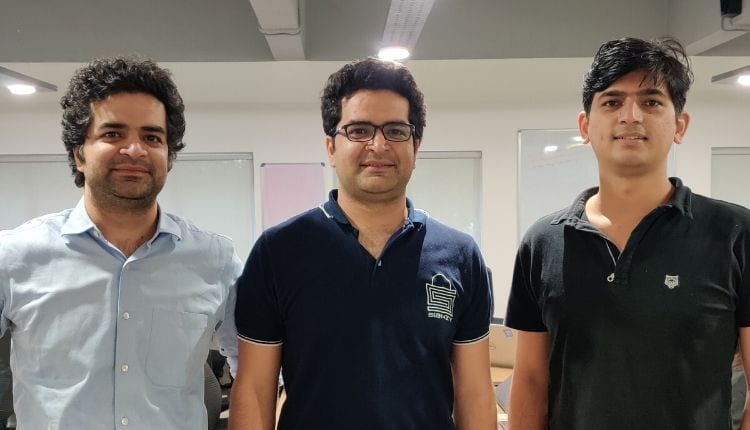
That widening helps explain the company Ratan now leads. Signing, identity and verification belong to a connected problem. For a customer, they are steps in one attempt to open an account or obtain a service. Inside an institution, those steps may involve several systems and teams. The founders were entering the space between the customer’s single intention and the bank’s many requirements.
An education in large organizations
Ratan graduated from IIT Delhi in 2011 with a silver medal. His subsequent work took him through analytics and consulting, including Essex Lake Group and Ernst & Young. He worked across India, the United States and China. New York and Shanghai appear in his account of the years before Signzy. The international ambition of the later business had some practical travel behind it.
A professional biography accompanying his 2017 writing describes work on anti-money-laundering and counter-terrorist-financing solutions for Citi and MetLife. It also records an analytics company he started in India in 2013, with clients including Axis Bank, Maersk and Benetton. These were encounters with organizations whose operations could hardly be reduced to an attractive screen and a persuasive demo.
The experience supplied an education in how institutions actually function. Large companies contain established processes, obligations and systems that have to keep working while something new is introduced. The analytics business put Ratan close to that reality before he began selling financial infrastructure. His later choice of problem makes sense against this background: he had spent time around the machinery.
His early writing also offers a clue to how he explained the opportunity. In a FICCI publication, he compared the importance of cryptography in digital banking with the importance of steel vaults in an earlier era. It was a useful translation. A bank’s reassuring solidity had once been visible in its building. Online, some of the protective work would be performed by mathematics and software.
First, persuade the people who ask for proof
A company selling verification faces an agreeable irony: its customers need to verify the company. Banks have reasons to ask difficult questions about young suppliers. Software involved in onboarding sits close to decisions about identity, fraud and regulatory obligations. A startup’s enthusiasm can secure a meeting. Getting trusted with the process requires evidence that survives the meeting.
By 2017, Ratan and his co-founders had been included in Forbes India’s 30 Under 30. The recognition attached to all three founders, a reminder that this was a team assembled around different forms of expertise. Public recognition could help introduce them. The product still had to perform the less photogenic work of checking people and documents.
In November 2018, Signzy raised a $3.6 million Series A led by Stellaris Venture Partners and Kalaari Capital. Its Real KYC onboarding product had been deployed by more than 45 large clients at that point. Those figures belong to that stage of the company’s history. They mark a business moving beyond the course exercise into repeated use by financial institutions.
- 2011IIT Delhi graduation and silver medal
- 2015Signzy founded
- 2018$3.6 million Series A
- 2022Rs 210 crore funding round
- 2024Difenz acquisition
In September 2022, another funding announcement put the round at Rs 210 crore, led by Gaja Capital. Ratan’s own account of the journey contrasted an early team of six working from a small flat with more than 200 colleagues across six offices. There is a whole organizational story inside that change of address: the founder’s job expands along with the problem the company has agreed to solve.
The queue moves behind the screen
For Signzy, part of the work became helping institutions assemble onboarding journeys without writing every connection afresh. Its no-code platform and APIs put verification functions into workflows that banks could configure. The practical appeal is easy to understand. A financial institution may need several checks to happen in a particular order, with different outcomes depending on what each check discovers.
In January 2022, Ratan’s discussion with Stellaris described Signzy supporting more than ten million customer and business onboardings a month. The company also described reducing clients’ time to market from six months to three or four weeks. These were reported operating and implementation measures, rather than promises about how quickly every individual customer would finish an application.
identity
evidence
rules
decision
The distinction matters because banking has several clocks. There is the time a software team spends launching a process, the time an institution spends reviewing a case and the time a customer spends waiting. Improving the machinery can affect all three. A faster implementation creates the opportunity for a better experience; the details of the process determine whether the customer receives it.
Learning to sell across a border
Ratan had spoken early about wanting to build a global company from India. Expansion required learning more than another set of document formats. In a 2023 conversation with marketing director Ryan Stack, he discussed Signzy’s American sales effort and the need to give Indian and US sales their own attention. Teams could exchange ideas while responding to the conditions of their respective markets.
That is a revealing piece of the founder’s work. Enterprise software travels with a burden of explanation. Buyers need to understand how it fits their operations, who will support it and why changing an existing process is worth the trouble. Familiarity earned in one country does not automatically settle those questions in another. Each new relationship adds its own examination.
By then, the original signing problem had developed into a business that sold the connective work behind financial services. Customers might never encounter the Signzy name. They would encounter a bank’s application process. Building infrastructure involves accepting that arrangement: the client owns the visible relationship, while the supplier takes responsibility for parts of the experience underneath.
When the checks need a memory
In 2024, Signzy acquired Difenz, a fraud risk management company. Ratan’s announcement praised its founders, Madhu Srinivas and Sivaram Jayaraman, and pointed to the value of offering institutions a broader set of compliance tools. The deal brought another part of the customer relationship into view: watching for risk after someone has been allowed through the door.
His public work has also extended into industry discussions. The Fintech Convergence Council’s 2023/24 annual report listed him as chair of its Regtech Committee. In April 2024, he joined the India FinTech Diaries podcast for a conversation about generative AI, fraud and supervisory technology. These are questions where product decisions meet the expectations of institutions and regulators.
In an October 2026 essay, Ratan argued that increasingly convincing fake identities make isolated checks insufficient. A document, face or login result may appear acceptable alone while the wider sequence contains warning signs. His emphasis was on retaining risk information between stages, so that something learned during onboarding can affect a later decision. It is a continuation of his original concern about disconnected systems, with a more coordinated adversary on the other side.
“Businesses should not innovate and grow at the expense of compliance.”Ankit Ratan, January 2024
The unfinished assignment
In a 2025 discussion of frictionless banking, Ratan returned to the experience at the customer’s end. Moving a process onto a screen can preserve many of its old irritations. Repeated information, disconnected steps and unnecessary delays remain irritating even when the form looks modern. His ambition depends on attending to the process underneath that appearance.
Signzy’s current author biography credits the platform with supporting more than 25 million customer onboardings a month. The number describes the company’s reported scale. The personal thread running toward it is smaller and easier to grasp: an engineer dissatisfied with one business, an argument about documents, a course project that became increasingly difficult to put aside.
Ratan has kept working on a problem that sounds simple until someone has to implement it. A customer wants to proceed. An institution needs confidence. Somewhere between those wishes sit the documents, rules, systems and decisions that occupy his working life. The assignment has acquired rather more users than the classroom version anticipated.