Victor Fredung makes his living helping businesses establish who is on the other side of a screen. Ask him about social media, however, and he would quite like the option of remaining anonymous. There is something reassuring about an identity entrepreneur who does not demand to see everybody’s papers at every opportunity. In a 2019 conversation, he drew a distinction between opening a bank account and using a social network. The circumstances mattered. So did whether the company asking for your information deserved to receive it.
That tension runs through his working life. Fraud gives a business reasons to ask more questions. Customers give it reasons to stop asking quite so many. Fredung has spent years working between those two demands, first in payments and fraud prevention, then as co-founder and CEO of Shufti Pro, now Shufti. Today he is its chairman and co-founder. The job title has changed; the question remains wonderfully awkward: how much must a stranger prove before you let them in?
The customer who became the builder
His route into this question began with the unpleasant economics of payment fraud. Fredung and his fellow founders operated payment gateways serving businesses including digital goods, vouchers and online gambling. Transactions arrived; some subsequently returned as chargebacks. Buying tools to contain the damage brought temporary improvements, he recalled, but fraudsters adapted. Keeping chargebacks within a one per cent threshold became a recurring struggle for their prepaid and gift-card business.
They began developing their own fraud technology in 2015. Fredung dates his co-founding of Zensed to 2016; the product reached the wider commercial market in 2017 after use within their businesses and allied companies. It was an operator’s progression into software: encounter an expensive problem, try the available remedies, eventually decide to build one.
Even the name carried an argument. Zensed combined “Zen” and “sensed”, suggesting a better perception of suspicious transactions. His explanation of the product centred on combining many signals, rather than letting a single oddity decide a customer’s fate. A purchase made far from its shipping address need not be fraudulent. Treating every irregularity as a crime is an excellent way to acquire fewer customers.
Thirty seconds, and a much bigger map
Identity checks presented a related frustration. Fredung had experienced services that took too long and lost customers during verification. In a 2019 interview, he described the reaction with unusual economy: “it pissed us off a little bit”. That is a more recognisable entrepreneurial origin than a sudden vision of the future. People were leaving. Something had to work better.
Shufti began in 2017, with Shahid Hanif as his fellow founder. Fredung brought his payments experience to a business built around verifying customers online. In May 2019, he described its average verification time as 30 seconds. That was his account of the service at the time, rather than a promise about every check today. Its significance was the ambition behind it: reduce the waiting that made legitimate customers abandon a service.
The average identity-check time Fredung described in his 2019 interview. A historical company claim, not a current service guarantee.
He also argued that geography was a product decision. A financial company unable to verify people from a particular region could end up excluding that region altogether. Verification coverage therefore affected who could become a customer in the first place. His earlier ventures included Ogion Consulting, GiroSwift and Stafftimer as well as Zensed. Across that background, the recurring interest was practical: find where an online business gets stuck, then work on the obstruction.
A passport is quite a lot to hand over
On July 16, 2021, Fredung appeared before the US House Financial Services Committee’s Task Force on Artificial Intelligence. The hearing’s title, “I Am Who I Say I Am”, could have served as an unofficial description of his occupation. The rest of the title introduced the harder part: verifying identity while preserving privacy.
His written testimony described document checks, detection of manipulated images, and checks intended to establish that a real person was present. It also acknowledged what happens whenever somebody presents a passport or driving licence: a small transaction can expose a substantial collection of personal information. Name, birth date, address and signature come bundled together. The document is compact. Its implications are less so.
Fredung argued for faster verification alongside protection of customer data, and described an option that let organisations host verification on their own servers. These were positions he presented as the head of a supplier, with a supplier’s interest in the answer. The questions themselves reached beyond any one product.
His spoken testimony emphasised configurable verification, allowing businesses to shape the process around their requirements. That word sounds like software plumbing, but it carries a human consequence. The person opening an account is trying to get something done. Each request for another document, another picture or another attempt spends a little more of their patience.
“it pissed us off a little bit”
Victor Fredung, on customer losses caused by slow verification, 2019
The office was already several countries wide
Fredung’s own company had a similar coordination problem, with people rather than documents. In 2019, he described a business spread across Sweden, the United Kingdom and Latvia. He was in Sweden; the UK held the headquarters and development team; human verification specialists worked in Latvia. Bringing everyone into a single room was hardly the founding assumption.
He sometimes worked from home after his daughter’s birth that year. Geography did not require every developer to live nearby. Keeping people informed still required effort.
By 2021, his management advice had become notably specific. Hold weekly meetings. Ask for feedback. Learn how different employees work. He described replacing Trello with an internally developed system for organising tasks, while using Google Meet for calls. The software choices were only part of the answer. His emphasis was on regular contact and listening, including asking a struggling colleague what was wrong before delivering criticism. The fraud specialist’s managerial advice began with giving somebody a hearing.
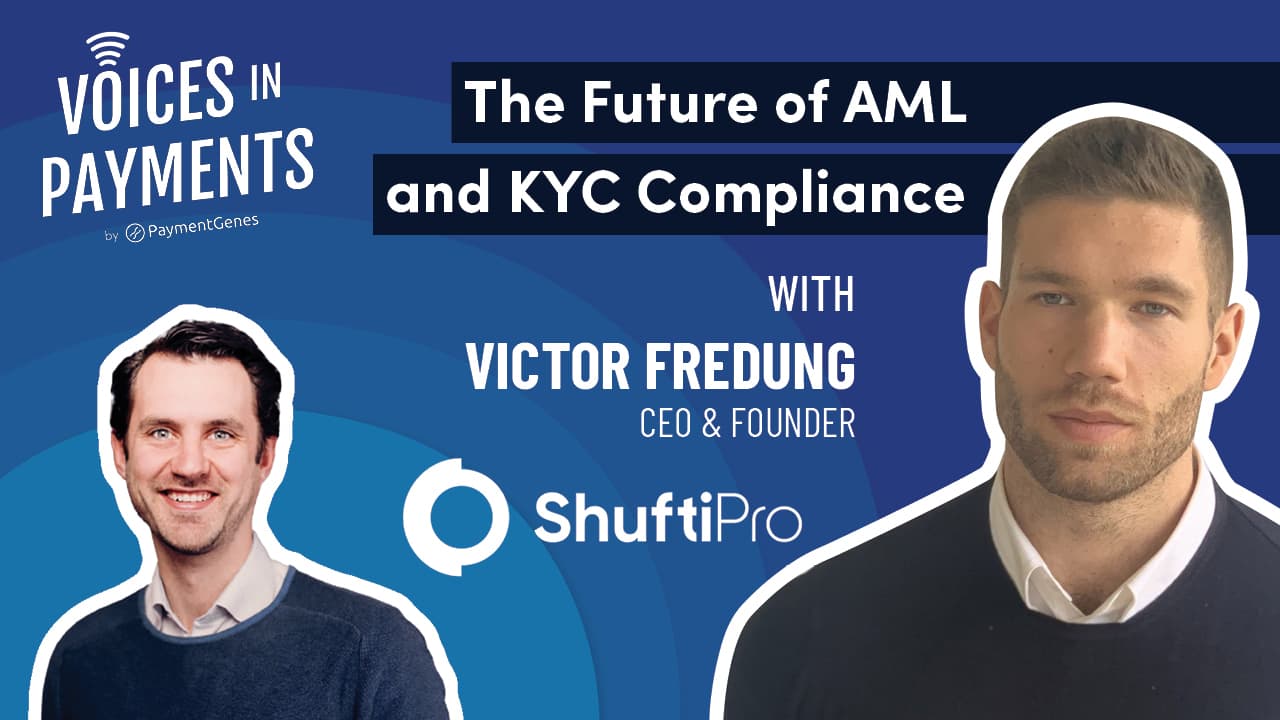
Twenty million dollars buys a longer to-do list
In March 2022, Shufti announced a $20 million Series A led by Updata Partners. Fredung was CEO. The stated plans were expansion, better identity-verification products and a broader compliance offering. A funding round gave the company resources to pursue them; it also made those plans rather harder to leave as intentions.
His comments at the time returned to flexibility. Customers needed verification shaped around their business objectives, he said, with options for privacy and security, including deployment on their own premises. Borderless businesses needed coverage across borders. The investment announcement presented a familiar Fredung concern at a larger scale: a useful check must fit the organisation trying to use it.
- 2016Co-founds Zensed
- 2017Shufti begins
- 2021Testifies to Congress
- 2022$20m Series A
By October 2023, the company reported passing 20 million identity verifications and having more than 1,000 clients. Those are company-reported milestones, not Fredung’s personal tally. They nevertheless show the distance between an operator’s irritation at lost customers and a business processing identity checks at scale. The original inconvenience had acquired departments, investors and a substantial volume of paperwork of its own.
Limassol enters the picture
That November, Fredung explained the reasoning behind an office in Limassol, Cyprus. The attraction was access to clients and partners across Mediterranean markets and the Middle East, helped by the island’s location and business events. International expansion, in his telling, still involved being easier for particular people to reach.
He described a company that had moved beyond its initial identity-verification offering into business verification, screening and risk assessment. Its customers’ requirements had changed, and its range of services had followed. He also discussed work on an approach to verification that would avoid reliance on a central organisational database. That was a development plan he described in 2023, not a claim that it had already been delivered.
These plans connected the geographic question to the privacy question. How could the business operate across more places while giving customers workable ways to handle their information? An office in Cyprus and a choice about database architecture occupy different parts of a company meeting. For Fredung, both belonged to the task of making verification usable.
The chairman who would close the laptop
His account of everyday life offers a useful corrective to the international itinerary. In May 2022, he described spending 99 per cent of his working time at a computer, moving between meetings and internal projects. He fitted family time into openings in the day. Flexible working, he said, also let the company recruit beyond its immediate geography and a single time zone.
Asked about reading, he admitted he should do more, but wanted time away from it after so much screen work. His gadget loyalty was less equivocal: Macs remained his preference, even when recent announcements had left him unimpressed. There is a familiar kind of customer affection in that answer, durable enough to accommodate a complaint.
There was another career he could imagine. Asked in a 2021 technology questionnaire what he would have done if tech had not worked out, Fredung chose sports. He gave no elaborate alternative biography. The answer is a small glimpse of a life outside compliance software, and rather easier to picture than a childhood ambition to improve customer-verification workflows.
His public writing later ranged across trust in the digital economy and competition in software. Today Shufti lists Hanif as CEO and Fredung as chairman and co-founder, guiding the board and long-term growth. It puts him at a different vantage point over the business they built. The small, difficult exchange at its centre remains: a company asks for proof; a person decides whether to trust it. Fredung’s career has grown around making that exchange work for both of them.
Continue the conversation
- Victor Fredung on LinkedIn · Shufti’s current leadership · Shufti company profile
- The Zensed interview: payment fraud and the first product · The 2019 conversation with Ton Dobbe
- Managing across three countries · Fredung on communicating with a remote team
- His written congressional testimony, July 2021 · The hearing transcript
- The March 2022 funding announcement · The October 2023 verification milestone
- Fredung on Cyprus and expansion · His workday, family time and Mac loyalty
- His start in tech, and the sports alternative
- His Forbes Business Council writing · Disruptive CEO Nation podcast · Shufti on YouTube