Anita Moreau’s career contains a pleasing change of venue. She trained to study the traces people leave behind, then founded an organization concerned with where people might go next. Archaeology, museum curation, a travel summit: the job titles move around. The interest in who gets remembered, represented and included stays remarkably steady.
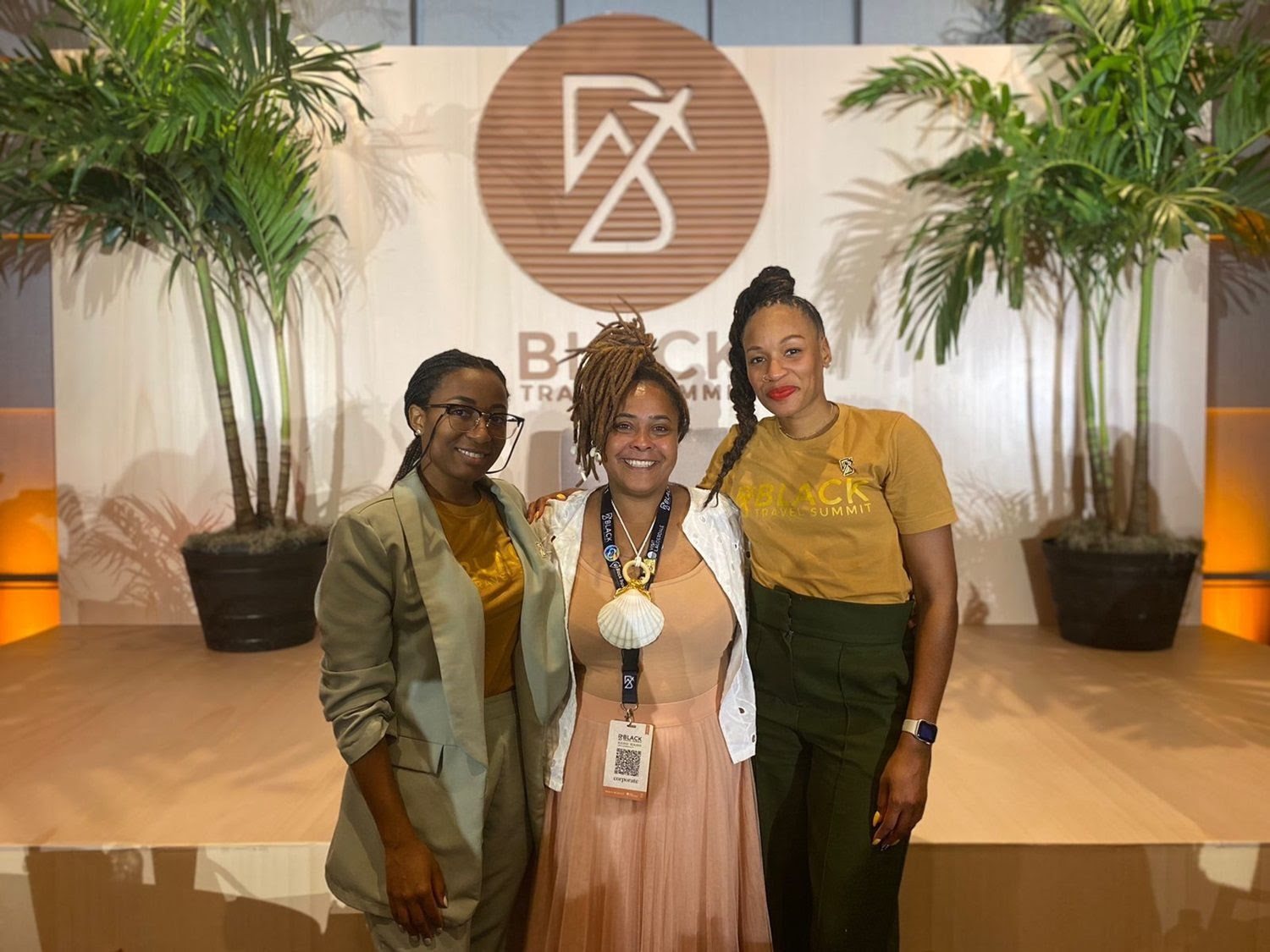
Moreau is the founder and CEO of Black Travel Summit, which she established in 2019. It brings Black travel professionals, entrepreneurs, creators and tourism brands together. Her work sits at an intersection that the travel brochure tends to hurry past: the relationship between the person taking the trip, the community receiving them and the people earning a living from the encounter.
There is pleasure in that work, of course. This is travel. But there are also introductions to make, businesses to develop and careers to advance. A beautiful destination can supply the view. Someone still has to organize the conversation.
The family map
Born and raised in London, Moreau is the daughter of a Seychellois mother and a Haitian father. Her own family history crosses the Indian Ocean, the Caribbean, Britain and the United States. She is now based in Miami. A neat little box marked “Where are you from?” has its limitations.
She has described growing up among London’s different Black diaspora communities and thinking about how her Caribbean and East African identities fitted together. Visits to Haiti and Seychelles brought another kind of knowledge: relationships with relatives, experiences of place and the difference between knowing your heritage as a description and encountering it yourself.
Egypt became another important part of her life. Her interest in its history developed into travel and a lasting attachment. She and her husband, filmmaker Frantzy Moreau, chose to marry in Nubia, in southern Egypt. The wedding took place in Aswan, with Nubian drumming; their honeymoon took them to Sri Lanka. For this particular couple, an itinerary could do rather more than transport the guests.
Her curiosity also led her back to Seychelles for dissertation research. During that stay she joined a Sega dance troupe. It is a lovely detail in the life of an archaeologist: sometimes learning about heritage requires getting out of the chair.
The welcome starts before check-in
Moreau holds a master’s in archaeology from University College London. Her work studying communities and cultural heritage preceded the summit. That background helps explain the specificity of her advice to hospitality businesses. She pays attention to the decisions that can make a visitor feel considered, or leave them wondering whether anyone had thought of them at all.
In her writing about welcoming Black travelers, she asks hotels to examine the images used during booking, representation in management and the way staff respond to guests. She also encourages partnerships with local organizations and tours, and a serious approach to feedback. These are practical choices involving photographs, hiring, recommendations and daily interactions.
The local partnership is especially interesting. A hotel recommending an excursion makes an editorial decision about its surroundings. It tells a guest which parts of a place deserve attention. Including Black-owned businesses and cultural experiences can change the visitor’s understanding while creating opportunities for people nearby.
A welcome, in this account, has many authors. The advertising team begins it. The people at reception continue it. A manager, a tour operator and the person reading a guest’s comments all have a hand in how the story turns out.
“Go with an open mind.”
Anita Moreau, on advice for travelers
A room with business to do
Black Travel Summit grew from Moreau’s desire to expand opportunities for Black travelers and the people working in travel. The distinction matters to its program. Encouraging someone to take a trip is one task. Helping an entrepreneur meet a possible partner, or a creator connect with a brand, calls for a different kind of gathering.
The summit combines events, education and professional connections. Its audience spans people who organize journeys, document them, market destinations and operate businesses. A travel advisor and a filmmaker may arrive with quite different questions. Giving them reasons to meet the wider industry is part of the founder’s job.
By February 2025, the organization had engaged more than 10,000 attendees across its activities. That is a cumulative figure, rather than the crowd at a single event. It suggests the work extends beyond one busy weekend: repeated opportunities for people to find a community and discover someone whose experience might be useful to their own.
Attendees engaged across Black Travel Summit activities by February 2025.
In August 2025, the summit announced its first advisory board. The group brought together people from hospitality, investment, tourism and creative businesses. Among them were African Bush Camps founder Bekezela Ndlovu, travel entrepreneur Gai A. Spann, East Chop Capital co-founder Carrington M. Carter and Hyatt executive Michele Bondanelli.
That range gives a more precise picture of Moreau’s ambition. Representation reaches into the ownership of businesses, access to commercial relationships and the expertise required to grow. The board brought different kinds of experience within reach of the same organization.
“We began in 2019 as a vision to connect our community through the joy of travel,” Moreau said when the board was announced. The sentence leaves room for both the joy and the work. A good conference needs enough of each to make people want to return.
Rio was a beginning
The decision to take the summit to Brazil became public in November 2024. Tania Neres, Embratur’s coordinator for diversity, Afrotourism and Indigenous peoples, announced Brazil as the next host country. A photograph from that gathering shows Neres alongside Moreau and Martinique Lewis of Black Travel Alliance. The international plan had acquired faces, partners and a destination.
Moreau’s own account of the announcement was less polished than an ordinary corporate milestone, and more revealing. She wrote about the difficulty of keeping the news secret, the long hours behind the 2024 event and a five-year dream of global expansion. She thanked Neres and the Brazilian Tourist Board for their part in making it happen.
The first international edition followed in Rio de Janeiro in 2025. For an organization concerned with the African diaspora, Brazil offered a setting where cultural connections and contemporary travel businesses could meet. The summit’s theme, Diaspórica: Legacy in Motion, put that relationship into the program itself.
Its geographical expansion also changes what an introduction can mean. People who might otherwise encounter each other through a screen can discuss a destination or business in person. The value of the meeting depends on what follows it. Rio would soon provide a particularly clear example.
What Milwaukee gave back
In October 2026, the summit gathered in Milwaukee. Moreau brought a historian’s interest to the host city. Learning about Bronzeville, the neighborhood associated with Black business, culture and entertainment, helped inspire the theme: Renaissance: Rebirth, Renew, Reclaim.
The choice made the city’s history part of the gathering’s purpose. Bronzeville offered a way to consider identity and storytelling alongside tourism. Moreau had previously worked as a museum curator and historian focusing on Black history and the contributions of Black communities. Here was a host destination that rewarded that attention.
The summit also expanded its Black AF Experience Program, with roughly a dozen activities connecting attendees to Milwaukee and Black-owned businesses. Those encounters give a conference a life outside the meeting room. They let the host community participate as more than scenery.
The Black Travel Film Festival adds another route into that work. By 2026 it was in its third year, with Janeita Bellamy as director. Its categories included scripted, unscripted and short-form storytelling. For a founder interested in cultural memory, film offers a way for journeys to leave something that lasts beyond the return flight.
Recognition has followed Moreau’s work. MIPAD included her in its Global Top 100 Travel, Tourism, Hospitality Edition, Class of 2026. The recognition places her alongside others working across travel and the diaspora. It also draws attention to a form of leadership that happens through arranging the conditions for other people to meet.
The next connection is Cotonou
On October 17, at the Black Travel Awards Gala in Milwaukee, the summit announced Cotonou, Benin, as its 2027 host. The edition will be its first on the African continent, organized in partnership with Benin Tourism.
The relationship began taking shape at the 2025 Rio gathering, where Benin Tourism representatives connected with the summit team. That progression is useful evidence of what Moreau’s organization is trying to make possible. A meeting in Brazil developed into a partnership for a gathering in West Africa.
Moreau’s earlier work asked how people carry cultural heritage across places and generations. Her current work adds a commercial question: how can those connections support the people building businesses and careers today? The answer requires a guest list, a program, dependable partners and the patience to keep relationships going after an event ends.
The archaeologist has become a convener. She still has an interest in what survives. Now part of the work is helping people meet someone with whom they might make something worth keeping.
Continue the conversation
Moreau’s work, interviews and public profiles.