A travel conference with a cake decorating class has some explaining to do. Black Travel Summit’s Milwaukee program offers one at Confectionately Yours. Elsewhere, attendees can take a Bronzeville trolley tour or dress for “Bridgerton in Bronzeville” over a tea flight. The choices sound delightfully extracurricular. They also reveal the company’s proposition: a destination’s Black businesses and culture deserve a place inside the travel industry’s working day.
- Black travel professionals meet tourism brands, peers, and potential collaborators.
- Business sessions share the program with films, competitions, and local experiences.
- After Rio in 2025, the next flagship gathering is scheduled for Milwaukee, October 15-18, 2026.
Founded by Anita Moreau in 2019, the Miami company organizes an annual gathering and smaller events throughout the year. Its customers include creators, travel advisors, entrepreneurs, hoteliers, and travelers. On the other side of the conversation sit destinations, hospitality companies, and brands. Bringing them together is the work. A room full of people who love travel becomes more useful when some can commission, distribute, or buy what the others make.
The curator who noticed the missing names
Moreau came from archaeology and museum curation. Born in London to a Seychellois mother and Haitian father, she had reasons to see the African diaspora as something larger than a single national market. Earlier interviews identify her as Anita Francois. Her professional background matters: a curator asks whose stories survive, how they are presented, and who is allowed to interpret them.
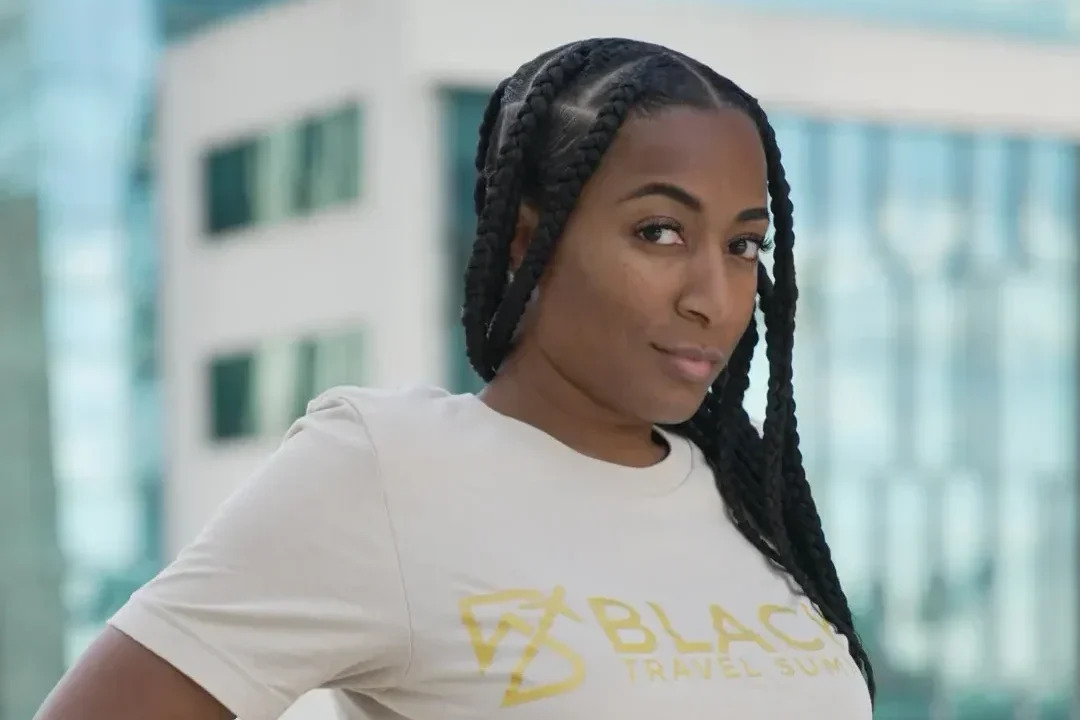
In a 2020 interview, she described recognition as an industry problem. Black people were traveling and building businesses; corporate attention did not reliably follow. Social media offered a way to show those journeys, but an audience and an industry relationship are different assets. The summit’s answer was to create occasions where the community could meet the wider trade, rather than leave each entrepreneur to knock on the same doors alone.
Heritage supplies the subject matter. Event production supplies the method. That combination explains the breadth of the program: professional education belongs alongside the people, food, neighborhoods, and histories that make a destination interesting. A business card acquires rather more context when its owner has just shown you their city.
A meeting needs a job to do
The 2026 agenda divides education into five tracks: creator, corporate, entrepreneur, hoteliers and investors, and trade. Each enters with a different problem. A creator needs a stronger brand or a commission. An advisor needs tours clients will value. A hotelier needs an investment conversation. A destination needs better ways to work with the people it hopes to attract. One inspirational speech would have considerable difficulty serving that entire queue.
An opportunity pathway, not a promise of a contract.
Black Travel Alliance became a sister organization in 2024. Its Wavelength event appears on the Milwaukee schedule. The Alliance’s format connects Black travel creators with brands through speed networking. That gives the vague instruction to “make connections” a mechanism: there is a place, a time, and another party with a reason to listen. Applicants still need to meet the relevant participation requirements.
The competitions are similarly concrete. Design Your Route: The Cruise Edition, with AmaWaterways, asks participants to rethink a river cruise itinerary through Black history, culture, food, and community. Passport To Storytelling puts original concepts before industry executives. Brand Breakthrough asks marketers to develop an awareness strategy for a Black-owned tourism brand. These are briefs people can work on, with opportunities to demonstrate judgment rather than merely announce ambition.
Rio supplied more than scenery
The first international flagship edition took place in Rio de Janeiro in November 2025. Brazil’s tourism agency, Embratur, had announced the hosting decision at the 2024 Florida summit. Its account highlighted Little Africa, samba, and African heritage as tourism experiences. The location fitted the company’s diaspora focus while giving Brazilian businesses a chance to enter the conversation on their own ground.
Local partner Diaspora.Black described helping produce the Rio gathering and participating in its programming and business space. Moreau’s public planning account named Etnias Turismo e Cultura and Visit Rio among the on-the-ground collaborators. Those details matter more than a generic declaration of global reach. An international conference needs local knowledge, suppliers, and relationships; crossing a border creates work before it creates a photograph.
“to move people, ideas, and opportunity across borders”
Anita Moreau, on the summit’s purpose
Milwaukee offers a different setting for the same inquiry. Visit Milwaukee’s announcement connects the gathering with Black history, local entrepreneurship, and cultural institutions. The main summit is scheduled for the Baird Center. The Black Travel Film Festival, established in 2023, is scheduled at Nō Studios on October 15. Its scripted, unscripted, and short-form categories give a travel vlog a place beside more conventional filmmaking.
The price of getting into the room
The commercial model follows the event: paid passes, sponsorship opportunities, exhibitors, and brand activations. The registration overview lists a $350 summit pass; attendees should confirm the current price and inclusions in live registration. Accommodation is separate. A ticket buys participation, while the cost of getting there depends on the traveler. The important calculation is personal: which sessions and relationships could justify the time and expense?
The model has practical limits. In 2024, Hurricane Milton forced the Florida summit to move to November 21-24. Organizers changed the schedule and canceled a giveback session, asking attendees to bring donations instead. Weather interrupted the original timetable. The company’s response is visible in the operational details, which are more instructive than a tidy tale about perseverance.
There is a useful idea here for anyone organizing a professional community: give networking a task, bring relevant buyers into the room, and let local businesses contribute to the experience. Attendees can copy the principle too. Arrive with a portfolio, a specific question, or a partnership proposal. A gathering will be less useful to someone expecting guaranteed funding or automatic bookings. The introductions require work after the applause. The cake, at least, can leave with you.