Before Aniruddha Pai worked on the software of careers, he built a bot for one of university life's oldest minor panics: choosing a professor. Students at the University of Illinois were already asking one another for advice on Reddit. The questions were informal, repetitive, and entirely reasonable. Which instructor teaches this course? What do students think? How difficult is it? Pai and two collaborators made the answers callable. Type a short command under a post, and RedditProfessor returned course and instructor information in the conversation where the question had appeared.
It was a student project, not a manifesto. Yet it contains an unusually clear piece of product judgment. The team did not ask students to adopt a new destination or learn a grand interface. They noticed an existing behavior and placed a small utility inside it. The software arrived where the uncertainty already lived.
That instinct is the useful thread through Pai's young career. His public record is not thick with interviews or theatrical origin stories. It is better read through the things he chose to make: a professor bot, a music-discovery application, tools built during a software internship, and later a catalog that treats prompt engineering as a set of patterns. The subjects change. The work keeps returning to the narrow, difficult passage between a complicated system and a person trying to ask it something.
A degree with two operating systems
Pai arrived at Illinois after school in Dubai, where published 2019 results from Our Own High School list Aniruddha Girish Pai at 95.6 percent in the CBSE science stream. At university, he paired computer science with advertising and added statistics. On paper, it can look like a split personality: code on one side, persuasion on the other. In products, the combination is less exotic. Software has to function, but it also has to anticipate attention, language, and choice.
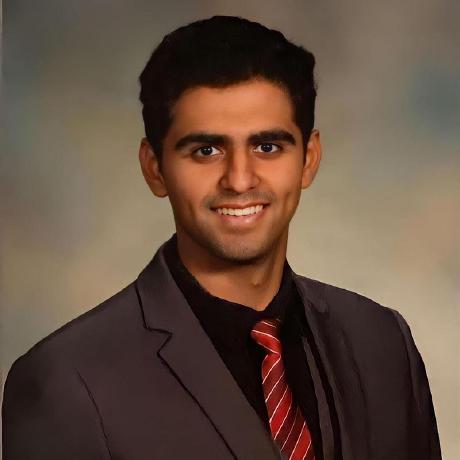
His campus activities crossed the same border. He served as a course assistant for introductory computer science, appeared in student advisory groups, worked with the campus chapter of the National Organization for Business and Engineering, and joined advertising and brand-health work. A résumé can make these sound like parallel lines. They are also practice in translating among different rooms: the beginner's office hour, the product committee, the strategy discussion, the team trying to understand an audience.
The teaching role matters. Introductory programming has a peculiar drama. A computer follows instructions with perfect literalism while the beginner is still learning which instructions can be said. Anyone helping in that room sees the distance between knowing a system and explaining it. Pai's later interest in prompts feels less like a sudden detour when placed beside that experience. Both are concerned with the design of instructions, and with what happens when intent must survive contact with a machine.
His education also included the practical variety of work students collect while finding their shape. He was listed as a data analyst with the Illinois Brand Health Index Group, a product developer in NOBE, an online private instructor at iD Tech Camps, and a software engineering intern at Graybar. In the Graybar role, his public student profile described a cloud-based tool for tracking value-added services and reported internal productivity gains from the tools he helped implement. The details are workmanlike. That is their charm. Student projects often promise to rearrange civilization; internal tools must first survive Tuesday.
The software arrived where the uncertainty already lived.
Songs, signals, and the art of a useful filter
Tunemash, a 2021 project, moved the question from professors to music. It used Spotify data to let listeners filter songs by attributes including genre, mood, and decade, then receive recommendations from a machine-learning model. Pai described building it with SQL, Express, React, Node, and Google Cloud. The stack dates the project neatly. The product problem does not age: how do you turn a huge catalog into a path that feels personal without making the user fill out a census form?
A recommendation engine is an argument about relevance disguised as convenience. It decides which signals count, how much friction a person will tolerate, and when a surprise is welcome. Advertising asks related questions about audience and attention. Statistics asks whether the observed pattern deserves trust. Computer science makes the whole arrangement run. Pai's course combination found a practical rehearsal in a music browser.
The campus years ended with high honors and a reported 3.93 GPA. Pai's LinkedIn record says his National Student Advertising Competition team placed third in its district in 2022, the Illinois program's first such placing in a decade. The university's May 2023 commencement program lists his full name among degree candidates. Soon after, the geography of the story shifted from Champaign to San Francisco and the context shifted from projects about student life to a company organized around the transition out of it.
Working inside the question of what comes next
At Handshake, Pai works as a software engineer in a business that connects job seekers, educational institutions, and employers. The company now describes itself as a career network for the AI economy, serving 25 million knowledge workers, more than 1,600 educational institutions, and one million employers. Those figures belong to the platform, not to any single engineer. They nevertheless show the scale of the system around his work.
There is a pleasing circularity here. The student who built a tool around campus questions now works on career technology, where the questions carry more weight. What am I qualified to do? Which employer will notice? What skill should I learn? A career platform has databases, rankings, profiles, messages, and models. To its user, it is often one urgent sentence typed late at night.
Pai's public professional activity offers a small glimpse of what catches his eye. Sharing Handshake's account of a 48-hour intern hackathon in San Francisco, he praised the creativity, speed, and thoughtfulness of teams that moved from a whiteboard to working prototypes. The event asked interns what was broken in a student's journey and how they would fix it. His response focused less on spectacle than on permission: talented people given the space to create.
“Seeing ideas go from a whiteboard to working prototypes in just 48 hours was a great reminder of what talented people can build.”Aniruddha Pai, on Handshake's intern hackathon
It would be easy to make too much of a shared post. It is still consistent with the record. RedditProfessor was a hackathon-scale answer to a student problem. Tunemash turned an idea into a functioning recommendation tool. The attraction is not merely speed. It is the moment an abstract complaint gains an interface and can finally be tested by somebody other than its inventor.
Prompts become patterns
In 2025, Pai published “Enhancing Interaction with Large Language Models: A Catalog of Prompt Engineering Techniques” in the proceedings of the International Conference on Open and Connected Technologies. The paper's central move was organizational. It presented prompt techniques as a catalog of reusable patterns, borrowing the logic of software design patterns for a field often taught as scattered tricks.
A prompt is not magic wording. It can be treated as a repeatable response to a recurring interaction problem, described clearly enough for someone else to use and compare.
That distinction matters because large language models invite folklore. A clever phrase works once, travels through a screenshot, and soon acquires the status of ritual. Pattern language asks more sober questions. What problem does this technique address? In what context? What is the structure? What are the consequences? The approach makes prompting look less like whispering to an oracle and more like interface design with unusually talkative software.
It also connects neatly to Pai's earlier projects. RedditProfessor compressed a search problem into a command. Tunemash turned taste into selectable attributes. Prompt patterns turn intentions into structures a model can interpret. None eliminates ambiguity; each gives ambiguity handles.
Handshake's own direction has moved closer to this territory. The company has expanded its AI work and promoted networks in which software engineers can contribute to model evaluation and reasoning tasks. Pai has shared that expansion publicly. His role sits within a broader change in career technology: platforms no longer only match a résumé to a listing. They increasingly mediate skills, learning, evidence, and short-term work connected to AI systems themselves.
The bridge is the work
Pai's public biography is still an early one. Its interest lies less in a finished legend than in a pattern visible soon enough to watch. Dubai supplied the science grounding. Illinois added code, advertising, statistics, teaching, and the productive chaos of campus organizations. Student tools gave abstract interests something to do. Handshake placed those interests inside a larger market where education and employment meet. The prompt paper extended the same concern into a newer interface.
There is no need to pretend every project was secretly destined for the same endpoint. Careers are not treasure maps left by one's younger self. But choices accumulate, and Pai's choices show a preference for translation: from data to recommendation, question to command, intent to prompt, student profile to possible opportunity.
This kind of engineering is easy to overlook because a good bridge makes the crossing feel ordinary. The user asks. The result appears. The awkward machinery stays mostly out of sight. Yet the real design work lives in deciding what the system should hear, which signal deserves weight, and how much complexity a person should have to carry.
The professor bot offers the cleanest ending because it was also an early beginning. Somewhere on a sprawling university subreddit, a student had a basic question and did not want another portal. Pai helped make the answer come to the question. Years later, amid language models and career networks, the scale is different. The courtesy remains the same.