Before the dealership software, there was a spreadsheet. Andy Park and his wife had become parents earlier than many of their friends. As those friends started families, they kept asking which products to buy. Recommendations accumulated. A list circulated. Park said at least 10 or 15 people had asked for it. Somewhere in that modest exchange was a business proposition: people already had advisers they trusted. Perhaps software could make the advice easier to find.
It is a pleasingly domestic beginning for a technology company. No garage door needs to rise. Nobody has to announce that shopping will change forever. Someone needs a recommendation, someone else has tried the product, and a spreadsheet does the social work. The interesting question is what happens when a founder tries to turn that familiar courtesy into a repeatable business.
Park would pursue that question at Wikets, then another version of it at CarNow. His public explanations repeatedly returned to human help at the moment of a purchase. His career also acquired a much graver chapter. In July 2024, he pleaded guilty to payroll tax and tax return offenses. In January 2025, he was sentenced to federal prison. Both the product insight and the criminal conduct belong in the account.
02The friends-and-family shopping department
Wikets launched its iPhone app in November 2011. Park’s co-founders were Vijay Manwani and Ravi Reddy. The company had attracted $1.5 million from investors including Battery Ventures and Andreessen Horowitz. Its premise gave recommendations a social address: the friend whose judgment you valued could become a more useful guide than a crowd of strangers averaging out their opinions.
Users could recommend products and places, save suggestions, share them again and earn rewards. Park distinguished an endorsement from a review. He was interested in the person prepared to attach a name to a suggestion. The original spreadsheet had supplied a small demonstration of demand. The app tried to give that exchange a home, a memory and a way to keep circulating.
The attraction is easy to understand. A score can tell you that many people approved of something. Knowing the recommender can tell you why their approval matters to you. A friend who has already made the mistake you are about to make can be an unusually efficient search engine. Wikets put a business around that everyday advantage.
Park brought experience from businesses with rather less domestic subject matter. His earlier career included Merrill Lynch, corporate development at Breakaway Solutions and a vice presidency in corporate development at BladeLogic, the data center automation company. He also completed undergraduate study at Yale. Finance, enterprise software and a consumer app made for an unconventional route toward the dealership showroom.
03An empty showroom, rendered in pixels
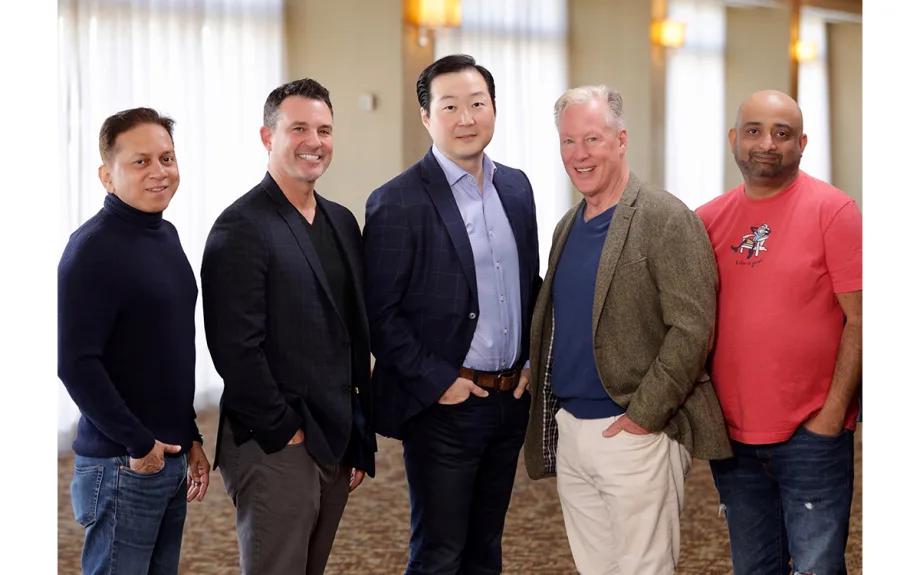
CarNow was founded in 2014. Park joined Tim Cox, Bidhan Patnaik and Saurav Biswas in building software for automotive retailers. The first offering centered on messaging. That choice made the conversation part of the product from the beginning. Cars brought the founders into a purchase with plenty of opportunities for a shopper to hesitate.
Park’s favorite explanation was concrete. An online showroom could display the merchandise and still leave customers stranded with questions. The value of a trade-in, the details of a vehicle and the practicalities of financing all created reasons to ask for help. A request to leave contact details deferred the conversation precisely when the shopper wanted to have it.
CarNow added live assistance. Park later summed up the operating principle in five words: “This is a people business.” The line is short enough to fit on a sales meeting whiteboard. Its implications are less convenient. Somebody must answer, understand the question and help the buyer continue. Installing software is the beginning of that work.
The connection with Wikets is interpretive, but clear: both products gave human guidance a place inside digital shopping. The businesses served different customers and different transactions. Yet Park kept circling the interval between seeing something and feeling ready to buy it. That interval can contain more uncertainty than a shopping cart suggests.
“This is a people business.”Andy Park, 2021
04Thirty million dollars, and a slingshot
In 2021, CarNow raised $30 million from Battery Ventures, bringing its reported funding total to about $55 million. A previous $10 million round in 2019 had also been led by Battery. At the time of the 2021 financing coverage, the company worked with about 4,700 dealerships, mainly franchised stores in the United States. The valuation was undisclosed.
Park had an agreeably odd phrase for the new spending power: “We can build a lot of slingshots.” It put a small, scrappy implement in the same sentence as institutional venture capital. Even founders with substantial financing apparently prefer to picture themselves carrying something that could fit in a pocket.
The useful question behind the joke was where the money would take the product. A messaging business could keep adding features around a conversation. A broader retail platform would have to connect the steps that followed it. Payments, inventory and the work of dealership employees all had to meet somewhere. The ambition was becoming organizational as well as technical.
That shift matters when considering Park’s work. A founder selling communication software can explain the value of a quicker answer. A founder selling a connected transaction has to persuade a retailer to change how its people work together. The customer buys a tool; the promised benefit depends on behavior spreading beyond the person who signed for it.
Investment from Battery Ventures
About $55m raised in total at the time. Company funding, not personal wealth.05The purchase that would not stay in one window
In November 2021, CarNow announced a collaboration with J.D. Power around finance and insurance shopping. Park described a buying process damaged by breaks in communication and by transactions that had to restart. The collaboration aimed to connect the online experience with the dealership’s existing process. Continuity had become an explicit part of the pitch.
Consider the ordinary indignity of explaining yourself twice. It is mildly irritating at a reception desk. During a complicated purchase, it also raises a practical concern: did the work you already completed count? This is the problem Park was describing. The value of a digital step depends partly on whether the next person can recognize it.
CarNow launched its Real-Time Retail platform in March 2022. A Live-Action checklist was intended to give dealers visibility into steps completed online or in person. The launch also brought integrations involving DealerTrack, DealerBuilt, Polly and TransUnion. The platform combined communication with more of the transaction, giving the company a larger role inside the dealership’s working day.
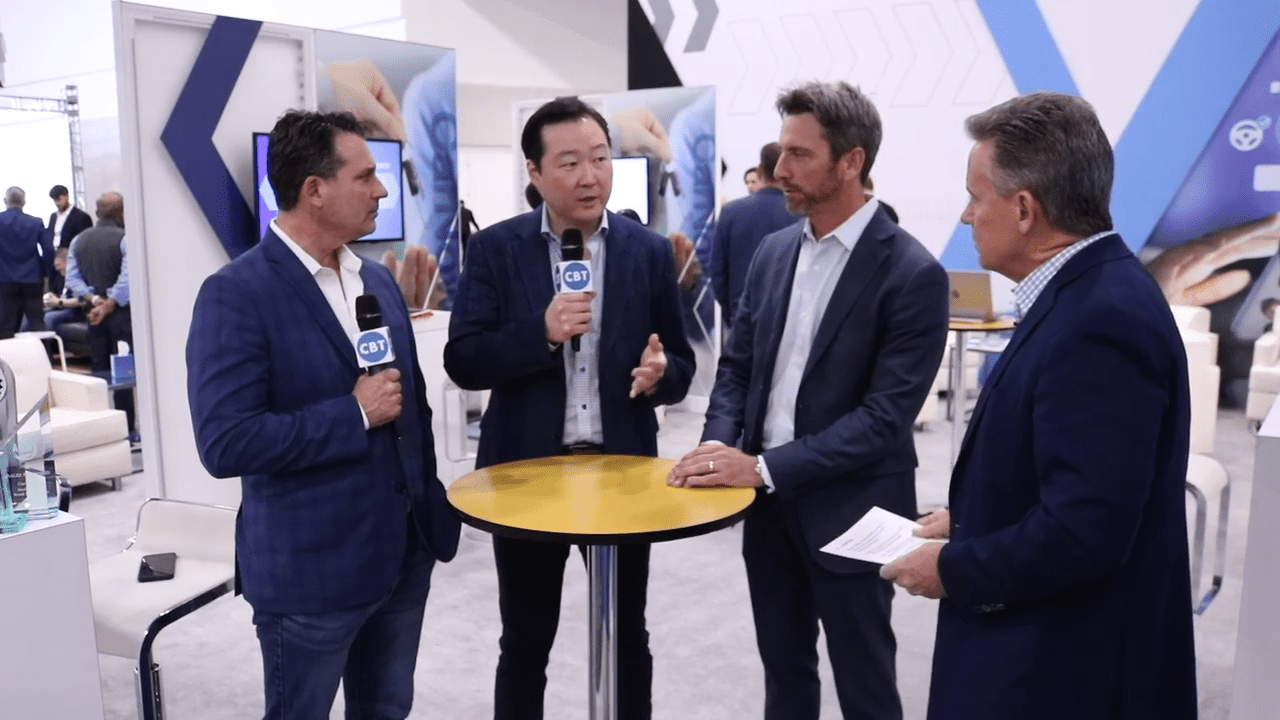
At the NADA Show in Las Vegas that year, Park appeared with Cox and automotive executive Michael Seeman to discuss the unified technology approach. The setting suited the task: a dealership software company explaining how its parts might work together, surrounded by an industry selling its own next versions. The challenge was to make a purchase feel less fragmented without giving staff another collection of disconnected tools.
- 01AskMessage a question
- 02WorkComplete buying steps
- 03ContinueCarry context in-store
06The financial record behind the sales pitch
The legal case concerned a different set of responsibilities inside the business. Park was responsible for its financial matters, including employment tax returns and remitting payroll taxes. From the company’s founding in 2014 through the third quarter of 2021, taxes were withheld from employee wages but were not paid over as required. The company’s own share of employment taxes also went unpaid.
The failure continued despite notifications from the payroll processor and discrepancies raised by an employee. Park also failed to file personal tax returns for 2013 through 2020. On July 22, 2024, he pleaded guilty to willful failure to pay over payroll taxes and willful failure to file a tax return. These were admitted offenses, rather than unresolved accusations.
The distinction is consequential. A founder’s observations about a market can be useful. His legal duties to employees and tax authorities remain duties regardless of how useful the product becomes. Customers can benefit from software while the executive responsible for financial compliance commits an offense. A complete account has to accommodate those facts together.
On January 23, 2025, U.S. District Court Judge Landya McCafferty sentenced Park to 30 months in prison and three years of supervised release. The sentence also included $639,821.78 in restitution and a $15,000 fine. The restitution figure represented tax and interest still unpaid at sentencing; it was not the total tax loss, which exceeded $14.7 million.
- July 22, 2024
- Guilty plea
- January 23, 2025
- 30-month prison sentence
- $639,821.78
- Restitution ordered
07The company carries on
CarNow announced Kayne Grau as chief executive in September 2023. Its current leadership page names Joe Gilmour as CEO. Park’s place in the business story is as a co-founder and former chief executive. The company now describes itself as an automotive retail conversion platform, serving more than 4,000 dealerships and combining technology with human expertise.
Those descriptions preserve something recognizable from the early messaging proposition. Buyers can handle some tasks themselves and ask for guidance on others. Dealership employees need useful context when they step in. The company’s continued work belongs to its present team, whose responsibilities extend beyond the biography of any founder.
Park’s story began with people asking for advice because they trusted the person giving it. It moved through software meant to make complicated buying decisions easier. It also reached a courtroom over obligations he had failed to meet. The spreadsheet, the showroom and the payroll record describe different kinds of reliance. In each, another person expects the information in front of them to mean what it says.