A car part can be perfectly good and still be a problem. Leave it on a dealer’s shelf long enough and it starts doing two jobs nobody wanted: occupying space and holding cash hostage. The engineering challenge is deceptively small. Someone has to notice the part before it becomes an expensive fixture.
- InterraIT builds and maintains software for enterprise operations.
- Its automotive work reaches into parts, dealers, warranty and damaged vehicles.
- The useful idea: fix the handoffs before adding intelligence.
That is a useful entrance to Interra Information Technologies, better known as InterraIT. Its services menu includes cloud, AI, mobile applications and modernization. Its case studies offer something more revealing: a view of the little organizational arrangements that determine whether any of those technologies earn their keep.
The shelf is a business problem
In an automotive case study published in April 2025, InterraIT describes a US-market manufacturer whose dealers accumulated parts that customers were no longer demanding. Inventory was becoming idle. Storage and money were getting stuck together.
The response combined daily reports identifying idle parts with a second report identifying parts approaching that condition. Then came the human mechanism: quarterly bonuses tied to keeping the idle-stock share within a specified range. Dealers received both an earlier warning and a financial reason to respond.
The interesting feature is the pairing. Information arrives soon enough to change an outcome; an incentive makes acting on it worthwhile. Read that way, the case offers a practical lesson in software design: a report needs a decision attached to it.
Ask the awkward question sooner
Another automotive project begins with new vehicles damaged between factory or port and their destination. The damage was physical. The delay was organizational. Departments and outside vendors exchanged documents and photographs by email. Approvals were manual, processing was slow, and the existing arrangements fell short on disclosure, audit and performance reporting.
InterraIT built an automated damaged-vehicle system with records, communications and workflow tracking. One change deserves attention: it captured customer acceptability earlier. A late rejection had meant more processing and reclassification. Asking sooner helped the business route vehicles without repeating that work.
This is where enterprise software becomes interesting. A system can make a bad sequence faster, or make the sequence better. Here, the consequential move was deciding when to ask a question. The software also provided record retention and reporting to support JSOX requirements.
A report needs a decision attached to it.What the dealer-inventory case suggests
The old code stays in the picture
Asoke K. Laha founded InterraIT in 1996. Today it identifies itself as a Ferfier group company; its leadership page lists Sweta Verma as CEO and President. That history places its current AI work beside a much older responsibility: maintaining the applications on which customers already depend.
Its offering extends from custom development and dealer systems to legacy and mainframe modernization, cloud migration, data platforms, cybersecurity and ongoing application management. Automotive and manufacturing are its stated focus, with retail, healthcare and technology also represented. The buyer is an enterprise team with systems to connect and operations to keep running.
For a procurement team, the alternatives include larger providers such as Cognizant and HCLTech, whose automotive offerings also cover modernization and enterprise integration. InterraIT’s case material gives buyers a narrower question to investigate: how much does the proposed team understand the particular dealer, parts or service process being changed?
The commercial model follows that work: business-to-business engineering, implementation, integration and continuing support, alongside packaged solutions. InterraIT occupies a crowded market for digital engineering and IT services. Its aftersales cases share a useful specificity: parts, warranty, dealer operations and the exceptions that interrupt them.
A separate case involving an unnamed Fortune 500 electronics company shows the infrastructure side. InterraIT standardized a serverless application’s deployment around AWS DevOps tools. The company reports a one-hour deployment cycle for each development, staging and production environment. That is a concrete operational outcome, with the claim belonging to InterraIT.
Deployment cycle per environment
Company-reported electronics DevOps case
AI arrives at the parts counter
InterraIT now groups intelligent offerings under iAI. The portfolio includes parts management, document validation, claims processing and chatbot assistance. Its iPMS offering combines demand forecasting with inventory visibility and those same pre-idle warnings. It can stand alone or connect to existing enterprise resource planning and dealer management systems.
The parts-management proposition also exposes a familiar tension. A dealer wants stock available when a customer needs it, but does not want shelves full of slow-moving items. Forecasting and early warnings address both sides of that balancing act. The useful demonstration would follow a part through the actual network, including the awkward exceptions.
Its iDVS document offering addresses invoices, certificates and other enterprise records, checking for missing information and discrepancies. These are product descriptions, best evaluated against an organization’s own documents, exceptions and approval rules. The appeal is easy to understand: fewer manual checks between receiving information and doing something useful with it.
“Most AI starts with a model. iAI starts with your process.”InterraIT’s description of its approach
The same integration theme runs through its expanded KoneX alliance, announced in February 2026. KoneX connects ecommerce and logistics systems; the partnership combines a shared platform with regional delivery. Businesses operating across borders need common connections and people who understand the local execution.
Copy the sequence
The transferable idea is a sequence of work. Map the process, including its exceptions. Find the late decision. Put information in front of whoever can act. Agree on an outcome before introducing another layer of technology. InterraIT’s iAI page describes a focused pilot around one process before expansion.
For a buyer, that suggests a disciplined first meeting. Bring one troublesome workflow, the records it produces and the people responsible for its decisions. Ask the delivery team to trace an ordinary case and an exception. Then choose a measure that can be observed: time waiting, stock sitting idle or work repeated. The cases suggest measuring the mechanics before judging the technology.
There are conditions. Forecasts depend on usable inventory data. Automated approvals depend on clear responsibilities. A bonus works only if its rules encourage the behavior the business needs. These are practical implications of the cases: connecting systems also means connecting decisions.
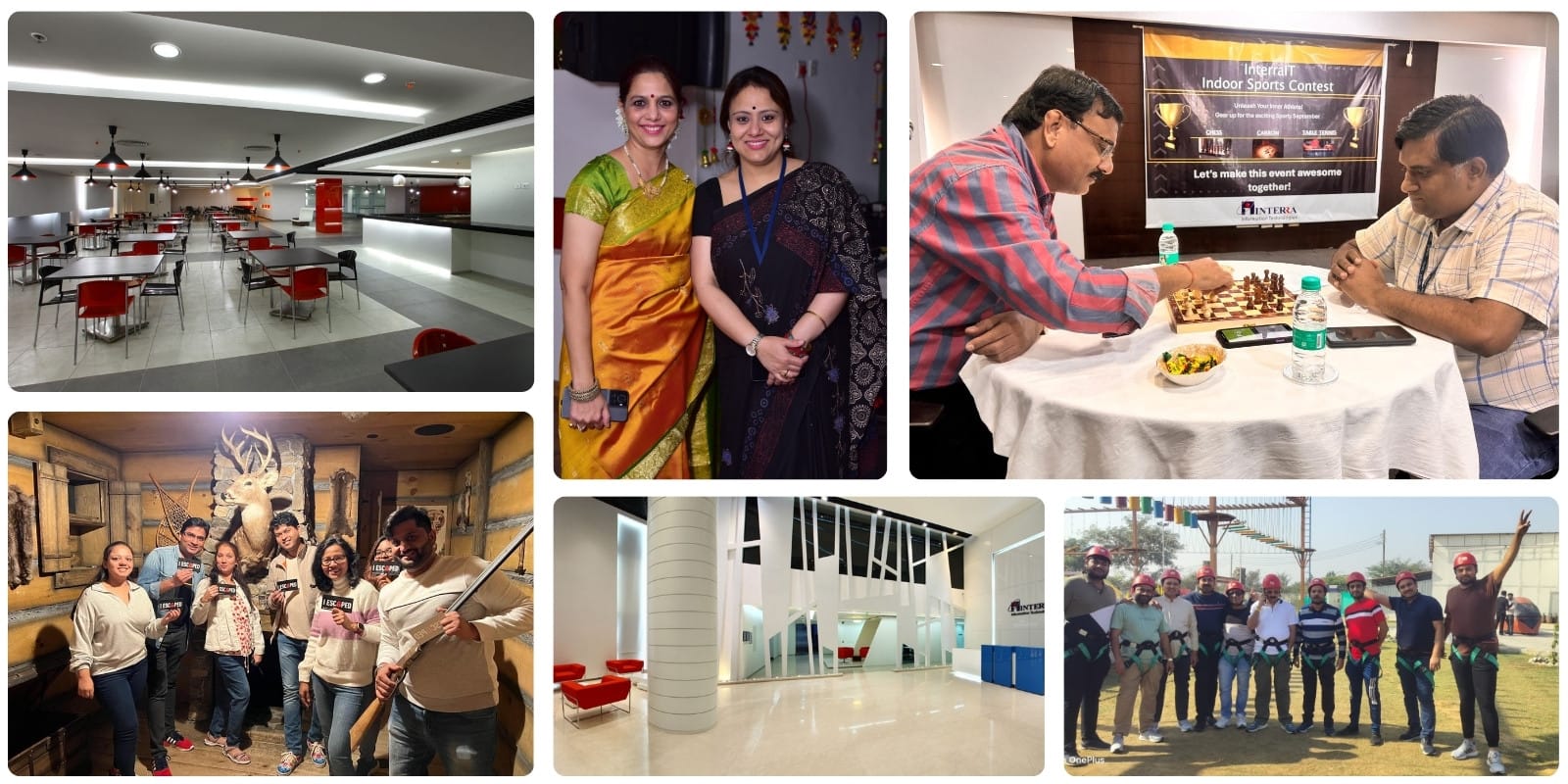
The company’s careers material promises mentorship, training and flexible work options for people building these operational systems. Those skills matter in a business where someone must understand both the application and the person waiting on it. Follow the waiting - at a shelf, an inbox, an approval queue - and InterraIT’s role becomes clearer.
Keep following the work
Read the detail: dealer inventory, damaged vehicles, DevOps.