The hall pass is a small object with a surprisingly large administrative life. Someone asks to leave a classroom. Someone approves. Someone needs to know where that student went. Put the process on a phone, and the little object acquires logins, permissions, notifications and connections to other school software. The ordinary has become a systems problem.
- Neumeric builds custom software, repairs aging applications and supplies IT staff.
- Its portfolio puts schools, governments and healthcare organizations in the foreground.
- The useful pattern: connect a real task to the systems and people that must act on it.
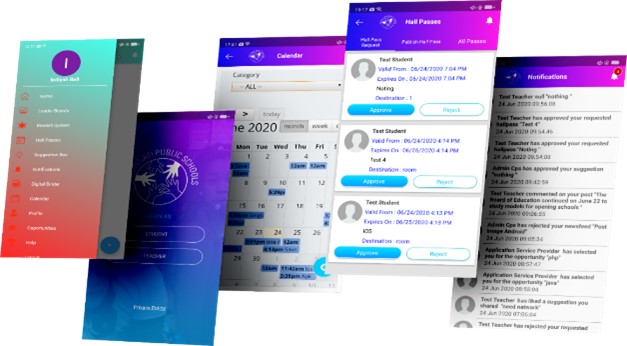
That is a useful way into Neumeric, an IT services company whose work includes Cincinnati Public Schools’ MyTomorrow application. In Neumeric’s account, the project was stalled and incomplete when its team took over. The repair involved a Drupal web platform, native iOS and Android apps, bugs, design changes and integrations with Schoology and PowerSchool. Hall passes were among the features. So were calendars, notifications and student information tools.
Software procurement often begins with a noun: an app, a website, a dashboard. MyTomorrow suggests the noun is the easy part. Getting the pieces to cooperate is the assignment. A handsome screen has limited social standing if the person behind it cannot sign in.
01 / The hall pass problem
Neumeric occupies the market for organizations with a particular job to finish. It offers website development, custom web and enterprise applications, mobile apps, cloud services, support and staffing. Its technology menu includes .NET, Java, Python and PHP, alongside content platforms such as Drupal and WordPress. It describes itself as platform agnostic.
The company dates its beginnings to a Detroit suburb in 1999. Founder Sudheer Gaddam is listed as CEO and CIO. Neumeric now reports more than 380 full-time professionals and says over 60% of its business serves public-sector clients. Its website also reports more than 1,300 successful projects. Those figures describe the company’s own account of its scale.
Company-reported. A clue to the customer mix, rather than a measure of software performance.
That mix helps explain the portfolio. Schools and agencies rarely begin with an empty desk and a clean database. They have existing systems, departmental obligations and users who need to complete a task today. MyTomorrow’s single sign-on and classroom-system integrations belong to that world. The app had to find its place among things the district already used.
02 / A beach is a workflow, too
Consider Miami Beach. Neumeric’s case study describes a custom application for assessing cleanliness across public spaces. Assessors can record observations, photographs and indexes; the system routes and schedules their work and sends information to the responsible waste, maintenance and public safety departments.
There is an appealing lack of glamour here. A photograph records the problem. Routing gives it somewhere to go. The interesting software question is what happens between the two. A report that ends in the wrong inbox is simply a more expensive way to be ignored.
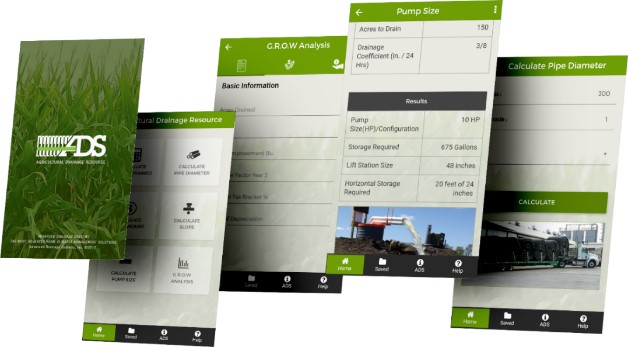
The private-sector work has similar practical detail. Neumeric describes building a field application for Advanced Drainage Systems that calculates drainage-related quantities, saves calculations under site names and works online or offline. It can calculate pipe requirements and project slope, among other functions. Connectivity is treated as a condition of use, rather than a polite assumption.
03 / The app they chose to retire
Detroit People Mover offers the revealing decision. According to Neumeric, the transit service had an outdated Ionic mobile application and a Drupal website. The initial problem was updating and supporting them. After reviewing the app’s upgrade requirements, the team chose a progressive web application as a more cost-effective option.
Neumeric describes updating the website to Drupal 10, creating the PWA and removing the old mobile application from the app stores. In other words, examining the maintenance problem changed the proposed solution. The existing app’s format did not get an automatic vote for its own survival.
That is a lesson a buyer can borrow without buying anything: ask what users need to do before deciding how the software must be packaged. A browser-based service can be a sensible option when it meets those needs. If essential device functions or operating conditions cannot be supported in the intended browser, the choice needs a different answer. The case illustrates a decision, not a universal recipe.
The existing app’s format did not get an automatic vote for its own survival.
THE EDITOR’S TAKE
04 / The unusual price of a pandemic app
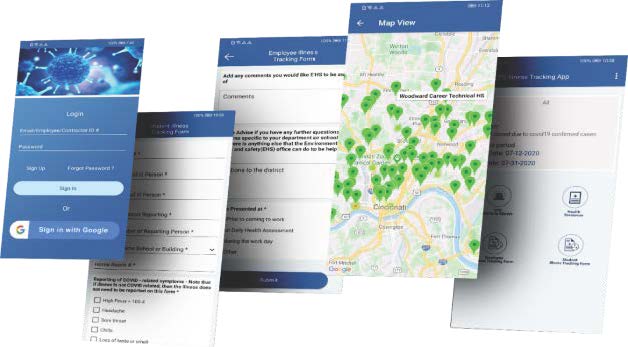
The Cincinnati story acquired another chapter during the pandemic. Neumeric’s ReCovid case describes a district facing health-status reporting across 68 schools and administration buildings, with more than 37,000 students and 6,700 faculty and contractors. These are the populations named in the case, rather than a verified count of app users.
Neumeric says it developed web and mobile software for health assessments, alerts, two-way communication and reporting, working with the district’s IT, health and safety, and administrative teams. The company says it provided the applications to Cincinnati Public Schools at no charge and offered ReCovid applications and support free to public-sector entities through the pandemic.
ReCovid applications and pandemic support for public-sector entities, according to Neumeric’s historical offer.
The detail matters because support was included in the offer. Software can create a new burden if an institution has to operate it without help. This case joins the application to its continuing care. The historical offer should be read on its own terms; Neumeric’s commercial services use several paid contract models.
05 / Hospitals, hosting and the business after launch
Neumeric also sells reusable software. Its Bhishak hospital information management suite is described as modular, web-based and delivered through a SaaS model. The product covers patient registration, billing, ward management, administration, reports and appointment scheduling. Related products address laboratory work, pharmacy management and medical image viewing.
The hospital example makes the distinction between product and services tangible. A product supplies recurring functions; a development engagement can adapt software to a particular organization. Neumeric operates in both markets. Its portfolio also includes HelloCarPool, a customizable ride-sharing solution with matching, payments and communication features.
Then there is the work after launch. Neumeric’s Central Health case describes managing four web properties, including AWS hosting, backups, security checks, uptime monitoring and ongoing development. The company describes HIPAA-compliant hosting as part of that engagement. This is an operational service claim, rather than a blanket certification for every Neumeric system.
A launch makes a fine photograph. Backups are harder to put on a poster. Yet the support business is a substantial part of what Neumeric offers: keeping an organization’s software usable while platforms, content and requirements continue to change.
06 / The contract is part of the product
For public agencies, the route to purchase belongs in the story. Neumeric holds Utah’s Interactive Mapping Solutions master agreement LS4613 through an OMNIA Partners cooperative arrangement. The signed agreement runs from August 1, 2024 to July 31, 2029. Its scope includes interactive mapping and related services.
The procurement’s executive summary names other successful offerors, including InfraMappa, MGT of America Consulting, The Chariot Group and Wander App. That gives a concrete comparison set for mapping work. Across Neumeric’s broader portfolio, the alternatives change: another development firm, a managed service provider, an internal team or a packaged application.
Neumeric’s published commercial options include fixed price, time and materials, retainers, subscriptions and outcome-based arrangements. The mapping executive summary describes flat-rate implementation and hourly professional rates. For a buyer, the useful question is which arrangement suits the uncertainty. Clear deliverables make a fixed quote easier to define. Evolving requirements call for an explicit method of approving changes and controlling spend.
An eligible agency can examine the cooperative route alongside its own procurement requirements. Access to an agreement still leaves practical decisions about scope, deliverables and support. Paperwork, unfashionable as it is, can determine whether the software reaches the people who need it.
07 / Borrow the questions, before the code
Neumeric’s cases suggest a compact buying discipline. Trace one real task from beginning to end. Identify the systems it touches and the person responsible for each handoff. Test the assumption that an existing app must remain an app. Put hosting, updates and support into the decision before release day arrives.
Custom development fits when those requirements deserve tailored work. If a standard product already handles the job, customization needs to justify its additional ownership burden. Staffing is another choice when the organization can direct the work but needs more people. Neumeric sells that option too, through contract, contract-to-hire and direct-placement services.
Its public personality is lighter than this checklist. The careers page promises in-house learning and paid offsite training under the heading “Learning is on us”. A designer’s team biography says he “Has the most colored pencils in the company”. These are employer-authored glimpses, but pleasingly specific ones.
The company’s most useful introduction remains the work itself: a student gets permission, an assessor records a problem, a transit user reaches a service. Each is a small event. Software earns its place by allowing the next event to happen.
Services, products and company channels.